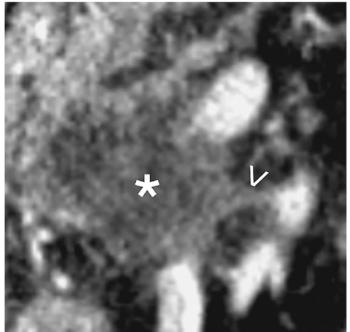
Emerging CT research suggests that the plexus pancreaticus capitalis 2 (PPC2) pathway or a mass with stranding morphology may significantly increase mortality risk in patients with pancreatic cancer and extra-pancreatic nerve plexus invasion (EPNI).
In the second of a two-part podcast episode, Kalpana Kanal, PhD, and Mahadevappa Mahesh, PhD, discussed the possible impact of new research showing significant declines in CT radiation dosing over the past decade, future research directions and the potential for indication-based diagnostic reference levels (DRLs) in the future.
In the first of a two-part podcast episode, Kalpana Kanal, PhD, and Mahadevappa Mahesh, PhD, reviewed key findings from a study examining CT radiation dosing over the past decade and shared insights from their experience for ensuring optimal radiation dosing for CT scans.
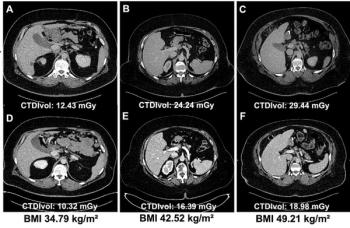
In addition to providing higher SNRs in vascular structures and parenchymal organs than energy-integrating detector CT, photon-counting CT enabled an approximately 30 percent reduction in volume CT dose index (CTDIvol) for patients with obesity, according to a new study.
Newly published preclinical research signals a substantial conceptual shift with a potential role of photon-counting CT in targeting specific biological processes.