Reportedly one of the first FDA-cleared chest X-ray AI software platforms derived from a foundation model, the Chest Xray software facilitates detection and localization of lung nodules, pneumothorax, mediastinal abnormalities and other thoracic abnormalities.
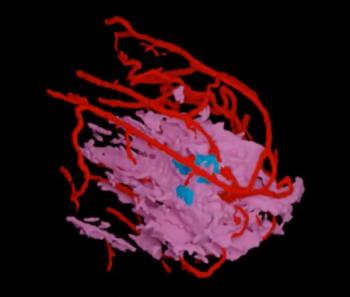
In multivariable external testing, tumor structure habitat phenotypes from pre-treatment MRI revealed more than a doubling of recurrence risk for women with stage 2 and stage 3 breast cancer.
Incorporating structural MRI to improve PET imaging resolution, the MICSI-PET software also offers automated Centiloid quantification from amyloid PET scans.
Emerging research demonstrates the increasing stability of attenuation on clinically relevant VMIs with photon-counting CT and a redefined role of kV that may have implications for longitudinal quantitative CT.
For patients with intermediate-risk prostate cancer, those with lower apparent diffusion coefficient (ADC) values on pre-treatment DWI MRI had a fourfold higher prevalence of distant metastasis in a study with a 10.3-year median follow-up.