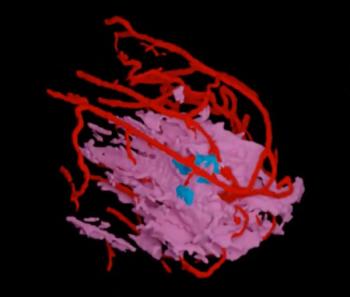
Newly published preclinical research signals a substantial conceptual shift with a potential role of photon-counting CT in targeting specific biological processes.
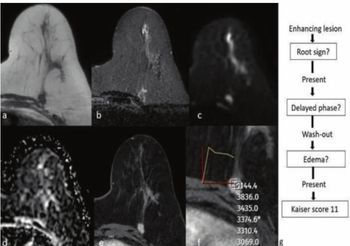
A Kaiser score > 5 with breast MRI demonstrated a 97 percent sensitivity and 87.9 percent specificity for predicting malignancy in patients with BI-RADS 0 or 4 presentations on mammography and breast ultrasound, according to a new study.
In a recent interview, Francesco Giganti, MD, PhD, discussed findings from a recent multicenter study demonstrating the ability of an AI software to provide significant clarity to initial PI-RADS 3 assessments on MRI and facilitate a nearly 19 percent reduction in unnecessary prostate biopsies.
The NEXT-Cue AI software, which incorporates analysis of brain MRI scans, reportedly facilitates prognostic assessments of potential progression from mild cognitive impairment (MCI) to Alzheimer’s disease within five years.
Assessing breast MRI scans, pathology and clinical data, the AI-powered TumorSight Risk software reportedly provides five- and 10-year risk for breast cancer recurrence for women with HR+, HER2-negative stage I-IIIA breast cancer.
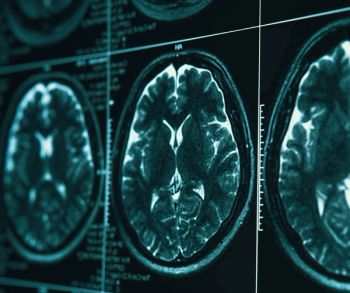
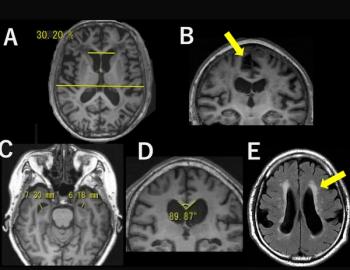
Tightness of the high-convexity sulci (THC) on brain MRI was associated with nearly threefold higher odds of cognitive decline over five to seven years of follow-up, according to a new prospective study involving over 2,100 community-dwelling senior citizens.