Will PCCT Lead the Next Revolution in Interventional Cardiology?
Through enhanced insights into atherosclerotic disease, complex coronary lesions and coronary stents, photon-counting CT provides an anatomical roadmap that may improve outcomes for interventional procedures.
I am particularly pleased to share our new expert review, published in EuroIntervention, together with Patrick Serruys, MD, PhD, Fei-Ran Chiou, MD, and an outstanding international group of colleagues.1 As senior author, this paper reflects something I have believed throughout my decades of experience in coronary imaging: the future of coronary CT is not just about detecting stenoses.
It is about understanding coronary artery disease (CAD) in sufficient detail to influence clinical decisions. Photon-counting CT is bringing us closer to that goal, not simply through sharper images but by providing increasingly detailed information in the following areas.
• Atherosclerotic disease. PCCT provides greater insight into plaque burden, composition, distribution, and evolution.
• Complex coronary lesions. PCCT improves our understanding of superficial and deep calcifications, lesion architecture, and chronic total occlusions.
• Coronary stents. PCCT gives us improved visualization of struts, residual lumen, and restenosis.
• Procedural planning. PCCT offers a comprehensive anatomical roadmap before entering the catheterization laboratory.
Why We Need to Look Beyond Stenosis Severity
For decades, coronary imaging has been dominated by one question: How severe is the stenosis?
However, stenosis is only one manifestation of a much more complex disease.Modern coronary computed tomography angiography (CCTA), particularly with PCCT, allows us to investigate the disease itself.
This creates an important opportunity for interventional cardiology.
What if we could arrive at the cath lab already knowing much more about the lesion — its morphology, calcium distribution, plaque characteristics, and anatomical complexity — we intend to treat?
Better information before the procedure means better planning during the procedure. See the
Photon-counting CT is not about replacing interventional cardiology or intravascular imaging. It is about making noninvasive imaging and intervention work better together. I am particularly pleased that several clinical examples in this review come directly from our cardiovascular PCCT experience.
After decades working in coronary imaging, I find this convergence especially exciting. The future of interventional cardiology may depend as much on what we know before entering the cath lab as what we do inside of it.
Dr. Cademartiri is the director of advanced cardiovascular imaging and photon-counting CT at the Scientific Institute for Research, Hospitalization, and Healthcare Synlab Diagnostic Network in Naples, Italy. He is also a consultant in advanced cardiovascular imaging at CDI/Centro Diagnostico Italiano in Milan, Italy.
References
- Chiou FR, Serruys P, Pontone G, et al. Photon-counting detector computed tomography and interventional cardiology. EuroIntervention. 2026;22–e13. doi: 10.4244/EIJ-D-26-00367 .
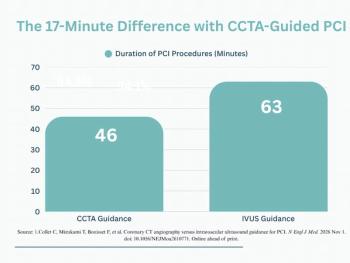
- Collet C, Mizukami T, Bouisset F, et al. Coronary CT angiography versus intravascular ultrasound guidance for PCI. N Engl J Med. 2026 Nov 1. doi: 10.1056/NEJMoa2610771. Online ahead of print.
Related to this article