

Commentary|Podcasts|October 5, 2026
The Reading Room Podcast: Current Perspectives, Challenges and Possibilities with AI in Breast Imaging, Part 2
Author(s)Jeff Hall
In the second of a three-part podcast episode, Wendie Berg, MD, PhD, FACR, FSBI, Manisha Bahl, MD, and Amy Patel, MD discuss how to handle disagreements with adjunctive AI in breast imaging, whether to include AI assessments in PACS, and whether patients should pay for the use of adjunctive AI.
Advertisement
When there are breast imaging cases in which the radiologist doesn’t agree with the finding from adjunctive AI software, Manisha Bahl, MD, MPH, FSBI, and Amy Patel, MD maintained during
“ … If I identify a suspicious finding which AI doesn't detect, I wouldn't dismiss it just because AI is negative. On the other hand, if AI highlights a finding that I didn't initially notice, I would go back and take a careful look. The value of AI is in having a second pair of eyes, another piece of information, not in replacing our clinical judgment,” noted Dr. Bahl, an associate professor at Harvard Medical School.
Wendie Berg, MD, PhD, FACR, FSBI, said the more challenging cases with AI may involve AI marks indicating suspicion where the radiologist doesn’t feel there is a concern for potential breast cancer.
“I think it's harder if you look at even where it's marked and you don't see anything and you don't think it's anything. Do you let those go? Do you save those marks?,” questioned Dr. Berg, a distinguished professor and Dr. Bernard Fisher Chair for Breast Cancer Research at the University of Pittsburgh School of Medicine.
Should AI Findings Be Noted in the Reports for Breast Radiologists?
Should adjunctive AI notations be saved in PACS? Dr. Bahl brings up the example of an AI-based ultrasound software she and her colleagues have been using. Noting that the software only assesses current ultrasound images without consideration of clinical factors or prior ultrasound exams, Dr. Bahl said they decided not to include the AI notations due to potential confusion for patients.
“The AI tool may recommend biopsy of a mass, but I, as the radiologist, know that the mass has been stable for the past year, which AI doesn't, which of course influences my decision. We felt that if we save the AI output for every case, we would need to justify in our reports when and why we disagreed with AI, which felt unnecessary, but those decisions may vary tool by tool or situation by situation,” explained Dr. Bahl, breast radiologist at Massachusetts General Hospital.
Noting that she also uses an AI breast ultrasound software, Dr, Patel said her facility does save the AI notations into PACS, and it was “important from our practice perspective” and in facilitating internal monitoring and audits of the impact of the software.
Dr. Berg concurred that documentation of AI findings is key to monitoring of the software’s performance over time. She added that potential medicolegal concerns are another pertinent factor.
“Another important point to consider is that these algorithms change rapidly, and so what output you had today might be very different in a month or a year when it would be rerun through the newer version of the software, and you can't prove, if you will, what it said before if you don't save that output,” pointed out Dr. Berg.
Should Patients Pay for the Use of Adjunctive AI in Breast Imaging?
All of the panelists noted that some practices are charging patients for use of adjunctive AI in breast imaging, but they all expressed concerns about the impact of this practice upon equitable access to the technology for all patients.
“What good are all these algorithms if not all patients have access? We even have issues right now with a lot of rural facilities not even having access to contrast-enhanced mammography (CEM). A lot of them don't have access to breast MRI, but they don't have access to CEM, which is supposed to be an option for them to have some sort of supplemental screening access with contrast. … I think there's a lot of work to be done on this front, but I'm definitely in the pool that I don't necessarily agree with charging a cash pay amount for AI access,” emphasized Dr. Patel, the medical director of the Breast Care Center at Liberty Hospital in Liberty, Missouri, and chair of the American College of Radiology’s (ACR) Radiology Advocacy Network and RADPAC.
For more insights from Dr. Berg, Dr. Bahl and Dr. Patel, listen below or
Advertisement
Related to this article

Catch up on the top radiology content of the past week.

Catch up on the most well-viewed video interviews from Diagnostic Imaging in September 2026.

In the first of a three-part podcast episode, Wendie Berg, MD, PhD, FACR, FSBI, Manisha Bahl, MD, and Amy Patel, MD share insights on the utility of AI in breast imaging with respect to potential advantages, current concerns and future directions.
Catch up on the top radiology content of the past week.
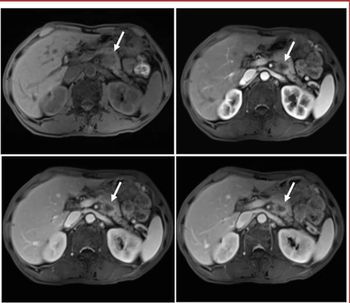
Magnetic resonance imaging offered a 29 percent higher sensitivity than CT for differentiating liver metastases, but CT provided 12 percent higher sensitivity than MRI for assessing vascular invasion, according to a new 40-study meta-analysis.
Catch up on the top radiology content of the past week.
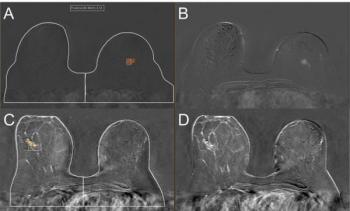
A deep learning model developed for predicting BI-RADS assessments from dynamic contrast-enhanced (DCE) breast MRI had over a 14 percent lower AUC than radiologist evaluation in external validation testing.
In the second of a two-part podcast episode, Lauren Nicola, MD, Christoph Wald, MD, PhD, MBA, and Peter Shen discuss challenges with evaluating value and ROI for AI software, the physician time required to do so, and possible solutions to facilitate improved clarity and consistency with AI reimbursement.
Advertisement
Advertisement
Trending on Diagnostic Imaging
1
Diagnostic Imaging's Weekly Scan: September 27 — October 3
2
The Reading Room Podcast: Current Perspectives, Challenges and Possibilities with AI in Breast Imaging, Part 1
3
Emerging Research Insights and New Advances in Neuroradiology
4
Current Perspectives on Integrating AI into Radiology
5