Catch up on the top radiology content of the past week.
In a recent interview, Shadpour Demehri, MD, discussed new research examining connections between deep learning assessment of bone mineral density on chest CT, brain MRI data and the potential for enhanced risk stratification in patients with diabetes.
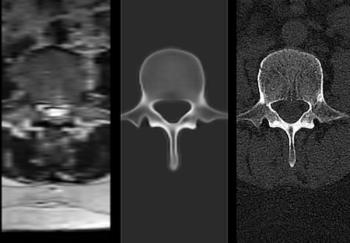
A recently published secondary analysis of the prospective Multi-Ethnic Study of Atherosclerosis (MESA) revealed striking findings between deep learning assessment of vertebral bone mineral density (vBMD) and regional associations with white matter hyperintensity (WMH) and fractional anisotropy (FA).
However, lead study author Shadpour Demehri, MD, said the key message with the
“ … You can come up with some sort of chronological cascade sequencing of events and putting together these findings in context, (you can) see what type of patients or what sub-population are at the high risk of multisystem degeneration together, which one could come earlier and basically could precede the second one. In this case, it was bone and brain,” noted Dr. Demehri, a professor of radiology and orthopedic surgery at Johns Hopkins University in Baltimore.
A particularly pertinent finding from the study, which was recently published in
“One corner of this triangle is bone density, the other one is brain degeneration, and the third one is diabetes. So diabetes is a root cause — or we call metabolic syndrome as part of a bigger picture — that can impact both bone and brain. In this case, it happens that we could detect signal in bone earlier than the brain degeneration, and that shows to us that if the patient comes with metabolic syndrome and abnormal bone, that raises the flag that this patient's brain could be at jeopardy,” explained Dr. Demehri.
(Editor’s note: For related content, see “