

News|Videos|September 24, 2026
IR Update: FDA Clears New Device for Liver Embolization Procedures
Author(s)Jeff Hall
Offering telescoping and high-flow configurations, the TriNav Advance device reportedly provides interventional radiologists with improved access to small distal vessels during liver embolization procedures.
Advertisement
The Food and Drug Administration (FDA) has issued 510(k) clearance for the TriNav Advance device, which may offer enhanced small distal vessel access for interventional radiologists performing liver embolization procedures.
TriSalus Life Sciences, the manufacturer of the
Along with a compatible microcatheter, one may employ the telescoping configuration of the TriNav Advance with proximal positioning of the device’s SmartValve to ensure targeted delivery to smaller distal vessels, according to TriSalus Life Sciences.
For procedures requiring infusion through a large lumen, the company said the high-flow configuration of the TriNav Advance device can be utilized in a similar manner to standard TriNav devices without the need for an additional microcatheter.
“The TriNav® Advance clearance marks a seminal moment for TriSalus Life Sciences, enabling us to expand our impact, particularly in cases involving tortuous anatomies,” said Richard Marshall, MD, the chief medical officer of TriSalus. “We believe that physicians can now optimize therapeutic delivery in difficult cases while limiting exposure to unaffected anatomical structures, which has been central to what makes PEDD (pressure-enabled drug delivery) clinically meaningful. This is a natural extension of the technology into cases we haven’t been able to fully address before.”
Advertisement
Related to this article

In a recent interview with Diagnostic Imaging, Joseph Cavallo, MD, MBA, offered insights on post-deployment monitoring with AI, the potential for improved workflow efficiency and the ongoing challenge of balancing essential clinical skills and AI literacy in the training of radiology residents and fellows.
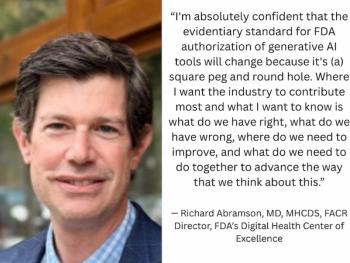
How will generative AI software be evaluated by the FDA in the future? What’s next for point-of-care ultrasound? What steps have been successful in facilitating adoption of AI applications across enterprise systems? Leaders in radiology and health care will be discussing these topics and more at the upcoming HLTH USA conference.

In the third of a three-part podcast episode, Wendie Berg, MD, PhD, FACR, FSBI, Manisha Bahl, MD, and Amy Patel, MD discuss recent developments with autonomous AI in breast imaging and share their perspective on the overall potential of AI to help mitigate the radiologist shortage.
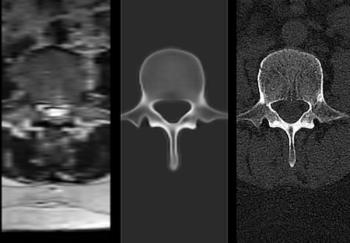
The cloud-based NextMR platform reportedly provides automated 3D bone images of conventional spine MRI images in less than 60 seconds.
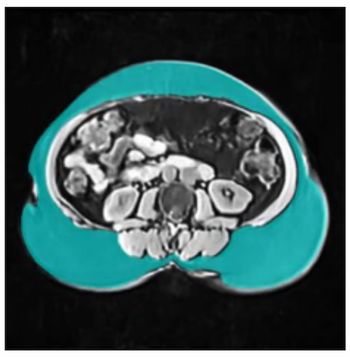
The AI-powered SwiftSight Body Composition software reportedly provides automated quantification of muscle and adipose tissue after a brief MRI scan.
In the second of a three-part podcast episode, Wendie Berg, MD, PhD, FACR, FSBI, Manisha Bahl, MD, and Amy Patel, MD discuss how to handle disagreements with adjunctive AI in breast imaging, whether to include AI assessments in PACS, and whether patients should pay for the use of adjunctive AI.

Catch up on the top radiology content of the past week.
Catch up on the top radiology content of the past week.
Advertisement
Advertisement
Trending on Diagnostic Imaging
1
Molecular Imaging in Focus: Comparative PSMA PET Study Offers Insights for Men with Recurrent PCa and Low PSA Values
2
Can CT Bone Reading Software Enhance Detection of Metastatic Rib Lesions in Women with Breast Cancer?
3
Breast Imaging in Focus: Can AI Models for Breast Cancer Detection and Risk Prediction Be Used Interchangeably?
4
Teleradiology With More Pay and Less Pressure
5