

Commentary|Podcasts|October 9, 2026
The Reading Room Podcast: Current Perspectives, Challenges and Possibilities with AI in Breast Imaging, Part 3
Author(s)Jeff Hall
In the third of a three-part podcast episode, Wendie Berg, MD, PhD, FACR, FSBI, Manisha Bahl, MD, and Amy Patel, MD discuss recent developments with autonomous AI in breast imaging and share their perspective on the overall potential of AI to help mitigate the radiologist shortage.
Advertisement
Recent developments with AI suggest that autonomous tools may be gaining a foothold in breast imaging workflows. Vara recently gained CE certification for AI triage software that reportedly allows reporting of screening mammography exams “as normal without radiologist review.”1 Lunit announced in late September 2026 that its mammography AI software Lunit Insight MMG will provide autonomous second reading at facilities in Stockholm, Sweden.2
In a
“The concern to me is not that autonomous AI and breast screening is inherently a bad idea, but … looking at the evidence and the regulatory frameworks, are they strong enough to justify removing an actual human reader from screening? That's the question I have. … It is a little bit concerning in terms of these algorithms. Yes, there's continuous monitoring, and we're assessing for drift. But then, you know, seeing an algorithm maybe going down a pathway that we didn't intend (is) something that's still a little bit worrisome in my opinion regarding autonomous AI,” noted Dr. Patel, the medical director of the Breast Care Center at Liberty Hospital in Liberty, Missouri, and chair of the American College of Radiology’s (ACR) Radiology Advocacy Network and RADPAC.
Emphasizing the ‘Adjunctive’ in Adjunctive AI
All of the panelists see the adjunctive value of AI for triaging cases and helping to optimize efficiencies in navigating burgeoning worklists for breast radiologists.
“I think of AI as having the potential to increase radiologist capacity rather than replacing radiologists. If we use AI, for example, we may have more time to spend on complex cases requiring our expertise, or to spend more time with patients. I think the future isn't AI versus the radiologists, but rather AI and radiologists working together to provide better patient care,” explained Dr. Bahl, an associate professor at Harvard Medical School and breast radiologist at Massachusetts General Hospital.
Could There Be Dramatic Shifts in Reimbursement with the Use Of Autonomous AI in Mammography Screening?
Dr. Berg said AI can be “tremendously helpful” with risk assessment, which may allow more time for breast radiologists to spend on image interpretation. However, she expressed concern that increasing interest in autonomous AI tools in the mammography screening setting could lead to significant reductions in reimbursement.
“I do worry that right now I see a lot of facilities where the breast imagers are now going to an entirely RVU-based compensation, and screening is definitely where the RVUs are, if you will. If AI is going to then be the autonomous reader of a lot of those screening mammograms, we could see dramatic shifts in compensation for breast imaging radiologists, where our days are now only the complex cases or only the diagnostic cases, and that could dramatically change how things work for us,” posits Dr. Berg, a distinguished professor and Dr. Bernard Fisher Chair for Breast Cancer Research at the University of Pittsburgh School of Medicine.
For more insights from Dr. Berg, Dr. Bahl and Dr. Patel, listen below or
References
- Vara. Vara receives world-first CE certification for autonomous AI in breast cancer screening. Business Wire. Available at:
https://www.businesswire.com/news/home/20260901360645/en/Vara-Receives-World-First-CE-Certification-for-Autonomous-AI-in-Breast-Cancer-Screening . Published September 2, 2026. Accessed September 29, 2026.
2. Lunit. Lunit expands AI-powered breast cancer screening across the Stockholm region. PR Newswire.
Advertisement
Related to this article
In the second of a three-part podcast episode, Wendie Berg, MD, PhD, FACR, FSBI, Manisha Bahl, MD, and Amy Patel, MD discuss how to handle disagreements with adjunctive AI in breast imaging, whether to include AI assessments in PACS, and whether patients should pay for the use of adjunctive AI.

Catch up on the top radiology content of the past week.
Catch up on the top radiology content of the past week.
In a recent interview with Diagnostic Imaging, Joseph Cavallo, MD, MBA, offered insights on post-deployment monitoring with AI, the potential for improved workflow efficiency and the ongoing challenge of balancing essential clinical skills and AI literacy in the training of radiology residents and fellows.
In the first of a three-part podcast episode, Wendie Berg, MD, PhD, FACR, FSBI, Manisha Bahl, MD, and Amy Patel, MD share insights on the utility of AI in breast imaging with respect to potential advantages, current concerns and future directions.
Catch up on the most well-viewed video interviews from Diagnostic Imaging in September 2026.
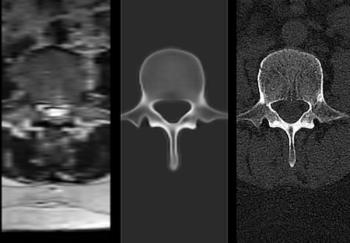
The cloud-based NextMR platform reportedly provides automated 3D bone images of conventional spine MRI images in less than 60 seconds.
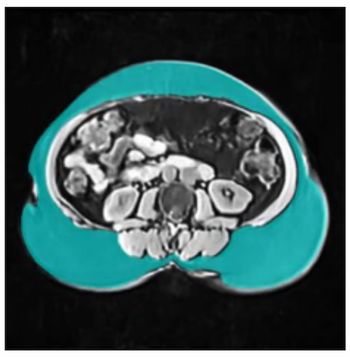
The AI-powered SwiftSight Body Composition software reportedly provides automated quantification of muscle and adipose tissue after a brief MRI scan.
Advertisement
Advertisement
Trending on Diagnostic Imaging
1
What New Dosimetry Data Reveals About 177Lu-Edotreotide for GEP-NET Treatment
2
FDA Clears AI-Powered Platform for Converting Spine MRIs to 3D Visualizations
3
FDA Clears MRI-Based AI Software for Body Composition Analysis
4
The Responsibility of Authorship in the AI Era
5