Interventional Radiology in Focus: A Closer Look at Y90 Radioembolization for Patients with Liver Cancer
In the latest episode of his “Interventional Radiology in Focus” series, Mina Makary, MD, discusses pertinent principles, pearls and outcomes with Y90 radioembolization for the treatment of patients with liver cancer.
Transarterial radioembolization (TARE) with yttrium-90 (Y90) microspheres has become an established treatment for both primary and metastatic liver malignancies.
Treatment selection for hepatocellular carcinoma (HCC) continues to be guided largely by the Barcelona Clinic Liver Cancer (BCLC) staging system. Most HCC patients present with unresectable disease. Early-stage patients may be candidates for ablation or bridging to transplantation. Intermediate-stage patients have historically been directed toward transarterial chemoembolization (TACE). Patients with advanced-stage disease are managed with systemic therapy or palliation.
Y90 has shifted from a primarily palliative, local-control tool to an effective option in appropriately selected early-stage patients. Radiation segmentectomy can achieve five-year outcomes comparable to resection and ablation in unresectable patients and those who are not candidates for ablation. Y90 now has a role across most BCLC stages, contingent on technical feasibility, overall clinical status and other factors.
These gains have paralleled advances in dosimetry from empiric/BSA-based models to single-compartment (MIRD) dosing, to multi-compartment/partition dosimetry distinguishing tumor from normal liver and now the current voxel-based dosimetry enabling more precise dose-volume targeting and clinical success.
As with any oncologic therapy, treatment goals—curative intent, downstaging/bridging, or palliation—should be defined through multidisciplinary discussion with medical, surgical, and radiation oncology, and revisited as the patient's disease course evolves.
In terms of clinical pearls, pre-procedural evaluation should include recent multiphasic MRI or CT, assessment of vascular patency and variant anatomy, and review of current medications such as GLP-1 treatments and comorbidities affecting sedation and positioning.
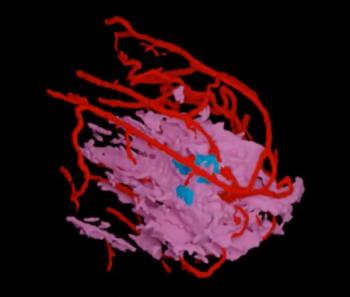
For the procedure planning, it behooves us to understand the vascular anatomy through the angiogram and perhaps obtain a cone-beam CT to understand the vascular distributions. While there are different approaches to this assessment, understanding this is key as it allows us to be more selective with our technique, optimize appropriate dosing and facilitate better patient outcomes.
Post-treatment imaging within the first month may show hyperemia. A more reliable assessment of response is typically available at three months. Timing of resumption or initiation of systemic therapy should be coordinated with the broader treatment team based on the patient's overall goals of care.
Investigational directions include extrahepatic Y90 radioembolization applications (glioblastoma, splenic and prostate targets), alternative radioisotopes such as holmium-166 for HCC, and combination regimens pairing Y90 with immunotherapy, including the ongoing EMERALD-Y90 trial.
Dr. Makary is a vascular and interventional radiologist. He is an associate professor of radiology at the Ohio State University Wexner Medical Center.
Related to this article