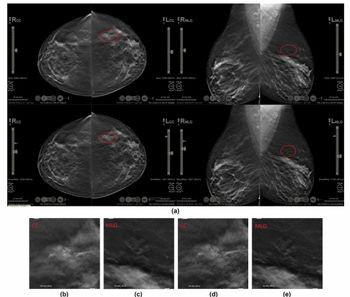
The study authors pointed out that DM-guided biopsies and DBT-guided biopsies had the same malignancy rate at 16 percent.
“ … There were no significant differences in the histopathologic outcomes between the two methods, including the final malignancy rates, suggesting that DBT-guided biopsies are equally effective while offering advantages in terms of efficiency and radiation safety,” noted lead study author Eralda Mema, M.D., who is affiliated with the Department of Radiology at Weill Cornell Medicine in New York City, and colleagues.
Three Key Takeaways
• Improved efficiency with DBT guidance. DBT-guided stereotactic biopsies were modestly faster than DM-guided procedures (14 vs. 15 minutes), suggesting incremental workflow gains in busy breast imaging practices.
• Lower radiation exposure without compromising dose. DBT-guided biopsies were associated with significantly reduced radiation exposure (5.7 vs. 8.6) and lower mean glandular dose (13 mGy vs. 15 mGy), supporting a potential radiation safety advantage.
• Comparable diagnostic performance. Malignancy rates were identical at 16 percent with no significant differences in histopathologic outcomes, indicating DBT guidance maintains diagnostic accuracy while improving efficiency and radiation metrics.
The researchers noted that shorter procedure times and 2 mGy reduction in average radiation dose with DBT guidance can reduce the “considerable discomfort” associated with stereotactic biopsy procedures and ease patient fears about radiation exposure.
“This could provide added reassurance to patients concerned about radiation during mammographic-guided procedures and potentially improve future compliance with screening mammography,” added Mema and colleagues.
(Editor’s note: For related content, see “FDA Clears AI-Powered Triage Platform for Digital Breast Tomosynthesis,” “Current Perspectives on Digital Breast Tomosynthesis in Women with Dense Breasts” and “Mammography Study: Multi-Stage Use of AI for DBT Exams Yields Over 21 Percent Increase in Breast Cancer Detection.”)
Beyond the inherent limitations of a single-center retrospective study, the authors conceded a lack of randomization for the choice of modality for biopsy guidance and that approximately 75 percent of the biopsies in the study were performed with DM guidance. The researchers also noted the reduced likelihood of post-fire images being obtained for DBT-guided biopsies and the exclusion of patients who had multiple biopsies in the same breast for suspicious calcifications.