Register Now: Image-Based Risk: The Next Frontier in Breast Cancer Screening
|Articles|May 14, 2008

Siemens showcases dual energy software, applications

Siemens Healthcare cast its dual-source CT scanner Somatom Definition as the clinical pioneer of multienergy scanning, presenting its Optimum Contrast software as the means for improving dual-energy images created using injected contrast agents. Image optimization algorithms process data obtained at different energy levels -- 80 kVp to 140 kVp -- to create optimal image quality for the kinds of structures being displayed (soft tissue and vasculature, for example), according to the company.

Siemens Healthcare cast its dual-source CT scanner Somatom Definition as the clinical pioneer of multienergy scanning, presenting its Optimum Contrast software as the means for improving dual-energy images created using injected contrast agents. Image optimization algorithms process data obtained at different energy levels - 80 kVp to 140 kVp - to create optimal image quality for the kinds of structures being displayed (soft tissue and vasculature, for example), according to the company.

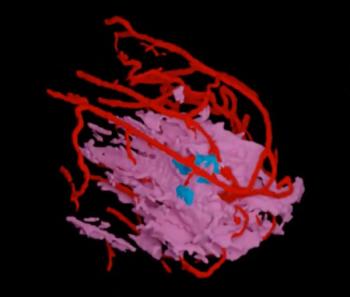
On May 13, from its booth on the exhibit floor of the MDCT symposium, Siemens also showcased 10 dual-energy applications, including syngo DE Heart PBV (Perfusion Blood Volume), which color marks nonperfused parts of the myocardium. Its DE CT application detects the presence and level of stenosis, as well as the location and extent of reduced perfusion in the myocardium. Syngo DE Lung Vessels helps evaluate patients suspected of having a pulmonary embolism, characterized by a sudden occlusion of blood vessels in the lungs. The "Lung Isolation" application isolates the entire organ to assess the perfusion situation without obstructing adjacent organs. Syngo DE Brain Hemorrhage helps distinguish between new and old cerebral hemorrhages.


Related to this article

See the Real-World Impact of AI in Radiology
AI has to do more than show potential. It has to deliver measurable results.The Rad AI Outcomes and Market Impact Compendium brings together real-world clinical, operational and financial evidence from health systems, academic medical centers and radiology practices using Rad AI Reporting, Impressions and Continuity.Explore results including 60+ minutes saved per radiologist shift, a 47% reduction in report error rates, 70%+ patient follow-up adherence and >7x ROI — plus, case studies showing how organizations are translating AI into greater capacity, quality and financial performance.See what AI built specifically for radiology can deliver in practice.