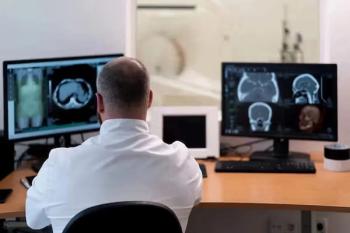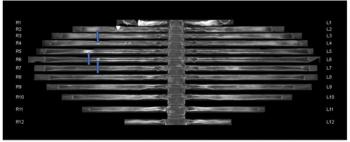
The use of adjunctive CT bone reading software in women with breast cancer detected between 8 to 22 percent more metastatic lesions for reviewing radiologists and reduced CT interpretation time by 50 percent or more, according to a new study.
While the favored device for PACS images is the common cathode ray tube display, these popular, reliable, high-resolution monitors are not perfect. One problem is their curved surface. Radiographs were previously viewed on a flat light box.
While the favored device for PACS images is the common cathode ray tube display, these popular, reliable, high-resolution monitors are not perfect.
One problem is their curved surface.
Radiographs were previously viewed on a flat light box. Presenting them in digital form on a CRT with a curved surface will cause distortions, said Hans Roehrig, a professor of radiology at the University of Arizona.
"The problem is similar to making flat maps of the spherical earth," he said.
Distortions of this type can lead to clinical problems in procedures in which exact anatomical dimension is critical. Millimeter precision is necessary in stereotactic breast biopsies, orthopedic surgery, and radiation oncology.
Flat-panel LCD displays are one alternative to curved CRTs, but LCD image clarity depends on viewing angle, Roehrig said. Viewed straight ahead, on-axis contrast ratios can be as high as 300:1. But if the viewer moves off axis either side to side or up and down, the contrast ratio drops significantly, he said.
Roehrig recently evaluated a second alternative, the flat-surface CRT. He compared the performance of these flat-surface CRTs with traditional curved-surface CRTs. Measurements on the monitors, which were identical in all other respects (1600 x 1200 pixels, calibrated to the DICOM Grayscale Display Function Standard), included dynamic range, display function, veiling glare, and spatial uniformity.
The curved and flat CRTs were found to be similar in many respects based on physical evaluation. But, overall, the curved CRT fared better in terms of signal-to-noise ratio, uniformity, and veiling glare, according to Roehrig.
Paradoxically, four of four radiologists in the study preferred the flat CRT.
"The physical data generally showed that the flat CRT was slightly inferior in performance compared with the curved CRT, yet the radiologists seem to prefer the flat CRT and felt that diagnostic information was not impaired," Roehrig said. "It seems that the benefits of less glare and fewer geometric distortions may induce radiologists to sacrifice some of the advantages in display performance."
In order to determine if this trade-off is clinically acceptable, Roehrig recommends a more elaborate receiver operating characteristic (ROC) study.
"An ROC study would determine if there's a performance cutoff point at which the curved CRT yields better performance than the flat CRT despite the subjective preference of the radiologists," he said.
Stay at the forefront of radiology with the Diagnostic Imaging newsletter, delivering the latest news, clinical insights, and imaging advancements for today’s radiologists.
Subscribe