Does Photon-Counting CT Offer Bigger Advantages in Bigger Patients?
Emerging research suggests that the benefits of photon-counting CT may be more pronounced in patients with obesity.
We often discuss photon-counting CT (PCCT) in terms of ultra-high spatial resolution, spectral imaging and impressive anatomical detail.
However, one of its most important advantages may emerge under the most challenging imaging conditions.
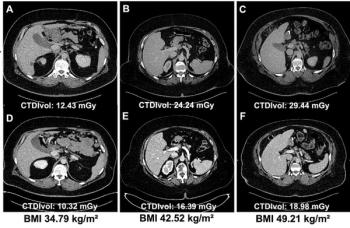
Obesity is a perfect example. A new study published in Radiology compared PCCT with conventional energy-integrating detector CT (EID-CT) in 51 patients with obesity using an intra-individual study design.
The results are quite remarkable.
• Radiation dose. Researchers noted an approximately 30 percent lower volume computed tomography dose index (CTDIvol) and 26 percent lower dose length product (DLP) with PCCT.
• Aortic SNR. The aortic signal-to-noise ratio (SNR) was approximately 49 percent higher with PCCT.
• Liver SNR. The liver SNR was approximately 17 percent higher with PCCT.
• Image quality. PCCT demonstrated significantly better overall quality, sharpness, contrast, and fewer artifacts.
Perhaps the most interesting finding was that the advantage in SNR increased with body mass index (BMI).
This is what technological progress should look like in everyday clinical practice. It’s not simply producing spectacular images under ideal conditions. It is delivering better, more reliable images in patients who are technically difficult to examine.
For decades, CT imaging has involved a compromise between radiation exposure and image quality. Photon-counting CT is progressively changing that relationship. Its improved photon efficiency can be used to reduce radiation dose, improve image quality, or achieve both simultaneously.
This study suggests that the benefits may become particularly relevant as patient size increases.
Of course, this was a relatively small, retrospective study involving thoracoabdominal CT. Its findings cannot automatically be extrapolated to every clinical application or scanner configuration.
However, the message is important. The real value of PCCT is not just that it performs better under ideal conditions, but its advantages may become even more relevant when imaging conditions are far from ideal.
Dr. Cademartiri is the director of advanced cardiovascular imaging and photon-counting CT at the Scientific Institute for Research, Hospitalization, and Healthcare Synlab Diagnostic Network in Naples, Italy. He is also a consultant in advanced cardiovascular imaging at CDI/Centro Diagnostico Italiano in Milan, Italy.
Reference
- Hegmanns J, Zensen S, Rosok D, et al. Intraindividual comparison of radiation dose and image quality: photon-counting versus energy-integrating detector CT in obesity. Radiology. 2026;321(1).:e260573. doi: 10.1148/radiol.260573.
(Editor’s note: This blog is adapted with permission from Dr. Cademartiri’s original LinkedIn post available at:
Related to this article