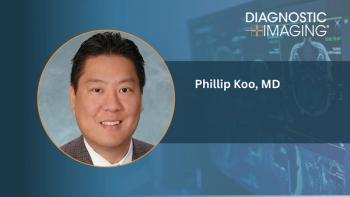
In a recent interview, Phillip Koo, MD, discussed emerging trends with AI, theranostics and empowered patients, and how these developments may lead to challenges and potential opportunities for radiologists and nuclear medicine physicians.
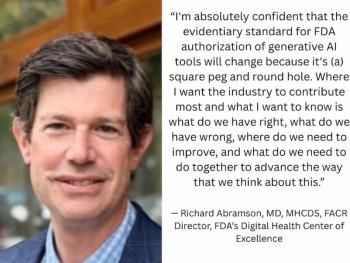
How will generative AI software be evaluated by the FDA in the future? What’s next for point-of-care ultrasound? What steps have been successful in facilitating adoption of AI applications across enterprise systems? Leaders in radiology and health care will be discussing these topics and more at the upcoming HLTH USA conference.
In the third of a three-part podcast episode, Wendie Berg, MD, PhD, FACR, FSBI, Manisha Bahl, MD, and Amy Patel, MD discuss recent developments with autonomous AI in breast imaging and share their perspective on the overall potential of AI to help mitigate the radiologist shortage.
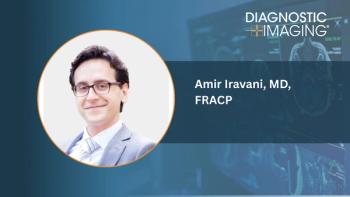
In a recent interview, Amir Iravani, MD, FRACP, discussed the radiotherapeutic agent 177Lu-edotreotide and new dosimetry data from the COMPETE trial that was recently presented at the ASTRO conference.
In the second of a three-part podcast episode, Wendie Berg, MD, PhD, FACR, FSBI, Manisha Bahl, MD, and Amy Patel, MD discuss how to handle disagreements with adjunctive AI in breast imaging, whether to include AI assessments in PACS, and whether patients should pay for the use of adjunctive AI.
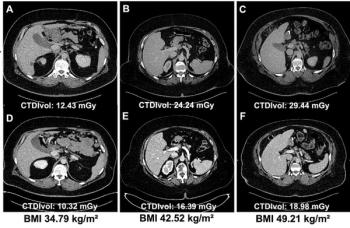
In addition to providing higher SNRs in vascular structures and parenchymal organs than energy-integrating detector CT, photon-counting CT enabled an approximately 30 percent reduction in volume CT dose index (CTDIvol) for patients with obesity, according to a new study.
Facilitating enhanced 3D visualization of skeletal anatomy, the BoneEnhance machine learning module reportedly provides automated segmentation of bone and surrounding tissues for the Accuro XV ultrasound system.
Newly published preclinical research signals a substantial conceptual shift with a potential role of photon-counting CT in targeting specific biological processes.