“In this longitudinal study of invasive breast cancer, high GTC assessed at preoperative (ultrasound) was independently associated with an increased risk of ipsilateral or contralateral breast cancer compared with low GTC,” noted lead study author Tingting Deng, MD, who is affiliated with the Department of Ultrasound at the State Key Laboratory of Oncology in South China and the Sun Yat-sen University Cancer Center in Guangzhou, China, and colleagues.
Could GTC Assessment on Breast Ultrasound Bolster Risk Stratification for Breast Cancer Recurrence?
While noting the future studies are necessary to validate the current findings, the study authors suggested that GTC evaluation on pre-op breast ultrasound could have a significant impact in risk stratification and possible monitoring for those undergoing treatment for invasive breast cancer.
“If this marker is validated in future studies, patients with high GTC at preoperative (ultrasound) may potentially benefit from tailored surveillance strategies, including supplemental imaging approaches. Moreover, because breast (ultrasound) allows repeated, radiation-free evaluation, serial assessment of GTC may enable longitudinal monitoring of breast tissue characteristics over time,” posited Deng and colleagues.
Three Key Takeaways
- High glandular tissue component on preoperative ultrasound may flag patients at elevated risk for new breast cancer. In this 8,886-patient retrospective study from two institutions, high GTC was independently associated with roughly double the risk of ipsilateral or contralateral breast cancer. The hazard ratios were 1.93 and 2.02 with a median follow-up of 6.8 and 8 years.
- The association appears specific to breast cancer events in the breast itself, not systemic disease. GTC showed no significant link to regional or distant recurrence (HRs of 0.89 and 1.2). This suggests its value lies in breast-level surveillance planning rather than predicting metastatic risk.
- GTC assessment could support more personalized surveillance after treatment. If this marker is validated in future studies, patients with high GTC on preoperative ultrasound may benefit from tailored surveillance strategies, including supplemental imaging. Given that breast ultrasound is radiation-free and repeatable, serial GTC assessment may also allow longitudinal monitoring of breast tissue characteristics over time.
There was no association between GTC and regional or distant recurrence at Institution A (HR of 0.89) nor Institution B (HR of 1.2), according to the study authors.
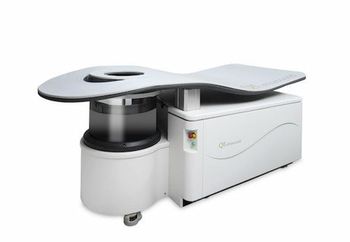
(Editor’s note: For related content, see “CMS Reverses Decision and Issues New Outpatient CPT Code for Ultrasound-Based QTscan,”“A ‘Wake-Up Call’ for BI-RADS 3 Audits” and “Can Breast Ultrasound AI Help Reduce Benign Biopsies?”)
Beyond the inherent limitations of a retrospective study, researchers noted the potential for inter-institutional variability in GTC assessment methods and the inclusion of ipsilateral and contralateral breast cancer in the study’s primary endpoint. They also conceded that the cohort, exclusively comprised of Asian women, hampers extrapolation of the study findings to broader populations