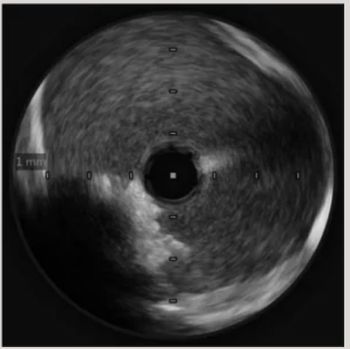
The Evident Vascular Guidance System and Evident peripheral imaging catheters reportedly offer enhanced image clarity and workflow efficiencies for intravascular ultrasound.
In a recent interview, Gadi Lalazar, MD, discussed new research demonstrating the capability of natural language processing (NLP) to enhance recognition of incidental hepatic steatosis in ultrasound reports.
When there are incidental findings of fatty liver disease, there may be a very significant gap between what is reflected in abdominal ultrasound reporting and what is documented in electronic health records (EHRs), according to new research presented at the Liver Meeting.
For the study, researchers utilized Briya AIRE (Briya), a clinical-grade artificial intelligence (AI) platform to perform a natural language processing (NLP) analysis of 28,795 ultrasound radiology reports for 20,422 patients.
The researchers found that only 22 percent of patients with metabolic dysfunction-associated steatotic liver disease (MASLD) had a documented diagnosis in EHRs.
While 85 percent of these patients had evidence of fatty liver documented in the ultrasound radiology reports, only 7 percent was captured by ICD-10 codes and ultrasound reports, according to the study authors. Employing NLP analysis, the researchers were able to confirm an additional 4,036 patients with confirmed fatty liver disease.
In a recent interview with Diagnostic Imaging, senior study author Gadi Lalazar, MD, shared his thoughts on the research findings.
"The main surprise was how many patients we picked up using the system that we would not have picked up otherwise, and that's both exciting and a little disconcerting. You realize that if you rely on diagnostic coding, then you pick up a fifth of your patients,” emphasized Dr. Lalazar, the director of hepatology and head of the liver unit at Shaare Zedek Medical Center in Jerusalem, Israel.
Given the continued increase in imaging volume, Dr. Lalazar suggested that AI may have a significant impact in harmonizing fragmented data to ensure timely recognition of incidental findings and appropriate intervention.
“We need safeguards to make sure that we're not missing patients with important pathologies. AI is being incorporated in real time to pick up life-threatening pathologies, and we have these things in place already for timely intervention. But I think also we need them for more chronic conditions so that we don't miss pathologies that are not necessarily accounted for because the study wasn't done for that purpose," maintained Dr. Lalazar.
(Editor’s note: For related content, see “
Reference