In the second of a two-part podcast episode, Kalpana Kanal, PhD, and Mahadevappa Mahesh, PhD, discussed the possible impact of new research showing significant declines in CT radiation dosing over the past decade, future research directions and the potential for indication-based diagnostic reference levels (DRLs) in the future.
In the first of a two-part podcast episode, Kalpana Kanal, PhD, and Mahadevappa Mahesh, PhD, reviewed key findings from a study examining CT radiation dosing over the past decade and shared insights from their experience for ensuring optimal radiation dosing for CT scans.
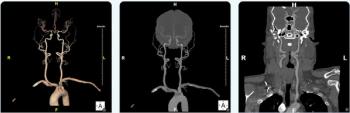
The AI-powered NeuroDR software reportedly removes bone, soft tissue and veins from CTA scans and provides subsequent 3D MIP views and curved planar reformatted views of carotid and vertebral arteries.
Newly published preclinical research signals a substantial conceptual shift with a potential role of photon-counting CT in targeting specific biological processes.
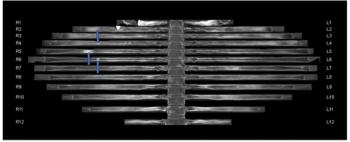
The use of adjunctive CT bone reading software in women with breast cancer detected between 8 to 22 percent more metastatic lesions for reviewing radiologists and reduced CT interpretation time by 50 percent or more, according to a new study.