Catch up on the top radiology content of the past week.
Catch up on the top radiology content of the past week.
Welcome to Diagnostic Imaging’s Weekly Scan, which offers an opportunity to catch up on the most well-viewed radiology content of the past week.
New research published in the Radiology journal earlier this week suggests that MRI-guided reconstruction may facilitate improved evaluation of amyloid brain positron emission tomography (PET) scans.
Comparing ordered-subset expectation-maximization (OSEM) reconstruction of PET imaging versus MRI-guided PET reconstructions for 120 patients, researchers noted
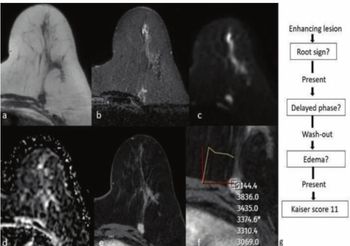
In another MRI study published in the European Journal of Radiology, researchers found that the
In a recent interview with Diagnostic Imaging, Stamatia Destounis, MD, FACR, shared her perspective on
For patients with metastatic castration-resistant prostate cancer (mCRPC), researchers found that (177Lu)Lu-PSMA-I&T led to a
In the first of a two-part Reading Room podcast episode, Lauren Nicola, MD, Christoph Wald, MD, PhD, MBA, and Peter Shen discussed