
Commentary|Podcasts|October 28, 2026
The Reading Room Podcast: Emerging Research and Current Perspectives on CT Radiation Dosing, Part 1
Author(s)Jeff Hall
In the first of a two-part podcast episode, Kalpana Kanal, PhD, and Mahadevappa Mahesh, PhD, reviewed key findings from a study examining CT radiation dosing over the past decade and shared insights from their experience for ensuring optimal radiation dosing for CT scans.
Advertisement
Recently published research revealed significant decreases in radiation dosing for computed tomography (CT) scans over the past decade in adults.
Reviewing a total of 5,234,285 adult CT exams obtained in 2025 and comparing the findings to a similar study performed in 2014, researchers found the following declines in national volume CT dose index (CTDIvol) diagnostic reference levels (DRLs):
• a 31.2 percent decrease for contrast-enhanced chest CT exams;
• a 26.7 percent decrease for non-contrast chest CTs;
• a 25 percent decrease for non-contrast cervical spine CTs; and
• a 15 percent decrease for contrast-enhanced neck CTs.1,2
What A New Study Revealed About CT Radiation Dosing Over the Past Decade
Overall, the study authors found a 21.8 percent decrease in DRLs for CT exams performed in 2025 in comparison to CT scans obtained in 2014.1,2 In a
“The one message I want to give here is we are not necessarily saying the lower the dose, the better. You have to balance the dose with the image quality, so we don't want to go too low in dose either. We want to have an optimized image quality, but the fact that we are seeing 21.8 percent decrease in dose in the top 10 protocols, when comparing to the 2017 DRL paper, I think is great because we are doing something right across the country. We are moving in the right direction for sure, and there are many reasons for that. … But I think it's a good thing that this dose has gone down,” noted Dr. Kanal, a professor of radiology at the University of Washington in Seattle.
Pertinent Considerations with the Recent CT Radiation Dosing Study
Mahadevappa Mahesh, MS, PhD, FAAPM, FACR, a co-author of the study, said the judicious approach to CT radiation dosing wasn’t isolated to larger academic institutions. He pointed out during the
Dr. Mahesh added that improvements in CT scanner technology (such as automatic tube current modulation (ATCM) across manufacturers has had a significant impact over the past decade in facilitating optimal radiation dosing.
“Even a community hospital just turning on the dose modulation immediately drops the dose by 20 to 30 percent easily on average,” posited Dr. Mahesh, a professor of radiology and cardiology at the Johns Hopkins University School of Medicine.
For more insights from Dr. Kanal and Dr. Mahesh, listen below or
References
- Kanal KM, Frush DP, Gingold E, et al. A decade of change in adult CT radiation doses: 2025 U.S. diagnostic reference levels. Radiology. 2026;320(1).
https://doi.org/10.1148/radiol.260322 .
2. Kanal KM, Butler PF, Sengupta D, Bhargavan-Chatfield M, Coombs LP, Morin RL. Radiology. 2017;284(1):120-133.
(Editor’s note: This podcast episode was drawn from a previously published video interview at:
Advertisement
Related to this article

Newly published preclinical research signals a substantial conceptual shift with a potential role of photon-counting CT in targeting specific biological processes.
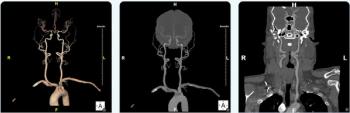
The AI-powered NeuroDR software reportedly removes bone, soft tissue and veins from CTA scans and provides subsequent 3D MIP views and curved planar reformatted views of carotid and vertebral arteries.
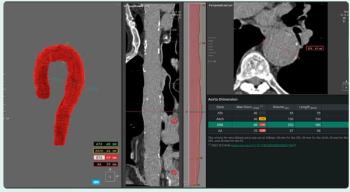
The newly cleared Aview Aorta Metrics software reportedly offers automated segmentation of aortic regions and classification of aortic zones based on chest CT images.
Catch up on the top AI-related news and research in radiology over the past month.
Catch up on a variety of FDA news in radiology from the past week.
Catch up on the top radiology content of the past week.
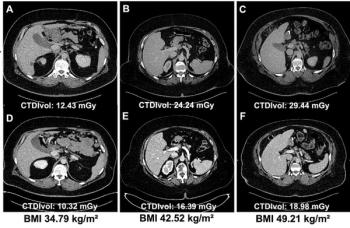
In addition to providing higher SNRs in vascular structures and parenchymal organs than energy-integrating detector CT, photon-counting CT enabled an approximately 30 percent reduction in volume CT dose index (CTDIvol) for patients with obesity, according to a new study.
The FFR-IQ software recently demonstrated a 92.2 percent sensitivity for non-invasive estimation of fractional flow reserve (FFRC) based on coronary CT angiography (CCTA) scans.
Advertisement
Advertisement
Trending on Diagnostic Imaging
1
Webinar: Current Perspectives and Recommendations on Ensuring Cybersecurity
2
FDA Clears CTA-Based AI Software for Enhanced Visualization of Head and Neck Arteries
3
Advances in AI — October 2026
4
FDA Clears AI-Enabled Chest CT Software for Aortic Analysis
5