

Commentary|Podcasts|September 30, 2026
The Reading Room Podcast: Current Perspectives, Challenges and Possibilities with AI in Breast Imaging, Part 1
Author(s)Jeff Hall
In the first of a three-part podcast episode, Wendie Berg, MD, PhD, FACR, FSBI, Manisha Bahl, MD, and Amy Patel, MD share insights on the utility of AI in breast imaging with respect to potential advantages, current concerns and future directions.
Advertisement
Noting the limited availability of MRI for breast imaging, Wendie Berg, MD, PhD, said in a
“I know it's been shown in several research studies to greatly enrich the yield from MRI screening. Normally, we expect the first time (to) find around 16 cancers per 1000. In patients where they've been picked as being higher risk by AI tools, that goes up to 60 or even higher per 1000 rate of cancer detection on the MRI, which would be great because at the present time, MRI is a very limited resource. In our center, for example, it is at least a six-month wait for a screening MRI appointment, and we're an academic center in a major city, and it's you know relatively available compared to many other places in the country,” noted Dr. Berg, a distinguished professor and Dr. Bernard Fisher Chair for Breast Cancer Research at the University of Pittsburgh School of Medicine.
The Shift in Evidence Support for AI in Breast Imaging
Manisha Bahl, MD, MPH, FSBI, pointed out that the research on AI in breast imaging has moved beyond simulation studies and retrospective date to more prospective research and evidence of benefit in real-world applications.
“For example, the
Could AI Exacerbate Problems with Health Equity?
While Amy Patel, MD, is excited about the potential of AI for improving the efficiency of breast imaging workflows, she expressed concern about reimbursement challenges with AI and the possible adverse impact on health equity.
“ … Are we deepening the disparities having AI products for some and algorithms for some, and not for others? … A lot of these critical access care hospitals are trying to keep the doors open, and so to justify obtaining an algorithm that isn't reimbursing, they're probably not going to end up investing in the product, even if the science and the evidence is incredibly compelling for increased cancer detection,” explained Dr. Patel, the medical director of the Breast Care Center at Liberty Hospital in Liberty, Missouri, and chair of the American College of Radiology’s (ACR) Radiology Advocacy Network and RADPAC.
What About the ‘Black Box’ Challenge with AI in Breast Imaging?
Dr. Berg also noted concerns with AI including comparisons to prior mammography exams, missing findings “that are relatively more benign appearing” and the overall black box nature of AI with what it sees on breast imaging.
“What is the overlap between the patients who have cancer identified because they had AI at higher risk compared to using breast density plus other risk factors? How much of those overlap?,” questioned Dr. Berg, the chief scientific advisor for Dense Breast-Info.org. “Are those the same patients or are there actually a lot of women with dense breasts who would get left, you know, out of the loop for supplemental screening if we relied on AI to identify them. That's something that we just don't have all the answers to yet.”
Why Ongoing Monitoring is Critical with AI
Noting concerns about generalizability, automation bias, and equity with AI in breast imaging, Dr. Bahl emphasized the importance of external validation and ongoing monitoring.
“I think it's important that we radiologists don't become over reliant on AI, and that this technology benefits all of our patients, not just a subset. Ultimately, a high-performing algorithm isn't enough. The question is whether AI meaningfully improves patient care and outcomes,” posited Dr. Bahl, a breast radiologist at Massachusetts General Hospital.
For more insights from Dr. Berg, Dr. Bahl and Dr. Patel, listen below or
Advertisement
Related to this article
In the second of a three-part podcast episode, Wendie Berg, MD, PhD, FACR, FSBI, Manisha Bahl, MD, and Amy Patel, MD discuss how to handle disagreements with adjunctive AI in breast imaging, whether to include AI assessments in PACS, and whether patients should pay for the use of adjunctive AI.

Catch up on the top radiology content of the past week.
Catch up on the top radiology content of the past week.
Catch up on the top radiology content of the past week.
Catch up on the most well-viewed video interviews from Diagnostic Imaging in September 2026.
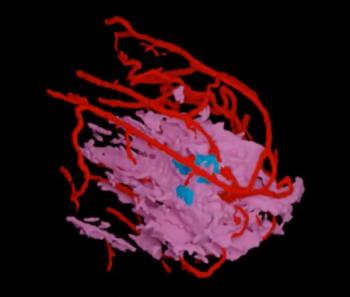
Assessing breast MRI scans, pathology and clinical data, the AI-powered TumorSight Risk software reportedly provides five- and 10-year risk for breast cancer recurrence for women with HR+, HER2-negative stage I-IIIA breast cancer.
In the third of a three-part podcast episode, Wendie Berg, MD, PhD, FACR, FSBI, Manisha Bahl, MD, and Amy Patel, MD discuss recent developments with autonomous AI in breast imaging and share their perspective on the overall potential of AI to help mitigate the radiologist shortage.
In a recent interview, Francesco Giganti, MD, PhD, discussed findings from a recent multicenter study demonstrating the ability of an AI software to provide significant clarity to initial PI-RADS 3 assessments on MRI and facilitate a nearly 19 percent reduction in unnecessary prostate biopsies.
Advertisement
Advertisement
Trending on Diagnostic Imaging
1
The Reading Room Podcast: A Closer Look at New Research on 177Lu-Edotreotide for Treating GEP-NETs
2
FDA Clears MRI-Based AI Software for Prognostic Evaluation of Patients with Mild Cognitive Impairment
3
How AI, Theranostics and More Empowered Patients Have Led to Significant Changes in Radiology
4
See the Real-World Impact of AI in Radiology
5