

News|Articles|September 29, 2026
ASTRO: What New Phase 3 Research Reveals About SBRT for Patients with Localized Prostate Cancer
Author(s)Jeff Hall
For patients with localized prostate cancer, stereotactic body radiotherapy (SBRT) offered comparable freedom from biochemical/clinical failure at eight years and nearly 40 percent lower urinary incontinence in comparison to radical prostatectomy, according to research presented at the ASTRO conference.
Advertisement
Could stereotactic body radiotherapy (SBRT) be a viable alternative to radical prostatectomy in patients with localized prostate cancer (PCa)?
For a phase 3, randomized controlled trial, recently presented at the
The study authors found that 94.8 percent of the SBRT cohort achieved freedom from biochemical/clinical failure (BCF) at five years in comparison to 94.1 percent for the radical prostatectomy group. Researchers also saw no statistically significant difference with freedom from BCF at eight years (91.2 percent for the SBRT group and 83.7 percent for those who had a radical prostatectomy.
“With long-term follow-up, both prostatectomy and SBRT achieved excellent biochemical control in patients with (localized) prostate cancer. These findings support SBRT as an effective non-surgical treatment option with comparable long-term disease control to prostatectomy,” emphasized lead study author Nicholas van As, MD, MB, the medical director at the Royal Marsden Hospital in London.
Patients in the SBRT cohort had a nearly 40 percent lower rate of self-reported urinary incontinence (defined as use of one urinary pad) at five years in contrast to patients in the radical prostatectomy arm of the study (8.3 percent vs. 48 percent), according to the study authors.
The researchers noted comparable grade 0/1 gastrointestinal (GI) side effects for both cohorts and one case of a grade 2 or higher side effect in the SBRT group at five years. The study authors also pointed out similar percentages of grade 0/1 genitourinary (GU) side effects and a low number of grade 2 or higher side effects (one case in the radical prostatectomy group and two cases in the SBRT cohort.
“The randomized findings support SBRT as an effective non-surgical treatment option and there were low … rates of side effects in both arms. … I therefore think all patients who are considering a radical prostatectomy should be given information about SBRT before they make their treatment decisions,” added Dr. Van As during an ASTRO press briefing.
Reference
- Van As N, Patel J, Tree A, et al. Efficacy of radical prostatectomy versus stereotactic body radiotherapy (SBRT) for localized prostate cancer: results from an international phase III randomised controlled trial (PACE-A). Presented at the American Society for Radiation Oncology (ASTRO) Annual Meeting, September 26-September 30, 2026, Boston. Available at:
https://amportal.astro.org/sessions/pl-01-22946/efficacy-of-radical-prostatectomy-versus-stereotactic-body-radiotherapy-sbrt-for-localised-pr-114308 .
Advertisement
Related to this article

In a recent interview, Phillip Koo, MD, discussed emerging trends with AI, theranostics and empowered patients, and how these developments may lead to challenges and potential opportunities for radiologists and nuclear medicine physicians.
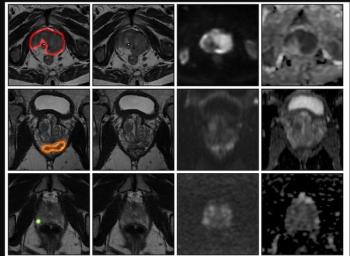
An AI model for prostate MRI offered an 89 percent AUC for prostate cancer detection in external validation testing, according to a newly published international multicenter study.

In a recent episode of our Molecular Imaging in Focus series, Jack Andrews, MD, discussed pertinent findings from a recent intra-patient comparative study of PSMA PET agents in men with recurrent prostate cancer presented at the recent ASTRO conference.

How will generative AI software be evaluated by the FDA in the future? What’s next for point-of-care ultrasound? What steps have been successful in facilitating adoption of AI applications across enterprise systems? Leaders in radiology and health care will be discussing these topics and more at the upcoming HLTH USA conference.

In the third of a three-part podcast episode, Wendie Berg, MD, PhD, FACR, FSBI, Manisha Bahl, MD, and Amy Patel, MD discuss recent developments with autonomous AI in breast imaging and share their perspective on the overall potential of AI to help mitigate the radiologist shortage.

In a recent interview, Amir Iravani, MD, FRACP, discussed the radiotherapeutic agent 177Lu-edotreotide and new dosimetry data from the COMPETE trial that was recently presented at the ASTRO conference.
In the second of a three-part podcast episode, Wendie Berg, MD, PhD, FACR, FSBI, Manisha Bahl, MD, and Amy Patel, MD discuss how to handle disagreements with adjunctive AI in breast imaging, whether to include AI assessments in PACS, and whether patients should pay for the use of adjunctive AI.

The BiPASS program, which combines 68Ga PSMA PET imaging with prostate MRI prior to the use of prostate biopsy, is slated to be evaluated in an impending phase 3 trial.
Advertisement
Advertisement
Trending on Diagnostic Imaging
1
FDA Clears First MRI-Derived AI Software for Assessing Breast Cancer Recurrence Risk
2
How AI, Theranostics and More Empowered Patients Have Led to Significant Changes in Radiology
3
MRI Study Links Tightness of High-Convexity Sulci to Higher Risk of Cognitive Decline in Older Adults
4
See the Real-World Impact of AI in Radiology
5