
Blog|Articles|November 16, 2026
A Good Story for the Radiologist
Author(s)Eric Postal, MD
More effort and detail on a clinical history may spark reciprocal diligence on imaging interpretation and possibly facilitate earlier detection.
Advertisement
It’s practically a rite of passage for medical school students. You get bombarded with books and movies about other med students before you, real and fictional. Maybe you find some on your own. One of the ones I liked was Michael Crichton’s Travels, which included some tales of his time as a med student at Harvard.
He wrote about being directed to interview specific patients for better understanding of their conditions. “Go see Mrs. Jones. She’s got a good story for diabetes.” While plenty of health situations don’t perfectly match what textbooks say and many diagnoses are complicatedly mixed, sometimes things are nice and straightforward, easily understood by a newbie.
The value of a good story diagnosis endures throughout one’s career. I saw a great example during my first rotation as an intern, which was, for better or worse, in the ER of a county hospital. To call the place hectic would be a charitable understatement. It hosted a constant stream of patients of varying “realness.” Mixed in with a bunch of people who really didn’t need to be in the ER were occasional folks with genuine medical emergencies.
Nothing showcased this better than the pool of potential cardiac cases. A lot of patients came in with chest pain, feeling faint, palpitation, etc. The vast majority didn’t turn out to have anything actionable. They wound up getting admitted for 24-hour observation in the telemetry unit and were subsequently sent home.
Toward the end of my month, however, I saw a “real” case. I never found out the details, but somehow the experienced staff immediately knew they were dealing with a true heart attack, and they jumped on it with an intensity I hadn’t seen thus far. The patient wound up in the CCU instead of telemetry and ultimately did well.
Only able to guess at what the ER staff perceived, I imagine the patient presented as a “good story” for a cardiac event via signs/symptoms, physical exam, an ECG straight out of the textbook and no ambiguity. That was in contradistinction to the vast majority of telemetry-bound patients I had seen thus far. They could have been cardiac, but probably weren’t, at least not emergently. Their management was ultimately along the lines of “can’t rule out,” “an abundance of caution,” etc.
The value of “good stories” in my subsequent work as a radiologist not only persisted, it massively increased. Unlike the ER folks I beheld, most diagnostic rads don’t personally see patients to hear them tell their own tales or conduct our own visual appraisal. The only story we get before we look at images is what the referring clinician tells us.
One afternoon this past week, I happened to field a few more chest CTAs than usual. Most had typically minimal clinical histories: “R/O PE,” or “D-dimer +”. A rad could read cases with histories like that all day long and never see a clot. He or she might grumble about it, but probably wouldn’t accuse any of them of being unnecessary scans. Pretty much anyone could have a pulmonary embolism (PE). Heck, they turn up as incidental findings in completely asymptomatic patients.
However, one of the CTs had a better “reason for exam”: “Right lower extremity swelling, worsening shortness of breath.” That is a “good story” for PE. Off the top of my head as I sat there, I could think of few other things that would cause that clinical presentation. It increased my suspicion that I would find one.
Did I? No, but I suspect that if I was being objectively measured for the time/effort I put into scrutinizing those pulmonary arteries, it would have been greater than for the other cases that hadn’t had stories as good.
That is just human nature. If you were brought into a room and told that there might be a hundred-dollar bill lying around somewhere in there, you would probably look for a bit. Finding nothing, you would eventually give up and leave. If, however, you were told there was definitely a hundy in there, you might persist till you found it. The more reason you are given to believe there is something to be found, the harder/longer you will try.
If, as a radiologist, I were in a position to address trainee physicians, their precursor med students, or even experienced clinical staff undergoing orientation at a new facility, this would probably be the point I would try hardest to get across. Tell my colleagues good stories whenever you can, and you will get better results from them.
Tell me you are getting a scan because “R/O path” or “pain,” and you are not giving me a good story. The only plot I am liable to come up with is that you have no idea and possibly no interest as to what is happening with your patient. You are getting the scan as a fishing expedition or maybe just because you think it needs to be on the record that you did something.
A good story doesn’t have to be super detailed. It might have been told many times before. Right lower quadrant pain, high white count, Rovsing’s or Blumberg’s sign may not ultimately mean any more than “R/O appy,” but they come across more seriously. I have seen enough fishing expeditions for “R/O appy” that I don’t feel any doubt when I call the appendix normal.
If, however, you tell me that other stuff, I can be looking at a textbook normal appendix and I might hesitate. Yes, it looks normal but how in the world can all those details in the good story you told me be wrong? Something has to be causing them. I might just spend another couple of minutes scrolling back and forth in my images and looking at the recons again. Maybe I will wind up finding something subtle that I would have missed otherwise.
Referrers who tell good stories to their radiologists (and other consultants) have a huge leg up on other clinicians. I would encourage a step beyond even that. As you do your work in the ER, ICU, or wherever else, keep eyes and ears out for colleagues who don’t convey good stories. When the opportunity presents itself, diplomatically show them the value of adopting your good habits. You might just wind up improving the care of a bunch of patients you will personally never see.
Advertisement
Related to this article
Through enhanced insights into atherosclerotic disease, complex coronary lesions and coronary stents, photon-counting CT provides an anatomical roadmap that may improve outcomes for interventional procedures.

Keeping defensiveness and ego at bay is just one of the attributes of those who consistently embrace learning from others over the course of one’s life.
While the P4 trial represents a landmark study on the use of CCTA guidance for percutaneous coronary intervention (PCI), there are pertinent caveats that warrant closer inspection.

Perspective and experience enable us to discern a reasonable explanation prior to boarding a rollercoaster of overreaction.
Emerging research suggests that the benefits of photon-counting CT may be more pronounced in patients with obesity.
Catch up on the top radiology content of the past week.
In the latest episode of her Breast Imaging in Focus series, Manisha Bahl, MD, MPH, FSBI, discussed new research demonstrating that cancer detection rate, sensitivity and positive predictive value (PPV) for digital breast tomosynthesis (DBT) all improved with age.
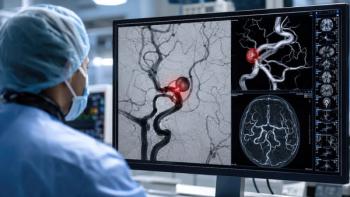
Uptunity | Aneurysm reportedly identifies suspected saccular brain aneurysms larger than 3 mm on head CTA and provides quantitative comparison between exams to assess changes in known aneurysms over time.
Advertisement
Advertisement
Trending on Diagnostic Imaging
1
Will PCCT Lead the Next Revolution in Interventional Cardiology?
2
Diagnostic Imaging’s Weekly Scan: November 8 — November 14
3
Breast Imaging in Focus: How Does Digital Breast Tomosynthesis Perform Across Different Age Groups?
4
FDA Clears CTA-Based AI Software for Brain Aneurysm Detection and Follow-Up
5