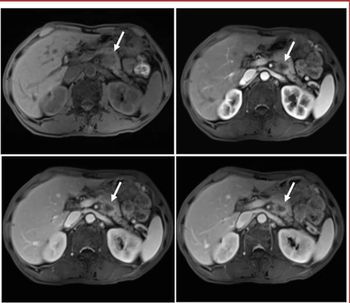
However, the researchers noted that the HKLC staging system had a higher linear trend (LT) than the HCLC system for quantifying survival differences between stages (10.919 vs. 8.201) and a higher C-index (83.5 percent vs. 81.8 percent)
Pointing out “significant heterogeneity” in patients staged as having intermediate or advanced HCC stages with the BCLC system, the study authors said the HKLC system offers improved clarity with disease extent.
“The Hong Kong Liver Cancer (HKLC) staging system was designed to increase the cohort stratification, reflecting a more nuanced approach to the extent of disease while slightly limiting the weight of liver function and disease etiology,” added Kasolowsky and colleagues.
Three Key Takeaways
1. BCLC staging system superiority. The Barcelona Clinic Liver Cancer (BCLC) staging system demonstrated the highest prognostic value for predicting overall survival in HCC patients undergoing transarterial chemoembolization (TACE), with the best likelihood ratio (26.639) and the lowest Akaike information criterion (317).
2. HKLC system offers greater stratification with respect to the extent of disease. While the BCLC system was the most applicable for HCC prognosis, the Hong Kong Liver Cancer (HKLC) staging system provided better differentiation of survival differences across stages.
3. Caution with HKLC in Western populations. The HKLC staging system was primarily developed using patients with hepatitis B virus (HBV)-related HCC, and its validation in Western populations remains uncertain, necessitating careful interpretation when applied outside its original cohort.
Emphasizing caution with respect to the HKLC system, the researchers said this staging system was primarily based on patients with hepatitis B virus (HBV)-related liver disease and noted a lack of clarity with validation of the system in Western populations.
The JIS system had the lowest LT (4.611), the lowest C-index (54.8 percent) and the second-highest AIC (449) out of the five HCC staging systems for prognostic stratification in patients treated with TACE, according to the study authors.
(Editor’s note: For related content, see “Current Perspectives on the BCLC Staging System for Hepatocellular Carcinoma,” “Can a CT Radiomics Model Improve Risk Assessment for Macrotrabecular-Massive Hepatocellular Carcinoma?” and “Emerging Model with Key MRI Feature Improves Prediction for Advanced Recurrence of Hepatocellular Carcinoma.”)
Beyond the inherent limitations of a single-center retrospective study, the authors acknowledged that the cohort included patients who received TACE as a first-line therapy, a second-line therapy or as a salvage treatment.