News|Articles|July 6, 2026

MRI and CT Data Show Improved Progression-Free Survival with Emerging Agent for Gastroenteropancreatic Neuroendocrine Tumors

Author(s)Jeff Hall

In comparison to everolimus, the peptide receptor radionuclide therapy (177Lu)Lu-edotreotide provided over a nine month longer median progression-free survival for patients with gastroenteropancreatic neuroendocrine tumours (GEP NETs), according to new phase 3 research.

Could thepeptide receptor radionuclide therapy (177Lu)Lu-edotreotide have an impact for patients with gastroenteropancreatic neuroendocrine tumors (GEP NETs)?

For a phase 3, open-label COMPETE study, recently published in the Lancet, researchers reviewed magnetic resonance imaging (MRI) and computed tomography (CT) data in 309 patients with treatment-naïve or previously treated unresectable grade 1 and 2 GEP NETs. The study authors noted that 207 patients were treated with (177Lu)Lu-edotreotide and 102 patients were treated with everolimus. The median follow-up for these cohorts were 27.5 months and 21.2 months respectively, according to the study.

Employing morphological imaging with MRI or CT (obtained every three months up to 30 months), the researchers found that patients treated with (177Lu)Lu-edotreotide had a median progression-free survival of 23.9 months vs. 14.1 months for patients treated with everolimus.

The study authors also pointed out a 15 percent overall reduction of treatment-related adverse effects with (177Lu)Lu-edotreotide in comparison to patients treated with everolimus (82 percent vs. 97 percent). Specifically, the researchers noted that the occurrence of at least one treatment-related grade 3-4 adverse event affected 18 percent of patients in the (177Lu)Lu-edotreotide cohort in contrast to 40 percent in the everolimus group.

“COMPETE is the first phase 3 trial to show superior efficacy and an improved harms profile of (177Lu)Lu-edotreotide monotherapy compared with targeted molecular therapy with everolimus in patients with advanced, progressive GEP NETs,” noted lead study author Thomas Walter, MD, who is affiliated with the Department of Medical Oncology at Hospital Edouard Herriot in Lyon, France, and colleagues.

Three Key Takeaways

• Superior efficacy in progression-free survival. (177Lu)Lu-edotreotide nearly doubled median PFS compared to everolimus (23.9 vs. 14.1 months), with a significantly higher objective response rate (22 percent vs. 4 percent), suggesting it may be a more effective first-line or subsequent therapy option for unresectable grade 1/2 GEP NETs.

• More favorable safety profile. Patients treated with (177Lu)Lu-edotreotide experienced fewer treatment-related adverse events overall (82 percent vs. 97 percent) and notably fewer severe (grade 3-4) events (18 percent vs. 40 percent), which could translate to better tolerability and quality of life during treatment.

• PRRT monotherapy may be sufficient without concomitant somatostatin analogues. The efficacy results suggest that combining PRRT with somatostatin analogue therapy isn't necessary to achieve treatment benefit over everolimus, potentially simplifying treatment regimens.

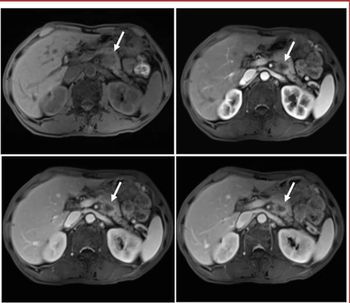
The researchers also found that the objective response rate (ORR) was significantly higher for (177Lu)Lu-edotreotide in comparison to everolimus (22 percent vs. 4 percent).

“Progression-free survival and ORR results from the COMPETE trial suggest that concomitant somatostatin analogue therapy is not required for PRRT treatment benefits compared with everolimus,” added Walter and colleagues.

(Editor’s note: For related content, see “Emerging PET/CT Radiopharmaceutical May Double Detection of Liver Foci in Patients with Neuroendocrine Tumors,” “Study Shows Promise of Emerging Radiotherapeutic Agent for Gastroenteropancreatic Neuroendocrine Tumors” and “Can a New MRI-Based Risk Stratification Model Bolster Survival Prediction with Pancreatic Ductal Adenocarcinoma?”)

In regard to study limitations, the authors noted the open-label study design and conceded that the largely White makeup of the cohort (greater than 80 percent) may thwart extrapolation of the findings to a broader patient population. The researchers also acknowledged that some patients may have been withdrawn from the study prior to the impact of PRRT being observed.


Latest CME