

Commentary|Podcasts|October 19, 2026
The Reading Room Podcast: A Closer Look at New Research on 177Lu-Edotreotide for Treating GEP-NETs
Author(s)Jeff Hall
In a new podcast episode, Amir Iravani, MD, FRACP, discusses emerging dosimetry data from the COMPETE trial for 177Lu-edotreotide and how it may help facilitate more personalized treatment for patients with gastroenteropancreatic neuroendocrine tumors (GEP-NETs).
Advertisement
For Amir Iravani, MD, FRACP, new dosimetry data from the COMPETE trial — which evaluated the radiotherapeutic agent 177Lu-edotreotide for gastroenteropancreatic neuroendocrine tumors (GEP-NETs) — signal the potential for more personalized targeted treatment in this patient population.
In a
For the study, Dr. Iravani and his colleagues reviewed multiple whole-body planar imaging obtained up to 96 hours post-dose and abdominal SPECT imaging obtained 24 hours after administration of each of the four cycles of treatment with 177Lu-edotreotide. The researchers also evaluated 177Lu-edotreotide by reviewing the radiotherapeutic agent’s dosimetry data for healthy organs in 17 patients and tumor dosimetry in nine patients.
Across four treatment cycles of 177Lu-edotreotide, the study authors found that the median kidney absorbed dose coefficients (ADC) remained relatively consistent (ranging from 0.44 to 0.47 Gy/GBq) with only a 14 percent intra-patient variability.
“If we do dosimetry at cycle one, we may not necessarily need to do that comprehensive dosimetry to kind of project what is going to be the cumulative absorbed dose within each patient after receiving all four cycles of treatment. Although all patients may need to have the dosimetry (as the) absorbed dose might be different, within each patient, we could basically project and predict what would be the cumulative dose to the kidney,” pointed out Dr. Iravani, an associate professor and vice chair of clinical research and theranostics within the Department of Nuclear Medicine and Theranostics at the David Geffen School of Medicine at the University of California, Los Angeles (UCLA).
While emphasizing the need for further research, Dr, Iravani said this dosimetry data suggests the potential of 177Lu-edotreotide to enable individualized treatment of GEP-NETs.
“The future direction would be personalizing this treatment and modifying and modulating the treatment based on the absorption dose to the normal organs and the tumors in the future with the hope that that approach would even improve upon what has been achieved from this agent in this trial,” suggested Dr. Iravani.
For more insights from Dr. Iravani, listen below or
(Editor’s note: This podcast was originally published as a video interview at the following link:
Advertisement
Related to this article
Catch up on the top radiology content of the past week.
Catch up on the latest imaging research presented at the recent American Society for Radiation Oncology (ASTRO) Annual Meeting.
In a recent episode of our Molecular Imaging in Focus series, Jack Andrews, MD, discussed pertinent findings from a recent intra-patient comparative study of PSMA PET agents in men with recurrent prostate cancer presented at the recent ASTRO conference.
Catch up on the top radiology content of the past week.
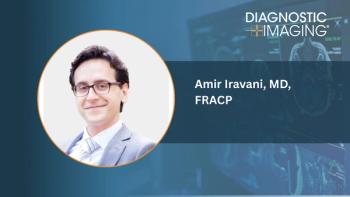
In a recent interview, Amir Iravani, MD, FRACP, discussed the radiotherapeutic agent 177Lu-edotreotide and new dosimetry data from the COMPETE trial that was recently presented at the ASTRO conference.
In the second of a three-part podcast episode, Wendie Berg, MD, PhD, FACR, FSBI, Manisha Bahl, MD, and Amy Patel, MD discuss how to handle disagreements with adjunctive AI in breast imaging, whether to include AI assessments in PACS, and whether patients should pay for the use of adjunctive AI.
Catch up on the top radiology content of the past week.
Catch up on key neuroradiology news and research from the past month, including recently published studies involving white matter hyperintensity findings on brain MRI, MRI-enhanced amyloid PET and the newly FDA-approved PET agent floretyrosine F18 for glioma imaging.
Advertisement
Advertisement
Trending on Diagnostic Imaging
1
FDA Clears First MRI-Derived AI Software for Assessing Breast Cancer Recurrence Risk
2
How AI, Theranostics and More Empowered Patients Have Led to Significant Changes in Radiology
3
MRI Study Links Tightness of High-Convexity Sulci to Higher Risk of Cognitive Decline in Older Adults
4
See the Real-World Impact of AI in Radiology
5