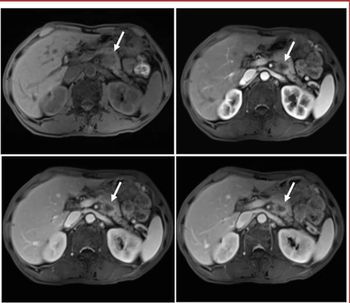
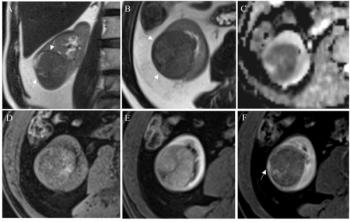
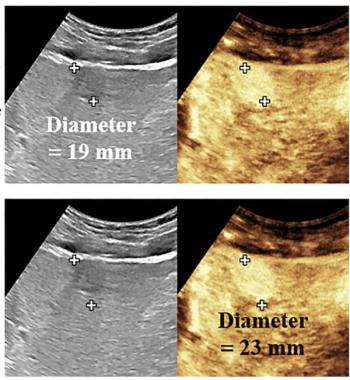
“ … Our study shows that solid components and multilocularity in benign lesions can mimic malignancy and lead to scoring as Ovarian-Adnexal Reporting and Data System (O-RADS) US 4 or 5, ultimately driving down the positive predictive value (PPV) of these categories,” wrote lead study author Priyanka Jha, MBBS, who is affiliated with the Department of Radiology at the Stanford University School of Medicine, and colleagues.
While cystadenomas and cystadenofibromas accounted for 46 percent of benign lesions initially scored as O-RADS 4 and 5 lesions, the study authors pointed out that they may have features, such as papillary projections and mural nodules, that can also be found with malignant lesions.
Three Key Takeaways
• High false-positive rate in O-RADS 4/5 lesions. A substantial proportion of lesions categorized as high risk were benign (84 percent of O-RADS 4 and 27 percent of O-RADS 5), indicating reduced positive predictive value and limited reliability for malignancy stratification.
• Key imaging mimics of malignancy. Benign lesions frequently demonstrated solid components (71 percent) and multilocularity (45 percent), features that can overlap with malignant criteria and commonly drive over-classification.
• Adjunct imaging and technique refinement are critical. Dynamic assessment (e.g., evaluating solid component movement, acoustic shadowing) and follow-up with contrast-enhanced ultrasound or MRI can improve differentiation of true solid tissue and enhance diagnostic accuracy.
In order to clarify between solid components in malignant lesions and mimics such as fibromatous tissue, the researchers suggested the use of exam maneuvers to assess for solid component movement or cine clips to help detect possible acoustic shadowing. They also noted the merits of subsequent contrast-enhanced ultrasound or MRI for improving risk stratification with lesion assessment.
“Contrast-enhanced US and MRI may be especially helpful for establishing the presence or absence of solid tissue because of their superior depiction of vascularized soft tissue and because they enable enhancement pattern evaluation with time-intensity curves,” added Jha and colleagues.
(Editor’s note: For related content, see “Ultrasound Study: O-RADS Scoring May Prevent Surgery for Over 40 Percent of Ovarian and Adnexal Lesions,” “Is MRI More Effective than Ultrasound for Diagnosing Adnexal Lesions?” and “Meta-Analysis Reaffirms Benefits of O-RADS MRI for Diagnosing Indeterminate Adnexal Lesions.”)
In regard to study limitations, the authors acknowledged the exclusion of patients with initial benign assessment and conceded a lack of central expert review of images for patients in the cohort. The researchers also pointed out that images were obtained by technologists who didn’t have specific training in gynecologic imaging.