

Richard Duszak, MD, and Mina Makary, MD, discuss a number of issues, ranging from demographic trends and NPRPs to physician burnout and medical student recruitment, that figure to impact the radiology workforce now and in the near future.
Richard Duszak, MD, and Mina Makary, MD, discuss a number of issues, ranging from demographic trends and NPRPs to physician burnout and medical student recruitment, that figure to impact the radiology workforce now and in the near future.

What is your diagnosis?

What is your diagnosis?
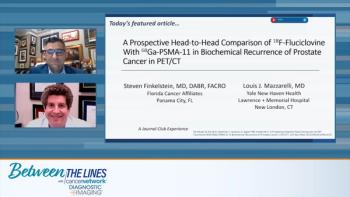
Interesting questions raised by a paper that compared the use of 18F-fluciclovine with 68Ga-PSMA-11 imaging modalities to detect biochemical relapse in prostate cancer and implications for integrating newer techniques into clinical practice.
Reactions to key findings from an article by Birgit Pernthaler, et al, that compared the use of 18F-fluciclovine with 68Ga-PSMA-11 imaging modalities to detect biochemical relapse in prostate cancer.
Drs Steven Finkelstein and Louis J. Mazzarelli highlight data revealed in the article “A Prospective Head-to-Head Comparison of 18F-Fluciclovine With 68Ga-PSMA-11 in Biochemical Recurrence of Prostate Cancer in PET/CT,” by Birgit Pernthaler, et al.
Can you make the diagnosis?

What type of deformity do you see on this image?

What type of arthropathy is seen on this image?

Review our most popular Image IQs of 2021 and test your radiology knowledge!
Drs Steven Finkelstein and Louis J. Mazzarelli comment on limitations associated with conventional imaging modalities in prostate cancer and highlight the roles of newer tests such as 18F-fluciclovine and 68Ga-PSMA-11.
Learn more about what Canon Medical will be showcasing virtually at RSNA 2021.
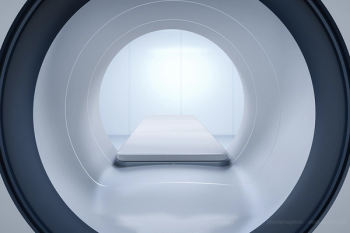
Diagnostic performance is comparable to fluorine 18 fluorodeoxyglucose PET/CT in diagnosing pulmonary lesions.

Magnetic resonance imaging is already the gold standard imaging technique for the evaluation of AL.
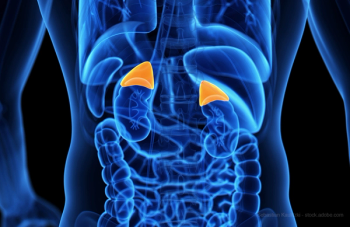
CT attenuation also affected by BMI and blood cortisol levels.
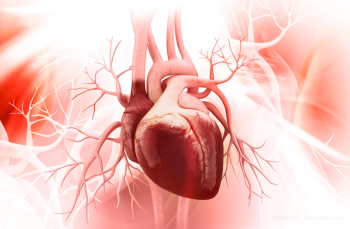
Imaging method reduced non-confident reads, decreased time.

Patient interaction does not affect work flow, improves radiologist satisfaction.

Patients with previous acute kidney injury at highest risk of repeat injury.

Women who participated in regular breast screening programs benefitted more from therapy than women who were not screened regularly.

Appropriate Use Criterion May Reduce Unnecessary Imaging in Renal Colic
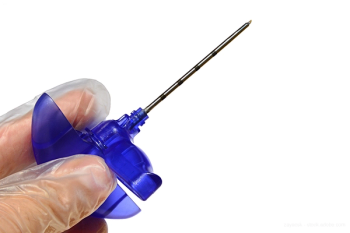
Automated robotic arm–assisted FDG PET/CT-guided real-time bone biopsy is feasible and safe.
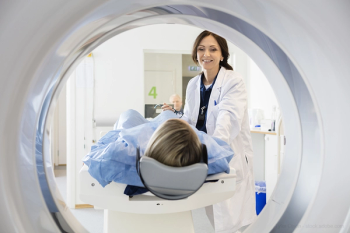
Greater efforts needed to harmonize reporting practices.

Gaming event increased resident knowledge and enthusiasm for using ultrasound in the emergency room
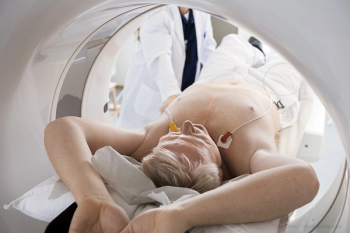
Use of a photon-counting-detector CT for renal stones is similar to using dual-energy CT.
Lobular or HER2–negative cancers are underestimated in size at MRI compared with ductal or other subtypes.
Patients with an initial clinical severity class of 1 also had a higher likelihood of missed injury.
Largest study in Europe for the evaluation of renal lesions using CEUS with a histopathological validation.
Machine-learned models provided substantial gains in model sensitivity with slight loss of specificity.
Edema visualization improves detection of early infarcts.

Radiologic reports with deep learning algorithm provide improved cerebral aneurysm detection.