
Register Now: Image-Based Risk: The Next Frontier in Breast Cancer Screening

DI Executive

Emerging literature suggests a seemingly insurmountable wave of physician burnout in radiology. While the recently enacted Dr. Lorna Breen Health Care Provider Protection Act offers the promise of increased awareness, education, and funding to help prevent burnout, an increased commitment and flexibility from institutional leadership may also be key to erasing stigmas and driving meaningful change.

The ruling noted that the interim final rule for the legislation materially altered the independent dispute resolution (IDR) process of the No Surprises Act and cited a lack of sufficient “notice and comment,” rendering the changes as unlawful as per the Administrative Procedure Act (APA).

In a recent video interview, Nina Kottler, MD, discussed the promise of artificial intelligence (AI) for improving workflow efficiency for radiologists, keys to assessing AI vendors and change management principles for facilitating implementation of AI into one’s practice.

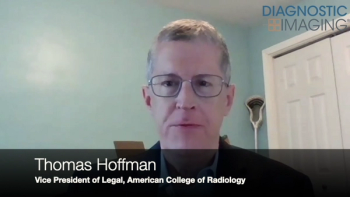
In an exclusive video interview with Diagnostic Imaging, Josh Cooper, vice president of congressional affairs for the American College of Radiology (ACR), and Thomas Hoffman, vice president of legal for the ACR, discuss the ACR’s lawsuit over the IDR process of the No Surprises Act and the potential impact of the law on reimbursement and patient access to care.

Emerging solutions for improved efficiency, patient comfort and image quality may ease the strain of increased patient volume as women catch up with mammography screenings that were delayed or put off during the COVID-19 pandemic.