
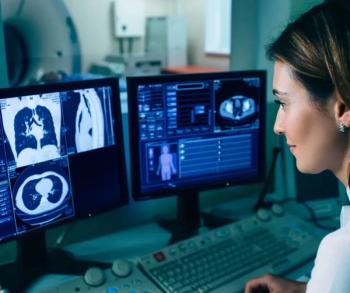
Where does radiology fit in the ever-shifting revenue puzzle at hospitals and other health-care facilities?
Where does radiology fit in the ever-shifting revenue puzzle at hospitals and other health-care facilities?
Having perspective on what constitutes bad luck, human error or a legitimate beef can prevent a lot of wasted energy on negativity inside and outside of the reading room.

Catch up on the top radiology content of the past week.
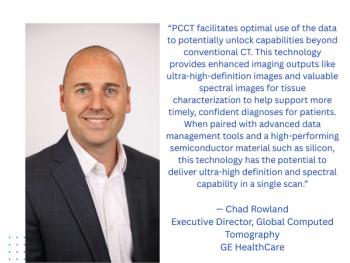
In addition to providing stronger image quality, well-designed photon-counting CT systems may facilitate increased standardization, efficiency and simplification that may lead to reduced cognitive burden for radiologists.

In a recent Practice Academy webinar session, Nina Kottler, MD, MS, FSIIM, FAIM, discussed challenges with narrow AI applications, the continued emergence of foundation models and a potential trajectory with AI that may facilitate a combination of opportunistic screening and prognostic risk assessment.

In a recent Practice Academy webinar session, Seena Dehkharghani, MD, FAHA, and Raza Mushtaq, MD, discussed the challenge of burgeoning worklist volume amid the ongoing radiologist shortage and the emergence of AI advances with enterprise imaging.

While maintenance of certification requires participation in peer review, a collegial ethos enables us to provide assessment of another radiologist’s work without crossing the line into odious expert witness cash grabs.
Getting caught up in the numbers of cases we’re reviewing may increase stress and inhibit our productivity.
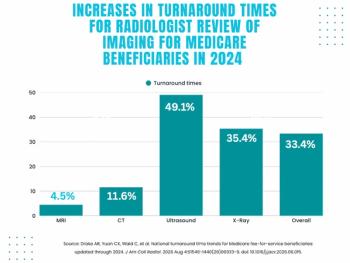
In comparison to 2023 statistics, the authors of a new study noted an approximately 49 percent increase in radiology turnaround time for ultrasound interpretation and over a 35 percent increase in turnaround time for X-ray assessments.

Can the newly launched MIM Anyware platform bolster imaging access and multidisciplinary collaboration?
Catch up on the top radiology content of the past week.
The newly FDA-cleared PACS Viewer from CliniComp reportedly allows direct review and analysis of imaging within a patient’s chart.
In a recent interview, Nina Kottler, MD, offered her perspective on findings from a recent report on AI in health care, AI integration challenges and what the future holds with AI in radiology.
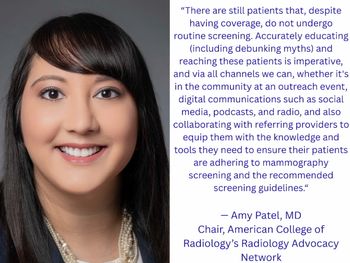
In a recent interview, Amy Patel, MD, discussed recent research on breast cancer screening, pertinent obstacles and keys to facilitating improved adherence with mammography screening.
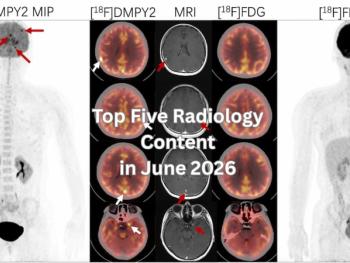
Catch up on the most-well viewed radiology content in June 2026.

Catch up on the most well-viewed video interviews from Diagnostic Imaging in June 2026.
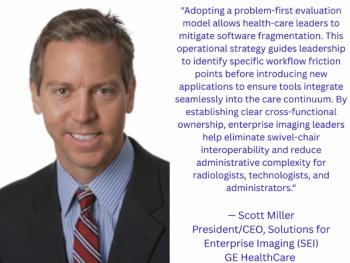
In order to fully take advantage of the capabilities of AI, this author emphasizes key principles and a framework for converting isolated technology solutions into reliable components of radiology workflows and operations.
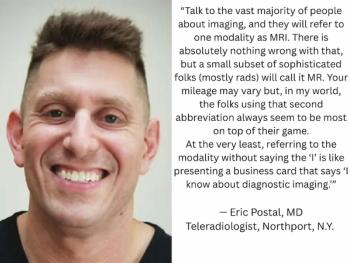
The words you say, how you say them and the tone in which you say them may impact perceptions of your credibility.
Catch up on a variety of FDA news in radiology from the past week.
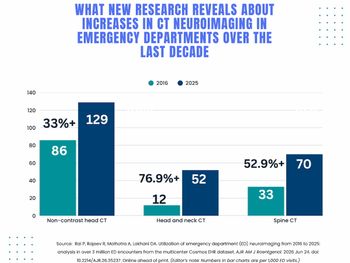
Researchers found that non-contrast head CT exams, head and neck CT exams and spine CT imaging increased by 33 percent, 76.9 percent and 52.9 percent, respectively, per 1,000 emergency department encounters over the last decade.
Catch up on the top AI-related news and research in radiology over the past month.
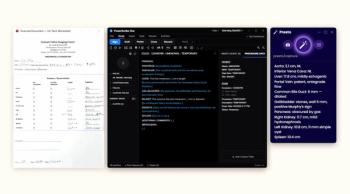
The newly launched HOPPR Presto Agent reporting platform can be integrated into existing radiology systems and AI models without the need for new software.
A combination of incentives and embrace of technology-enhanced efficiencies may facilitate underlying ‘autopilot’ motivations toward increased achievement in navigating radiology worklists.
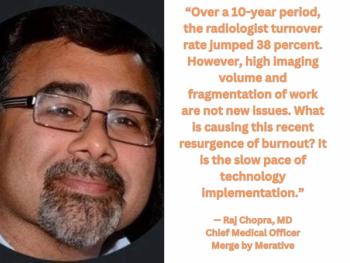
Noting that frustration over slow implementation of technological advances may be contributing to mounting radiologist frustration and subsequent burnout, this author offers key principles for integrating technological solutions into radiology workflows.
Catch up on the top radiology content of the past week.
In a recent interview, Nina Kottler, MD, discussed the challenges with traditional radiology reporting, its impact on cognitive load and the recently launched AI-enabled platform Mosaic Reporting.
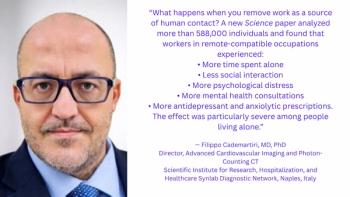
New research suggests the silent accumulated social costs of remote work are outweighing the benefits of increased flexibility and autonomy.
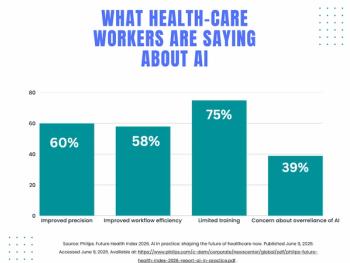
In a new survey of over 2,000 health-care professionals on AI use, respondents cited benefits ranging from improved work-life balance to preventing medical errors as well as concerns about overreliance on AI and inconsistent or limited training.
In recent interviews, Emanuel Kanal, MD, and Tobias Gilk, MRSO, MRSE, noted a lack of point-of-care safety requirements for MRI, a lack of state oversight, and a prevailing lack of minimum standards overall for MRI safety.
What's already being done with large language models in radiology practice today.