

I’ve long since learned that good faith is far more reliable than, say, contracts.
I’ve long since learned that good faith is far more reliable than, say, contracts.
Catch up on the top radiology content of the past week.

Does access to prior imaging results have to be mission impossible for teleradiologists?

The controversial Independent Dispute Resolution (IDR) process of the No Surprises Act was temporarily suspended by the CMS on August 4 due to a federal court ruling that vacated a substantial administrative fee increase and batching rule from the CMS that reportedly curtailed challenges of claim reimbursement by radiologists and other providers.
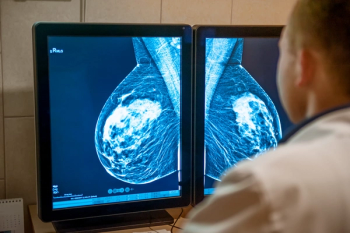
Reportedly the first randomized trial to examine the impact of artificial intelligence (AI) on screening mammography, researchers found AI-aided screening led to a 20 percent increase in breast cancer detection and a 44.3 percent decrease in mammography screening workload.
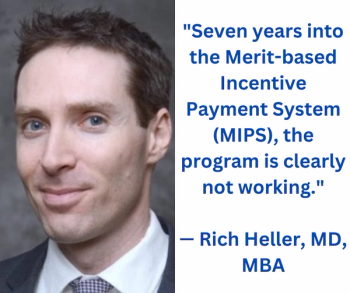
Noting that the Medicare conversion factor in 2024 could be lower than the rate in 1993, this author discusses three key issues that need to be addressed by government leaders in order to ensure equitable Medicare reimbursement for radiologists and other physicians.

Addressing ancillary repetitious inhibitors to radiology workflow could go a long way to mitigating burnout risk.
Recognizing the advent of beta amyloid-targeted therapies for the treatment of Alzheimer’s disease, the Centers for Medicare and Medicaid (CMS) has proposed eliminating coverage restrictions that limit amyloid positron emission tomography (PET) scans to clinical trial participants and one amyloid PET scan per lifetime.

The notion of non-physician practitioners (NPPs) attempting to do radiologist-level work is a very slippery slope and what this author refers to as the “bargaining” stage of grief.
Catch up on the top radiology content of the past week.

Noting recent double-digit increases in health-care associated infections (HAIs) and potential vulnerabilities in radiology departments, this author emphasizes proactive preventive measures to protect patients and staff.
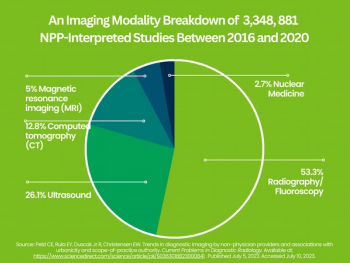
In a retrospective review of over 110 million imaging claims for patients with commercial insurance or Medicare Advantage, researchers noted key trends signaling significant increases in imaging billed by non-physician practitioners (NPPs).
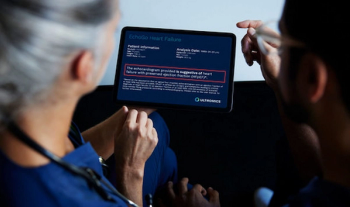
An artificial intelligence (AI)-enabled platform that can reportedly diagnose heart failure with preserved ejection fraction (HFpEF) through analysis of a single echocardiogram view, the EchoGo Heart Failure now has a HCPCS code for use of the technology in outpatient settings for Medicare beneficiaries.

While some may equate extra work hours as honorable self-sacrifice or dedication to patients, striving for an optimal balance of life and work is an individual choice that shouldn’t be criticized.
Whether it’s attempting to get appropriate clinical histories from referring physicians or getting a tech to split up a multiphasic contrast study into separate image series, consistently striving to fight the good fight for optimal image interpretation is worth the effort.

This author emphasizes keys to being engaging and informative during a lecture.
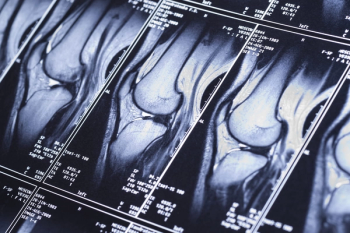
Researchers suggested that overnight use of a power-save mode on outpatient magnetic resonance imaging (MRI) devices in the United States could reduce annual energy consumption by 76,288.2 megawatt hours (MWh) and add up to $10.7 million in cost savings.

Lamenting a lack of control over imaging requests from referring clinicians, this author suggests that a more collaborative approach between referrers and radiologists may facilitate more efficient use of imaging.

Has a form of aversive conditioning sabotaged morale in radiology?
Catch up on the top radiology content of the past week.
Catch up on the top radiology content of the past week.
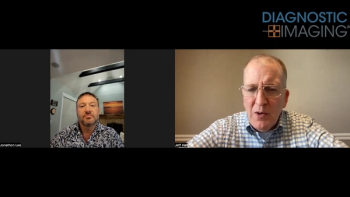
In a recent video interview, radiologist Jonathon Lee, MD, shared insights from his experience on the insidious nature of burnout, emphasized the link between work-life balance and productivity, and discussed a recent partnership between the teleradiology service provider vRad and the behavioral health consultancy VITAL WorkLife to help promote well-being for vRad teleradiologists.

Can more easygoing radiologists coexist with productivity-driven colleagues?

Recognizing the dual challenges of fending off cyberattacks and meeting the increasing demand for faster access to medical imaging, these authors offer proactive insights to address potential cybersecurity issues in radiology departments and practices.

Does the allure of leadership lose its luster for more seasoned radiologists?
Catch up on the top radiology content of the past week.
Having interests outside of one’s chosen profession provides more of a multifaceted perspective and potentially more door-opening opportunities in the future.
Taking the time to reexamine motivational priorities may be key to achieving an optimal work-life balance.
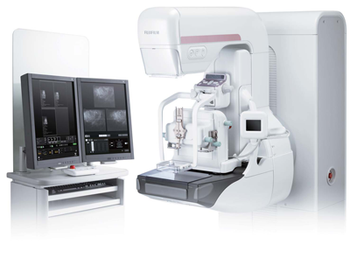
As literature continues to emerge about the potential of contrast-enhanced digital mammography (CEDM), this author reviews clinical and practical benefits of the modality and pertinent steps for adding it to your diagnostic armamentarium.
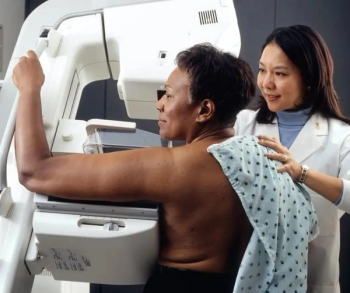
In a large retrospective review of over four million Medicare claims, researchers found that Black women were 16 percent less likely to have access to digital breast tomosynthesis than White women.