New research suggests that digital breast tomosynthesis (DBT) offers significantly higher detection rates than digital mammography for radial sclerosing lesions, lobular carcinoma in situ and atypical lobular hyperplasia.
In the latest episode of her Breast Imaging in Focus series, Manisha Bahl, MD, MPH, FSBI, discussed new research demonstrating that cancer detection rate, sensitivity and positive predictive value (PPV) for digital breast tomosynthesis (DBT) all improved with age.
In a recent interview, Carolynn DeBenedectis, MD, discussed the utility of AI-enabled slab reconstruction for interpretation of digital breast tomosynthesis (DBT) and new research showing a 13 percent reduction in reading time.
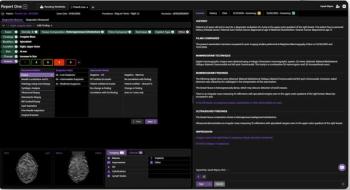
Report One, reportedly the first agentic reporting tool specifically geared to breast imaging, is one of three new products that will be showcased by MagView at the upcoming RSNA conference.
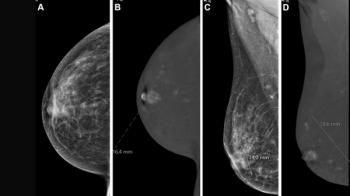
While contrast-enhanced mammography (CEM) offered the highest agreement with histopathology on the extent of malignancy in a new study, researchers found the use of pre-op CEM had no impact on mastectomy or reoperation rates.
In a new podcast episode, Manisha Bahl, MD, MPH, FSBI, offers pertinent insights into a recent study assessing whether AI models for breast cancer detection and short-term risk prediction can be used interchangeably.
In a new podcast episode, Manisha Bahl, MD, MPH, FSBI, discusses recently published guidelines on proliferative breast lesions with atypia and lobular carcinoma in situ (LCIS).
In a new podcast episode, Manisha Bahl, MD, MPH, FSBI, reviews key findings from a recent study examining the utility of contrast-enhanced mammography in prevalence and screening rounds.