

Commentary|Articles|July 3, 2026
Breast Cancer Screening: Where Things Stand
Author(s)Jeff Hall
In a recent interview, Amy Patel, MD, discussed recent research on breast cancer screening, pertinent obstacles and keys to facilitating improved adherence with mammography screening.
Advertisement
Separate studies on cancer screening published in JAMA Network Open and presented at the recent American Society of Clinical Oncology (ASCO) conference suggested mixed progress in regard to mammography screening.
The
However, the
In a recent interview, Any Patel, MD, a clinical associate professor of radiology at the Kansas University School of Medicine and chair of the American College of Radiology’s Radiology Advocacy Network, shared her perspective on these studies.
Q: The JAMA Network Open study noted that 8.8 million women between the ages of 45 to 64 are overdue for breast cancer screening. From your perspective, what are some of the contributing factors for this?
Amy Patel, MD: As the study alluded to, I also agree that socioeconomic barriers and access to care often prevent women from getting screened. It has been previously noted in the literature that patients who are of lower income, lower health literacy, lack insurance, and have limited access to care geographically often are not able and or do not seek routing screening. We also see this in clinical practice.
Q: In your experience, what are keys to facilitating patient adherence to mammography screening?
Dr. Patel: In the United States, we are very fortunate that mammography screening is covered by the overwhelming majority of insurance carriers, regardless of type. However, there are still patients that, despite having coverage, do not undergo routine screening. Accurately educating (including debunking myths) and reaching these patients is imperative, and via all channels we can, whether it's in the community at an outreach event, digital communications such as social media, podcasts, and radio, and also collaborating with referring providers to equip them with the knowledge and tools they need to ensure their patients are adhering to mammography screening and the recommended screening guidelines.
However, it's important to note that approximately 1 to 1.5 million United States women from the ages of 40 to 75 do not have insurance and therefore often do not seek screening as they cannot pay for it. This is where we must also reach the community as much as we can and offer resources and support for patients who need access. Even if one practices at a facility that does not offer free screening examinations, if he or she knows of a facility that does or other local and or state funded program, having the knowledge to guide these patients is crucial and can potentially save a life.
Q: Related research presented at the ASCO conference noted a significant improvement in the number of women in their 40s getting breast cancer screening after the April 2024 USPSTF guideline expansion. Are you seeing this in your practice? Are there other interventions, perhaps specific to younger women or those in their 40s, that may increase screening numbers and follow-up in this cohort?
Dr. Patel: Even prior to the 2024 USPSTF guideline expansion, our practice was fortunate to see patients being sent for screening mammography beginning at age 40. I acknowledge this may not be the norm at other practices and institutions, but our team has done a really great job over the years continuously meeting with our referring providers to stress the screening guidelines we follow in accordance with the American College of Radiology (ACR) and Society of Breast Imaging, educating patients in the community, and via all digital media methods, particularly social media to reach as many patients as we can as we do see a fair number of rural patients.
However, we did see an uptick in patients from certain providers who staunchly follow USPSTF guidelines, but it was not a significant amount when comparing those receiving screening beginning at age 40.
As for younger patients, we also saw an uptick in screening when we implemented risk assessments for patients in 2019, following imaging surveillance guidelines in accordance with the ACR and National Comprehensive Cancer Network (NCCN). Again, the same efforts were employed with patients and referring providers. It takes time and effort, but it can make a huge difference in the lives of patients and really transform one's practice for the betterment of patient care.
Q: Is there anything else you wanted to point out about these studies?
Dr. Patel: Regarding the research presented at ASCO, I think it is important to note that although a short period of time was assessed, I think this will be tremendously helpful especially in assessing future risk stratification strategies with longer-term data, and especially as we are seeing the incidence of breast cancer rising in young women.
I also think we will see what we already know to be true: that screening beginning at age 40 in average risk women saves the most lives and life years saved. We also know if we can detect a breast cancer early, and particularly 1 cm or less, a patient's survival probability approaches 100 percent.
Regarding the JAMA Network Open study, the findings supported "bundled" screening strategies such as colorectal, cervical, and breast cancer screening and that a program such as this could be more effective than individual screenings when it comes to adherence. That really opens up the discussion for advocating for policies at the state and federal level that improve access to preventative care and will take collaboration with different subspecialty groups to employ this type of strategy.
Advertisement
Related to this article

In the third of a three-part podcast episode, Wendie Berg, MD, PhD, FACR, FSBI, Manisha Bahl, MD, and Amy Patel, MD discuss recent developments with autonomous AI in breast imaging and share their perspective on the overall potential of AI to help mitigate the radiologist shortage.
In the second of a three-part podcast episode, Wendie Berg, MD, PhD, FACR, FSBI, Manisha Bahl, MD, and Amy Patel, MD discuss how to handle disagreements with adjunctive AI in breast imaging, whether to include AI assessments in PACS, and whether patients should pay for the use of adjunctive AI.

In the latest episode of her Breast Imaging in Focus series, Manisha Bahl, MD, MPH, FSBI, discusses new research comparing mammography-based AI models for breast cancer detection and short-term risk prediction.

Has the barrage of passwords, PINs and authenticator apps gone around the bend to a point where it hampers efficiency and productivity?

Catch up on the top radiology content of the past week.
In the first of a three-part podcast episode, Wendie Berg, MD, PhD, FACR, FSBI, Manisha Bahl, MD, and Amy Patel, MD share insights on the utility of AI in breast imaging with respect to potential advantages, current concerns and future directions.
While better imaging may reduce the need for additional diagnostic tests, it may also eliminate the reimbursement that comes with those additional tests.
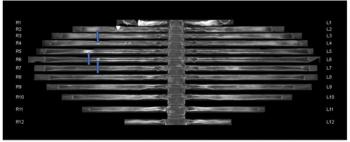
The use of adjunctive CT bone reading software in women with breast cancer detected between 8 to 22 percent more metastatic lesions for reviewing radiologists and reduced CT interpretation time by 50 percent or more, according to a new study.
Advertisement
Advertisement
Trending on Diagnostic Imaging
1
What a Large Prostate MRI Study Reveals About AI and Unassisted Radiologist Assessment
2
MRI Study Links Tightness of High-Convexity Sulci to Higher Risk of Cognitive Decline in Older Adults
3
Breast Imaging in Focus: Can AI Models for Breast Cancer Detection and Risk Prediction Be Used Interchangeably?
4
Research Highlights from the ASTRO 2026 Annual Meeting
5