
AI Coverage
Latest News
Feb 12, 2026 | News
What New CCTA Research Reveals About Quantitative Plaque Assessment and Predicting MACE
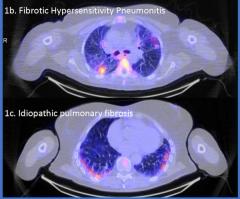
SPECT/CT Agent Garners FDA Fast Track Designation for Inflammation Assessment in Interstitial Lung Disease
Feb 12, 2026
Mammography Study Assesses Ability of AI to Predict DCIS Recurrence After Breast Surgery
Feb 11, 2026

Molecular Imaging in Focus: Emerging Insights on the PET and SPECT Imaging Agent 61Cu-NU101 for PCa
Feb 11, 2026

The Inflection Point for AI in Radiology: Emerging Insights for 2026
Feb 10, 2026





Advertisement
Shorts

0:51
The Rise of Agentic AI in Radiology
7 hours ago
by
Rajesh Bhayana, MD

0:55
Optimizing Data from Brain MRI: Can a Vision-Based AI Foundation Model Have an Impact?
2 days ago
by
Benjamin Kann, MD

0:43
Study: AI Finds 'Substantially' More Aneurysm Growth than Neuroradiologists
3 days ago
by
Jeremy Heit, MD, PhD

0:47
Defining the Problem to Be Solved Before Hunting for AI Software Solutions
8 days ago
by
Kernesha Weatherly, DHA

0:43
The Potential of Multisystem Screening with CT-Based AI
9 days ago
by
David Yankelevitz, MD

0:52
Where Things Stand with the Find It Early Act
10 days ago
by
Amy Patel, MD

0:59
Why Supplemental Imaging Use is 'Quite Low' for Women with Dense Breasts
14 days ago
by
Manisha Bahl, MD

0:34
Why LLMs Are a 'Natural Fit' for Automated CT Protocoling
17 days ago
by
Rajesh Bhayana, MD

0:44
Keys to Retaining Third-Year Residents in Interventional Radiology
18 days ago
by
Mina S. Makary, MD

0:33
Can AI Plaque Quantification with CCTA Facilitate Personalized Medicine?
22 days ago
by
Ron Blankstein, MD
Podcasts
Videos


Continuing Medical Education











All News
Advertisement
Advertisement
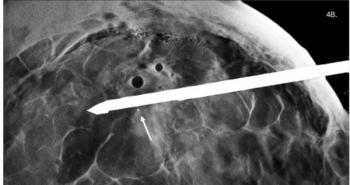
Employing digital breast tomosynthesis for biopsy guidance facilitated significantly lower radiation dosing than digital mammography guidance with no difference in malignancy rates, according to new research involving over 1,600 patients.

In a recent interview, Benjamin Kann, M.D., discussed new research highlighting the capability of an AI foundation model to obtain a variety of diagnostic and prognostic data from brain MRI scans.
If you knew the daily level of challenges a radiology supervisor or manager encounters, would you still aspire to the role?
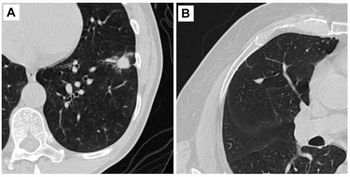
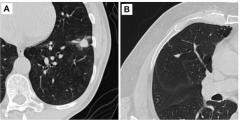
For the detection of lung cancer on low-dose CT, the eyonis LCS software reportedly offers greater than 90 percent sensitivity, specificity and negative predictive value (NPV).
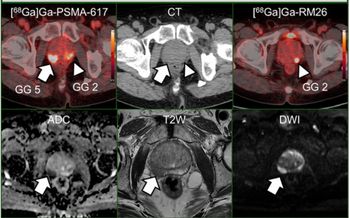
Researchers found that PSMA PET/CT offered 18 percent higher accuracy than mpMRI in detecting bilateral intraprostatic disease, according to a new study involving patients with intermediate or high-risk prostate cancer.

Catch up on the top radiology content of the past week.
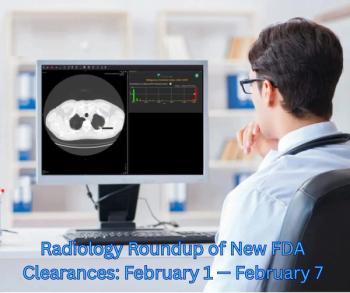
Catch up on a variety of new FDA clearances in radiology from the past week.
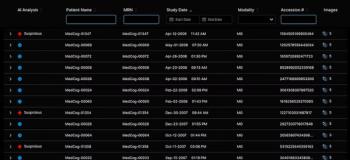
Flagging DBT images that may warrant a more expedited review, the CogNet AI-MT+ platform can reportedly be integrated into existing IT systems to facilitate workflow efficiencies for radiologists.

In a recent interview from the International Stroke Conference, Jeremy Heit, M.D., Ph.D., discussed new research suggesting that AI may offer better assessment than neuroradiologists of aneurysm growth on computed tomography or magnetic resonance angiography scans.
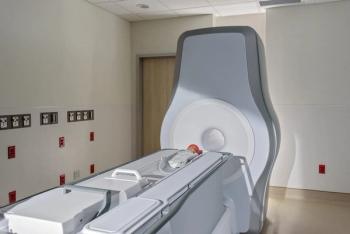
The Ascent3T Neonatal Magnetic Resonance Imaging System is reportedly the first high-field 3T system geared to neonatal applications.
Advertisement

Wendie Berg, M.D., Stamatia Destounis, M.D., and Amy Patel, M.D., share their thoughts and perspectives on key findings from the Lancet mammography study on AI and interval breast cancer, and how they have incorporated AI into their practices.
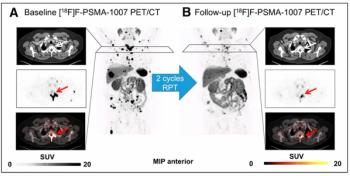
A high SUVmean on PSMA PET imaging was associated with 95 more days of mean progression-free survival (PFS) in contrast to those with a low median SUVmean, according to a new study of patients with mCRPC treated with (225Ac)Ac-PSMA-I&T.
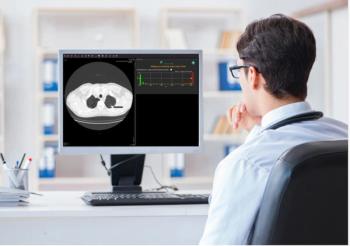
The CT-based RevealAI-Lung software reportedly offers a Malignancy Similarity Index score to facilitate evaluation of incidental lung nodules.
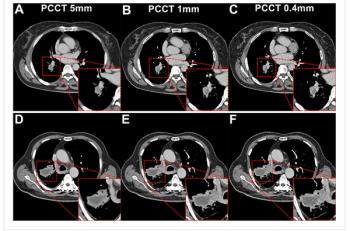
In addition to significantly reduced radiation dosing in comparison to energy-integrating detector CT (EID-CT), photon-counting CT provided higher detection of enhancement-related malignant features, according to new prospective research involving 200 patients with lung cancer.

The Brainomix 360 Stroke Next Generation software reportedly includes automated assessment of net water uptake (NWU), a CT-based biomarker that may improve risk stratification for patients with severe strokes.
Advertisement
Advertisement
Trending on Diagnostic Imaging
1
The Inflection Point for AI in Radiology: Emerging Insights for 2026
2
Molecular Imaging in Focus: Emerging Insights on the PET and SPECT Imaging Agent 61Cu-NU101 for PCa
3
What New CCTA Research Reveals About Quantitative Plaque Assessment and Predicting MACE
4
SPECT/CT Agent Garners FDA Fast Track Designation for Inflammation Assessment in Interstitial Lung Disease
5