
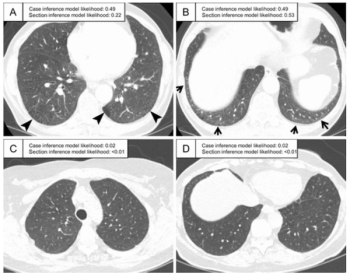
A machine-learning-based model demonstrated an 87 percent area under the curve and a 90 percent specificity rate for predicting interstitial lung abnormality on CT scans, according to new research.
A machine-learning-based model demonstrated an 87 percent area under the curve and a 90 percent specificity rate for predicting interstitial lung abnormality on CT scans, according to new research.
Geared toward ambulatory use, the HeartKey Rhythm suite reportedly offers enhanced signal clarity and rhythm detection algorithms.
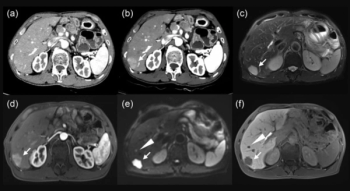
In a study involving 396 confirmed neuroendocrine tumor liver metastases, researchers found that Gd-EOB-DTPA-enhanced MRI offered 19 percent higher sensitivity than polyenergetic CT.
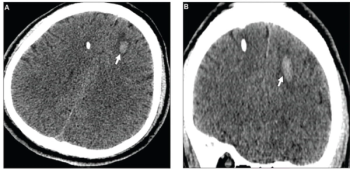
Adjunctive AI showed no difference in accuracy than unassisted radiologists for intracranial hemorrhage (ICH) detection and had a slightly longer mean report turnaround time for ICH-positive cases, according to newly published prospective research.
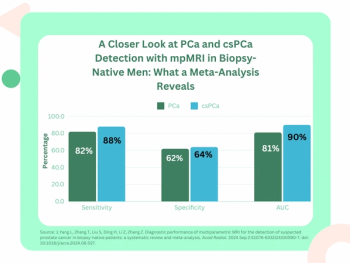
For clinically significant prostate cancer, multiparametric MRI (mpMRI) has a pooled sensitivity rate of 88 percent in biopsy-naïve men, according to a new 16-study meta-analysis.
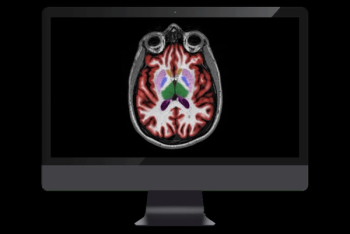
Offering enhanced deep learning technology, the updated NeuroQuant 5.0 software reportedly bolsters segmentation capabilities for amyloid-related imaging abnormalities (ARIA) in patients with Alzheimer’s disease.
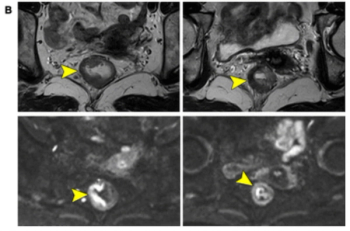
In a comparison of imaging assessments to gauge the effectiveness of neoadjuvant chemotherapy for rectal adenocarcinoma, researchers found the combination of diffusion-weighted imaging and MR tumor regression grading had a 90 percent area under the curve (AUC) and a negative predictive value (NPV) of 93 percent.
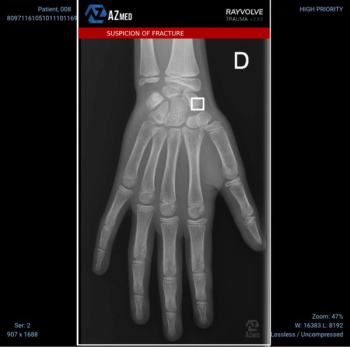
The AI-enabled software Rayvolve reportedly demonstrated a 96 percent sensitivity rate for diagnosing pediatric fractures in a recent study involving 3,000 patients.
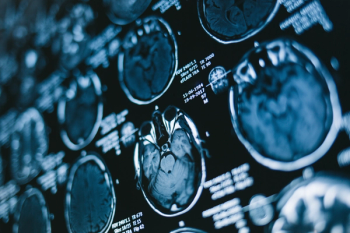
Utilizing a new machine learning model, the OptimMRI software may improve radiosurgery applications and lesioning techniques such as MRI-guided focused ultrasound through enhanced targeting of the inferolateral part of the ventral intermediate nucleus (VIM).
Catch up on the most-well viewed radiology content in August 2024.
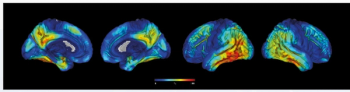
Targeting tau neurofibrillary tangles, the (18F)PI-2620 agent reportedly provides promising insight into the development of three neurodegenerative conditions including Alzheimer’s disease.
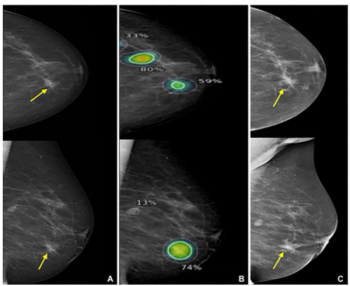
Identifying over 23 percent of interval breast cancers with a 96 percent sensitivity in mammography interpretation, an emerging AI software also facilitated correct localization in over 75 percent of cases involving interval breast cancer, according to new research.
Catch up on the latest research in neuroradiology over the past month.
Review the case and test your knowledge to make the correct diagnosis.
Our jargon and shorthand in radiology continue to evolve as we strive for efficiency in balancing terminology shifts, medicolegal considerations, voice recognition hurdles, and other demands of our field.
Catch up on the top AI-related news and research in radiology over the past month.
Catch up on the top radiology content of the past week.
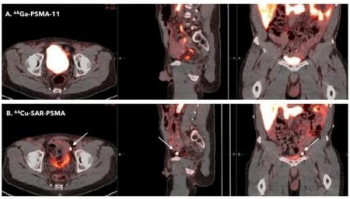
Currently in phase III trials, the 64Cu-SAR-bisPSMA PET agent reportedly offers a longer half-life and higher tumor uptake than other radiopharmaceuticals for prostate cancer imaging.
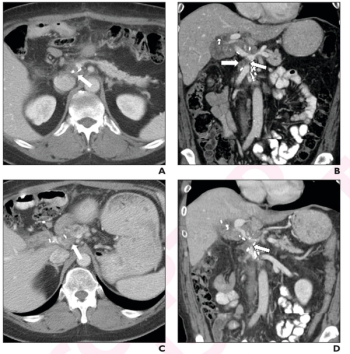
For patients who had post-op recurrence after a Whipple procedure for pancreatic ductal adenocarcinoma (PDAC), between 80 to 86 percent of follow-up CT exams revealed new or increased soft tissue.
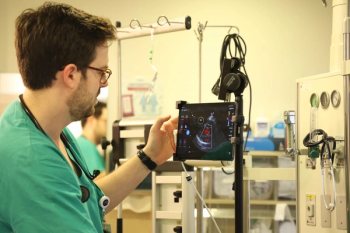
Combining four CAD modules for valvular pathologies with a variety of automated measurements, the AI-enabled AISAP Cardio ultrasound system reportedly facilitates up to a 90 percent accuracy rate in detecting common cardiac conditions.
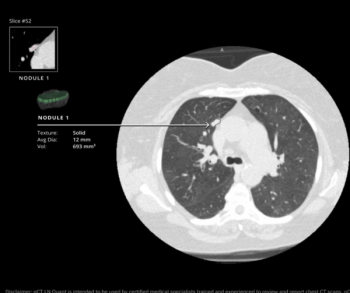
The AI-powered qCT LN Quant software reportedly generates 2D and 3D reconstructions and facilitates assessment of morphologic data across multiple thoracic studies.
Key features of the HealthCCSng V2.0 software include numerical coronary artery calcium (CAC) scoring, a new zero CAC category and user customization of upper and lower limits for CAC scoring categories.
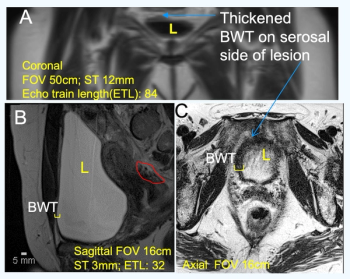
A new MRI contrast agent may provide a viable non-invasive alternative for the detection of interstitial cystitis, according to preliminary research presented at the 5th International Consultation on Interstitial Cystitis Japan (ICICJ) in Kyoto, Japan.
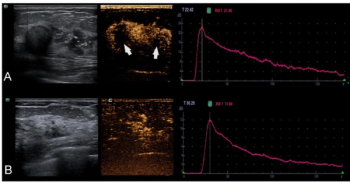
Adding two key findings from contrast-enhanced ultrasound to a predictive model of mammography, conventional ultrasound and clinicopathological findings led to a 86.1 percent AUROC for predicting the upgrading of ductal carcinoma in situ to invasive breast cancer, according to new research.
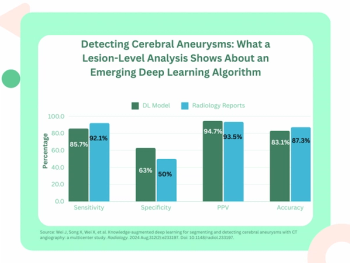
Providing an 85.7 percent sensitivity rate for detecting cerebral aneurysms on computed tomography angiography (CTA), the deep learning model also offered a similar AUC (93 percent) in comparison to radiology reports (91 percent).
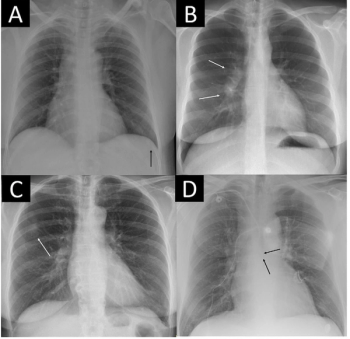
New research suggests the use of an AI software may help rule out pathology on over 50 percent of unremarkable chest X-rays with a 98 percent sensitivity threshold.
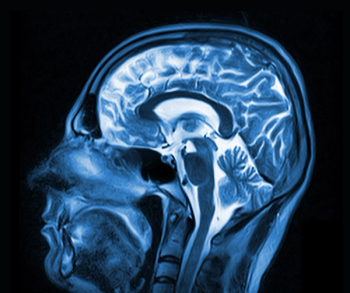
Detecting cerebral microbleed (CMB) in one of six healthy adults in a new study, researchers also found that CMB was the only MRI marker of small vessel disease (SVD) to be significantly associated with traumatic brain injury (TBI).
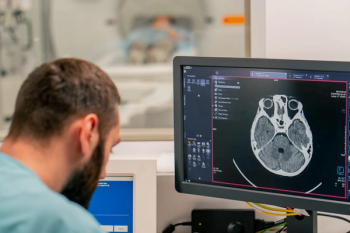
From questionable quality with images on CDs to issues with rad group portals, challenges continue to persist with access to imaging.
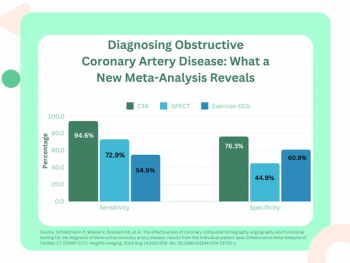
For patients with stable chest pain, CT angiography demonstrated a nearly 40 percent higher sensitivity rate than exercise electrocardiography and over an 18 percent higher sensitivity rate than SPECT for detecting obstructive coronary artery disease (CAD).
Catch up on the top radiology content of the past week.