
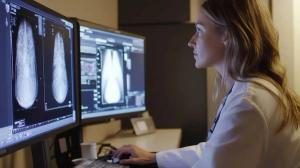
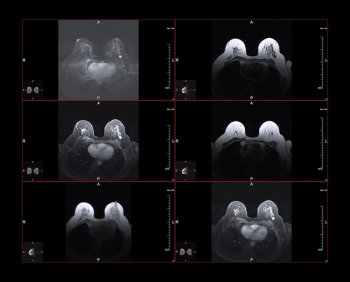
In the study of over 1,400 women with breast cancer, researchers noted that Black women with dense breasts or lobular histology were significantly less likely to have preoperative MRI exams than White women with the same clinical characteristics.
In the study of over 1,400 women with breast cancer, researchers noted that Black women with dense breasts or lobular histology were significantly less likely to have preoperative MRI exams than White women with the same clinical characteristics.
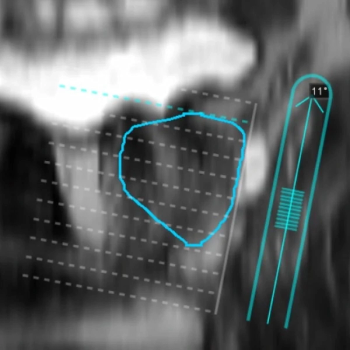
The MIM Software HDR Prostate reportedly enables clinicians to utilize preoperative MRI guidance and live ultrasound imaging to enhance tumor visualization during high dose-rate (HDR) brachytherapy treatments for prostate cancer.
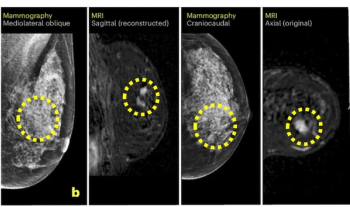
The AISmartDensity software facilitated a cancer detection rate (CDR) with breast MRI that was nearly four times higher than the CDR previously reported in trials involving traditional breast density assessment.
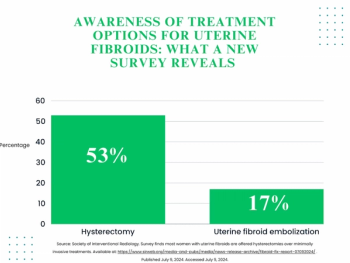
New survey findings show that over half of the female respondents were unaware of uterine fibroids and less than 20 percent of women diagnosed with the condition received information about less invasive treatment options such as uterine fibroid embolization.
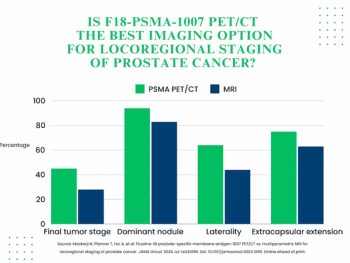
For men with prostate cancer, new research demonstrates that 18F-PSMA-1007 PET/CT is 17 percent more accurate than mpMRI at identifying the final pathological tumor stage and 12 percent more accurate in detecting extracapsular extension.
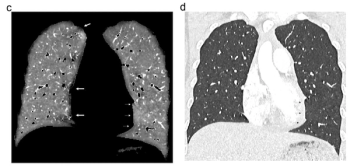
Photon-counting CT enables enhanced fissure visualization and a lower degree of cardiac motion artifacts for lung perfusion imaging at a significantly reduced scan time in contrast to dual-energy CT, according to new research findings.

What are the key drivers for facilitating staff retention in radiology?
Catch up on the top radiology content of the past week.
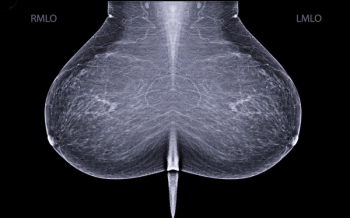
The combination of mammography with breast MRI within 90 days had a 96.2 percent sensitivity in comparison to 48.1 percent for mammography and 79.7 percent for breast MRI performed within 91 to 270 days after index mammography, according to newly published research.
In preliminary research, the targeted alpharadiotherapy agent 225Ac-FL-020 has demonstrated superior antitumor activity in xenograft models and a favorable safety profile.
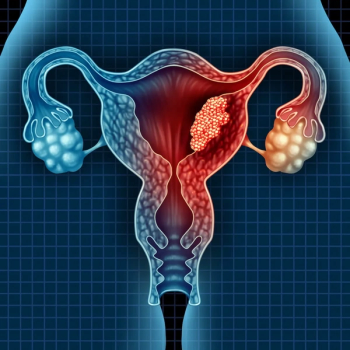
Utilizing a threshold of less than 5 mm of ultrasound-measured endometrial thickness, the authors of a new study noted an 11.4 percent false-negative probability for endometrial cancer in Black patients.
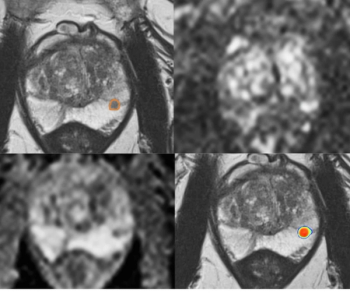
The combination of deep learning assessment of prostate MRI with PI-RADS classification at a 15 percent risk threshold spared 49 percent of biopsies in comparison to 37 percent employing a PI-RADS>4 only cut-ff approach, according to new research.

The EchoGo Heart Failure platform is reportedly the only AI-powered technology to receive a CPT reimbursement code for echocardiography detection of heart failure with preserved ejection fraction.
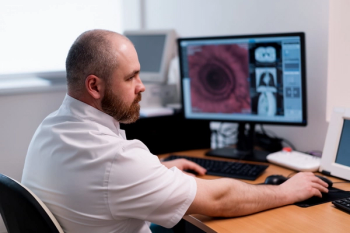
Emphasizing core concepts of sound ergonomics, accessibility, inclusivity, personalization, and convenient storage can help foster reading room environments with minimal distraction and optimal productivity.
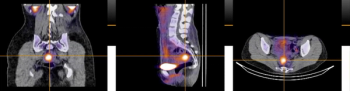
The radiotracer agent 99mTc-maraciclatide may provide an effective non-invasive alternative to laparoscopy for detecting early-stage endometriosis.
Review the case and test your knowledge to make the correct diagnosis.
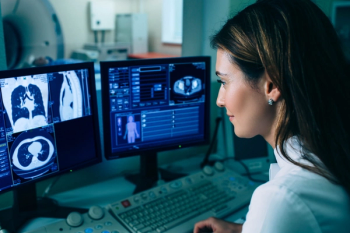
What are the best adaptive strategies for mitigating the anxiety of unknowns in one’s work and life?
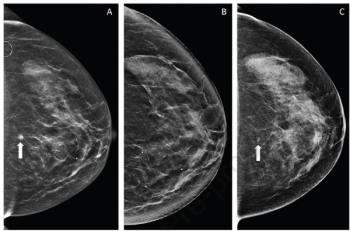
Noting significant variation with facilities for achieving passing criteria for mammography positioning, researchers found that structured interventions, ranging from weekly auditing of images taken by technologists to mechanisms for feedback from radiologists to technologists, led to significant improvements in a multicenter study.
Catch up on the top radiology content of the past week.
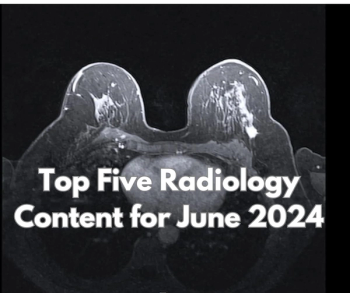
Catch up on the most-well viewed radiology content in June 2024.
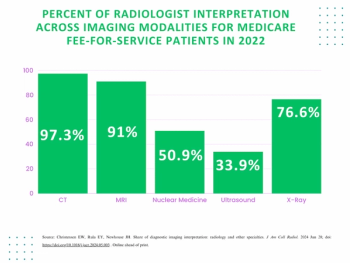
While radiologists interpreted approximately 99 percent of all non-cardiac CT, MRI and nuclear medicine studies in hospital and emergency department settings for Medicare beneficiaries, new research shows significantly less radiologist review of cardiac imaging and office-based imaging.
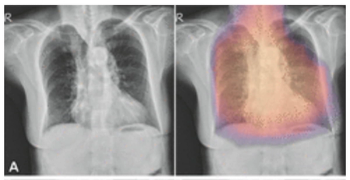
Out of 315 patients identified by artificial intelligence (AI) as being at high risk for osteoporosis, subsequent screening with dual-energy X-ray absorptiometry (DXA) in a randomized controlled trial revealed new-onset osteoporosis in 237 patients.
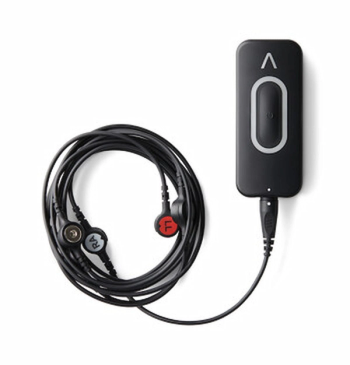
Using a reduced leadset and deep neural network algorithms trained on more than 175 million electrocardiograms, the KAI 12L technology reportedly detects up to 35 cardiac determinations, including acute myocardial infarction.
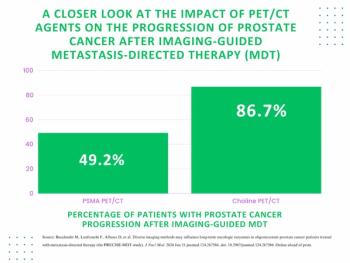
For patients with oligorecurrent prostate cancer, the use of PSMA PET/CT guidance for metastasis-directed therapy (MDT) provided over 19 months more median progression-free survival than choline PET/CT guidance, according to newly published research.
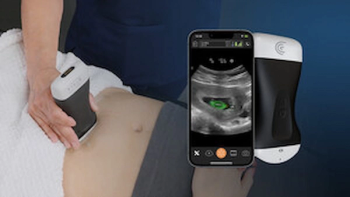
Clarius OB AI reportedly provides estimates of fetal age, weight and growth intervals based on automated fetal biometry measurements available through handheld ultrasound.

Catch up on the top AI-related news and research in radiology over the past month.
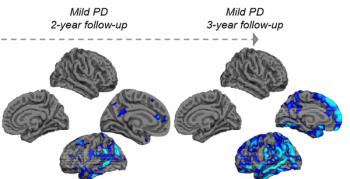
For patients with mild Parkinson’s disease, new research suggests that indexes of disease pathology with structural and functional connectivity of brain regions can help predict progression of gray matter atrophy at two- and three-year follow-up brain MRI exams.
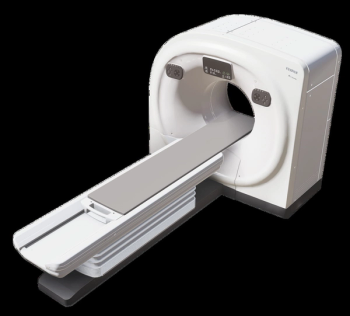
Proprietary technologies with the FCT iStream computed tomography system reportedly facilitate enhanced workflow efficiency and significantly reduced radiation dosing.
Review the case and test your knowledge to make the correct diagnosis.
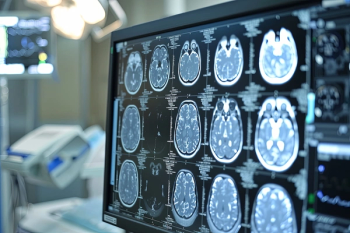
Noting an average processing time of 24 seconds for deep learning detection of acute ischemic stroke on brain MRI, the authors of a new study said deep learning assessment of DWI and FLAIR sequences had equivalent sensitivity and AUROC to T2WI MRI.