



CT
Latest News
Advertisement
Latest Videos











Advertisement
More News

The second-generation version of the VUZE System reportedly offers expanded functionality and incorporation of varied sources of 3D imaging data, including cone-beam CT scans obtained in the OR.
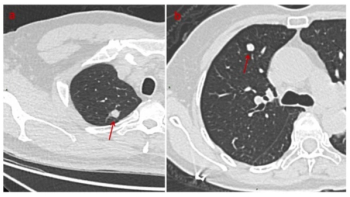
One deep learning model had a 72.4 percent accuracy rate for differentiating between benign and malignant solid pulmonary nodules on non-contrast CT while another deep learning model demonstrated an 87.1 percent AUC for differentiating benign and inflammatory findings.
Catch up on the top radiology content of the past week.

Catch up on the top AI-related news and research in radiology over the past month.
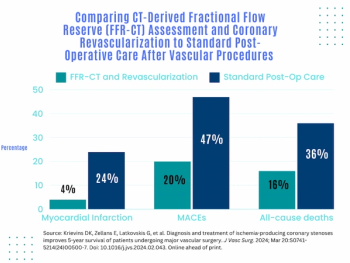
For patients with no history of coronary artery disease (CAD), new research shows the use of CT-derived fractional flow reserve (FFR-CT) guided revascularizations after elective vascular surgery reduced myocardial infarction and all-cause death by 20 percent in comparison to standard care.
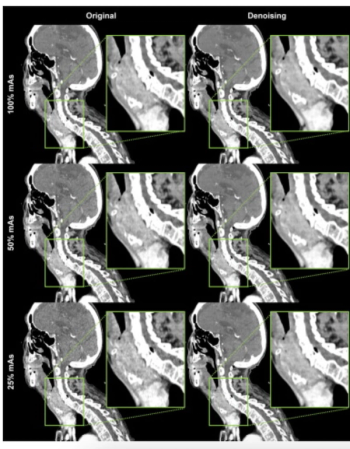
Image quality, sharpness, and contrast with AI-based denoising were significantly enhanced for neck CT in comparison to conventional CT image reconstruction at 100 percent and 50 percent mAs, according to newly published research.
Review the case and test your knowledge to make the correct diagnosis.
Catch up on the top radiology content of the past week.
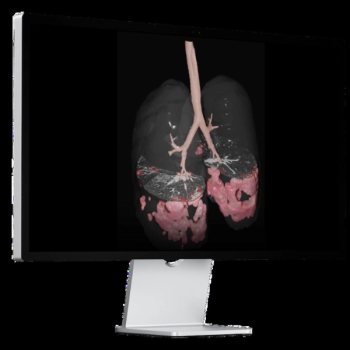
Reportedly trained on thousands of computed tomography scans, the e-Lung software utilizes machine learning to detect and assess the progression of features associated with interstitial lung diseases.
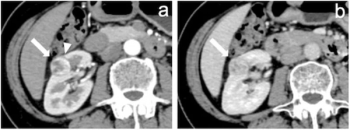
Multicenter CT Study Shows Benefits of Emerging Diagnostic Model for Clear Cell Renal Cell Carcinoma
Combining clinical and CT features, adjunctive use of a classification and regression tree (CART) diagnostic model demonstrated AUCs for detecting clear cell renal cell carcinoma (ccRCC) that were 15 to 22 percent higher than unassisted radiologist assessments.
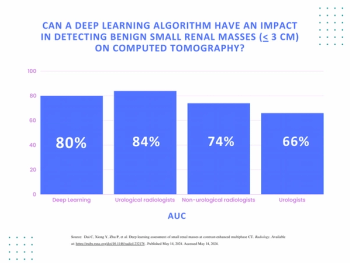
An emerging deep learning algorithm had a lower AUC and sensitivity than urological radiologists for differentiating between small renal masses on computed tomography (CT) scans but had a 21 percent higher sensitivity rate than non-urological radiologists, according to new research.
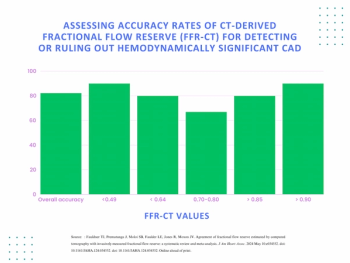
What a New Meta-Analysis Reveals About Fractional Flow Reserve Assessment with Computed Tomography
Published: | Updated:
While acknowledging variable accuracy overall with CT-derived fractional flow reserve (FFR-CT) values, researchers found that the accuracy rate increased to 90 percent for FFR-CT values greater > 0.90 and < 0.49.
Review the case and test your knowledge to make the correct diagnosis.
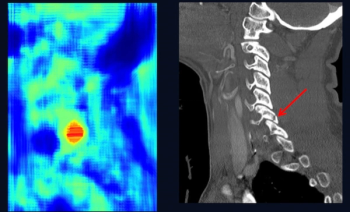
Researchers found a 98.3 percent concordance between attending radiology reports and AI assessments for possible cervical spine fractures on CT, according to new research presented at the 2024 ARRS Annual Meeting.

FDA Clears AI-Powered Qualitative Perfusion Mapping for Cone-Beam CT
Published: | Updated:
Reportedly validated in more than 10 clinical trials, the AngioFlow perfusion imaging software enables timely identification of brain regions with cerebral blood flow reduction and those with significant hypoperfusion.
Catch up on the top radiology content of the past week.
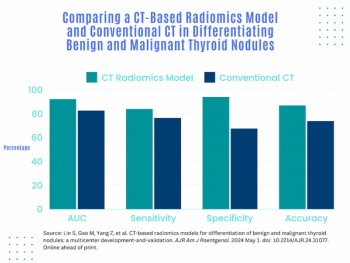
A computed tomography (CT)-based radiomics model that includes 28 radiomic features showed significantly higher accuracy, sensitivity, and specificity than conventional CT in differentiating benign and malignant thyroid nodules, according to newly published research.
Catch up on the top radiology content of the past week.
Catch up on the top AI-related news and research in radiology over the past month.
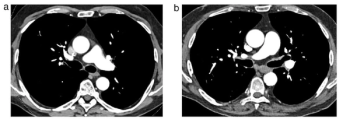
In comparison to energy-integrating detector CT for the workup of suspected acute pulmonary embolism, the use of photon-counting detector CT reduced radiation dosing by 48 percent, according to newly published research.
Review the case and test your knowledge to make the correct diagnosis.
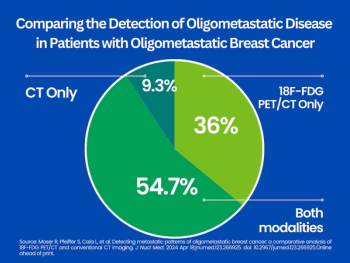
In a study of women with oligometastatic breast cancer, the use of 18F-FDG PET/CT detected additional metastases in one-third of cases that were not evident on conventional CT.
Catch up on the top radiology content of the past week.
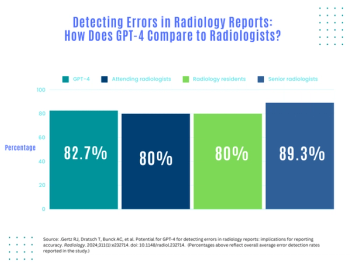
A new study shows that GPT-4 may offer comparable error detection rates to those of attendings and radiology residents in reviewing radiology reports, but researchers noted key caveats as well.
Catch up on the top radiology content of the past week.
Advertisement
Advertisement
Trending on Diagnostic Imaging
1
FDA Clears MRI-Based AI Software for Prognostic Evaluation of Patients with Mild Cognitive Impairment
2
The Reading Room Podcast: A Closer Look at New Research on 177Lu-Edotreotide for Treating GEP-NETs
3
Can MRI-Based AI Have an Impact in Reducing Unnecessary Prostate Biopsies?
4
How AI, Theranostics and More Empowered Patients Have Led to Significant Changes in Radiology
5