

CT
Latest News


Advertisement
Latest Videos











Advertisement
More News
Catch up on the most-well viewed radiology content in March 2024.
Emerging research on coronary artery calcium scoring for the assessment of coronary artery disease (CAD) suggests the use of virtual non-contrast images from photon-counting CT may lead to a nearly 20 percent reduction in radiation dosing.

The artificial intelligence (AI) modalities CINA-iPE and CINA-ASPECTS may facilitate improved detection of incidental pulmonary embolism and stroke evaluation, respectively, based on computed tomography (CT) scans.

Review the case and test your knowledge to make the correct diagnosis.

The multimodality system nCommand Lite reportedly facilitates real-time remote imaging guidance on scanning parameters and procedure assessments to licensed technologists for a variety of imaging modalities including CT and MRI.

Catch up on the top AI-related news and research in radiology over the past month.
Catch up on the top radiology content of the past week.
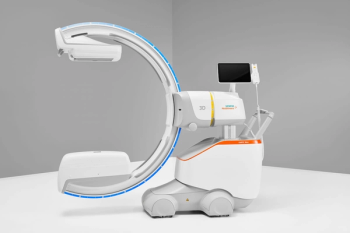
Offering ease of mobility and self-driving capabilities, the Ciartic Move C-arm device reportedly reduces the stress and potential for error associated with manual repositioning during intraoperative imaging with computed tomography and fluoroscopy.
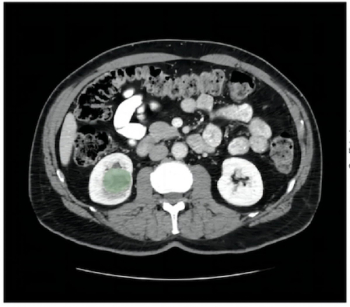
Emerging research suggests that a computed tomography (CT)-based radiomics model can predict FOXM1 expression and is independently prognostic for clear cell renal cell carcinoma.
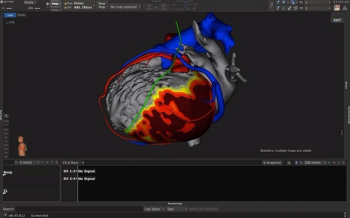
Three-dimensional interactive heart models created with AI-enabled segmentation of CT scans may reduce ventricular tachycardia ablation procedure times by 60 percent.
Review the case and test your knowledge to make the correct diagnosis.
Catch up on the top radiology content of the past week.
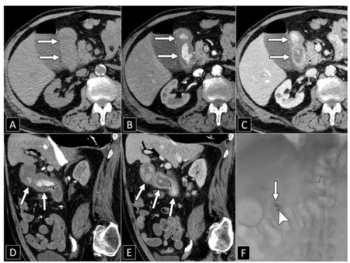
In joint consensus recommendations issued from the Society of Abdominal Radiology and the American College of Gastroenterology, researchers discussed key pearls, benefits, and limitations of CT angiography for imaging of overt lower GI bleeding and CT enterography for detecting small bowel bleeding.
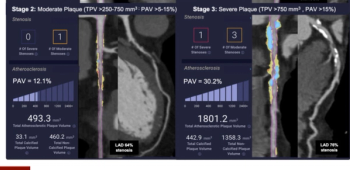
Employing quantitative computed tomography, the staging system’s insights on stenosis, ischemia and coronary atherosclerosis may facilitate individualized assessments of heart disease risk.
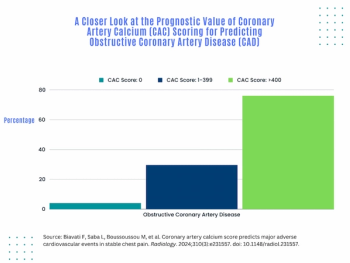
Computed tomography (CT) findings from over 1,700 patients with stable chest pain reveal that coronary artery calcium (CAC) scores of 0 are associated with a 4.1 percent prevalence of obstructive coronary artery disease (CAD) whereas CAC scores of 400 or higher are linked to a 76.1 percent incidence of obstructive CAD, according to research from a multinational study.
Review the case and test your knowledge to make the correct diagnosis.
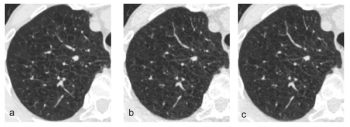
In comparison to standard-dose lung CT, the combination of deep learning image reconstruction with ultra-low-dose CT offered similar detection and characterization of pulmonary nodules at a nearly 93 percent reduction of radiation dosing, according to new research.
Catch up on the most-well viewed radiology content in February 2024.
Catch up on the top AI-related news and research in radiology over the past month.
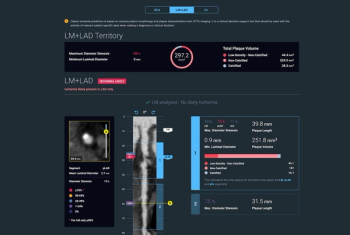
Clinicians can bill Category 1 CPT Code 75580 for adjunctive use of the artificial intelligence (AI)-powered Cleerly Ischemia software for fractional flow reserve estimates based on coronary computed tomography angiography (CCTA) scans.
Catch up on the top radiology content of the past week.
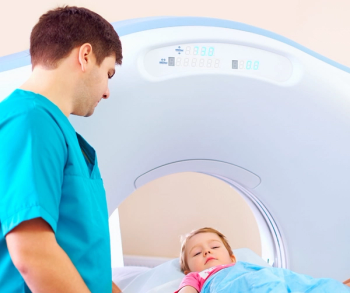
The use of computed tomography (CT) for cases of minor head trauma was associated with a 29 percent higher incidence of hematologic malignant neoplasms in comparison to those with no CT, according to a new study involving over 2,400,000 pediatric patients.
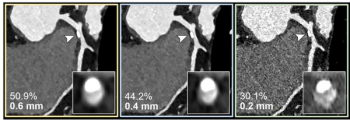
The use of ultrahigh spatial resolution with photon-counting CT led to lower Coronary Artery Disease Reporting and Data System (CAD-RADS) category assessments in over 54 percent of patients in comparison to the use of standard spatial resolution, according to recently published research.
Review the case and test your knowledge to make the correct diagnosis.
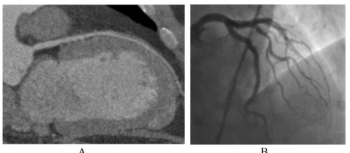
Study Offers Closer Look at Patient Preference For CT Angiography Over Invasive Coronary Angiography
Patients who had CT angiography procedures reported lower pain levels, better preparation and were 25 percent more willing to undergo the procedure again in comparison to patients who had invasive coronary angiography, according to newly published research.
Advertisement
Advertisement
Trending on Diagnostic Imaging
1
FDA Clears MRI-Based AI Software for Prognostic Evaluation of Patients with Mild Cognitive Impairment
2
Can MRI-Based AI Have an Impact in Reducing Unnecessary Prostate Biopsies?
3
The Reading Room Podcast: A Closer Look at New Research on 177Lu-Edotreotide for Treating GEP-NETs
4
How AI, Theranostics and More Empowered Patients Have Led to Significant Changes in Radiology
5