

Molecular Imaging
Latest News
Advertisement
Latest Videos









Advertisement
More News
Catch up on the most-well viewed radiology content in September 2024.
Catch up on the most-well viewed prostate imaging content in September 2024.
Catch up on the top radiology content of the past week.
Now available with MIMneuro, the Centiloid scaling software provides automated quantitative assessment of amyloid plaque density, a key component of Alzheimer’s disease.
Catch up on the top radiology content of the past week.
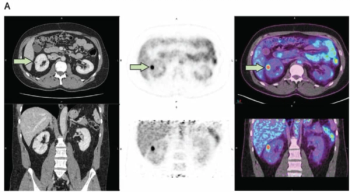
Study for Emerging PET/CT Agent Reveals ‘New Standard’ for Detecting Clear Cell Renal Cell Carcinoma
Results from a multicenter phase 3 trial showed that the PET/CT imaging agent (89Zr)Zr-girentuximab had an 85.5 percent mean sensitivity rate for the diagnosis of clear cell renal cell carcinoma.
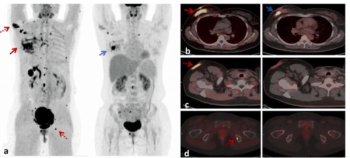
The imaging agent 18F-FAPI PET/CT demonstrated greater than a 45 percent higher sensitivity rate in comparison to 18F-FDG PET/CT for the detection of axillary and extraaxillary regional lymph node metastases, according to a lesion-based analysis from a recent study.
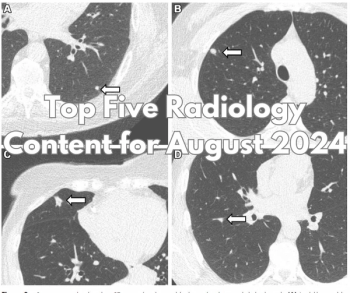
Catch up on the most-well viewed radiology content in August 2024.
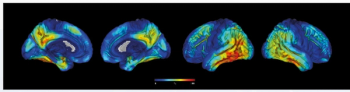
Targeting tau neurofibrillary tangles, the (18F)PI-2620 agent reportedly provides promising insight into the development of three neurodegenerative conditions including Alzheimer’s disease.
Catch up on the top radiology content of the past week.
Catch up on the top radiology content of the past week.
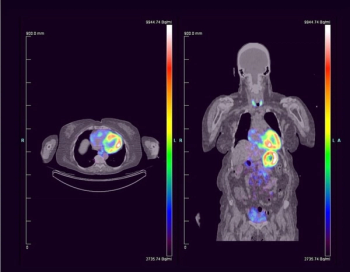
Reportedly the only imaging agent to garner a breakthrough therapy designation for cardiac amyloidosis, 124I-evuzamitide has demonstrated robust sensitivity for the condition as well as a favorable safety profile.
Catch up on the top radiology content of the past week.
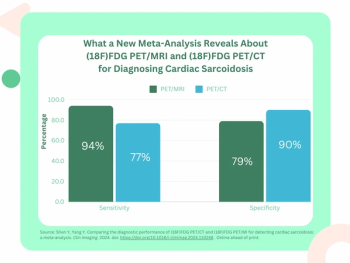
The researchers found that (18F)FDG PET/MRI had a 17 percent higher pooled sensitivity rate for cardiac sarcoidosis in contrast to (18F)FDG PET/CT.
Catch up on the most-well viewed radiology content in July 2024.
Catch up on the top radiology content of the past week.
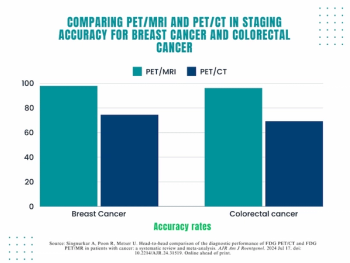
While PET/MRI and PET/CT had comparable sensitivity for patient-level regional nodal metastases and lesion-level recurrence, the authors of a systematic review noted that PET/MRI had significantly higher accuracy in breast cancer and colorectal cancer staging.
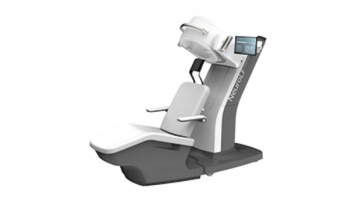
Offering dedicated PET imaging of the brain, the compact NeuroLF system may facilitate patient comfort while enabling detection and monitoring of brain tumors, epilepsy, and neurodegenerative diseases such as Alzheimer’s disease.
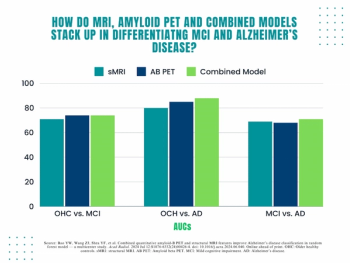
Emerging research revealed that a machine learning combination of amyloid beta PET and structural MRI demonstrated an 89 percent AUC in differentiating between older healthy patients and those with Alzheimer’s disease.
Catch up on the top radiology content of the past week.
Catch up on the top radiology content of the past week.
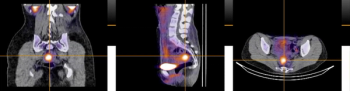
The radiotracer agent 99mTc-maraciclatide may provide an effective non-invasive alternative to laparoscopy for detecting early-stage endometriosis.
Catch up on the top radiology content of the past week.
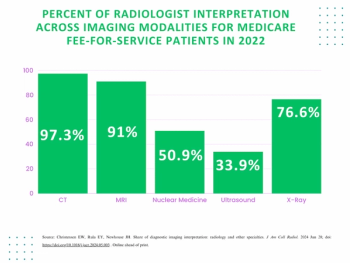
While radiologists interpreted approximately 99 percent of all non-cardiac CT, MRI and nuclear medicine studies in hospital and emergency department settings for Medicare beneficiaries, new research shows significantly less radiologist review of cardiac imaging and office-based imaging.

Catch up on the top AI-related news and research in radiology over the past month.
Advertisement
Advertisement
Trending on Diagnostic Imaging
1
FDA Clears AI-Enabled Chest CT Software for Aortic Analysis
2
Mammography Study Reveals Nearly 13 Percent Reduction in Reading Time with AI-Powered Slab Reconstruction for DBT
3
FDA Clears Machine Learning Module for Emerging Musculoskeletal Ultrasound Platform
4
Advances in AI — October 2026
5