



Molecular Imaging
Latest News
Advertisement
Latest Videos












Advertisement
More News
Catch up on the top radiology content of the past week.
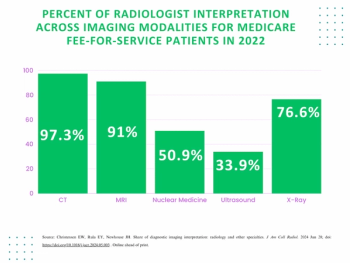
While radiologists interpreted approximately 99 percent of all non-cardiac CT, MRI and nuclear medicine studies in hospital and emergency department settings for Medicare beneficiaries, new research shows significantly less radiologist review of cardiac imaging and office-based imaging.

Catch up on the top AI-related news and research in radiology over the past month.
Catch up on the top radiology content of the past week.
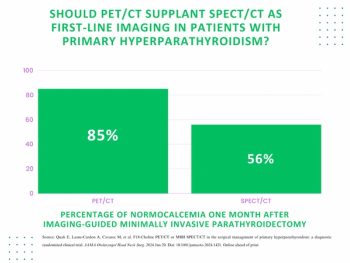
F18-choline PET/CT imaging guidance for minimally invasive parathyroidectomy (MIP) procedures led to a 29 percent higher percentage of normocalcemia at one month post-op in comparison to imaging guidance with Tc99m-sestaMIBI (MIBI) SPECT/CT, according to new research.
Catch up on the top radiology content of the past week.
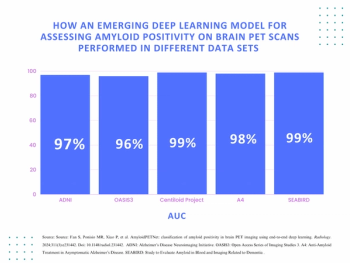
In validation testing with 205 18F florbetapir PET scans from 95 patients with Alzheimer’s disease, a deep learning model demonstrated a 93.2 percent accuracy rate and a 97 percent AUC for detecting amyloid-β positivity.
In a recent interview at the SNMMI conference, David Gauden, D.Phil, discussed key findings from new research evaluating the use of the PET radiotracer 18F-flotufolastat in patients with primary prostate cancer (PCa) and men with biochemical recurrence of PCa.
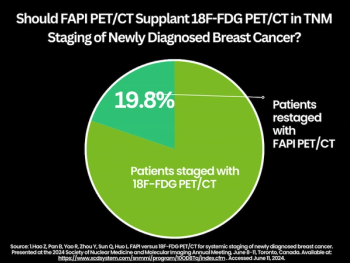
Improved assessment of axillary lymph node status with FAPI PET/CT led to restaging of nearly 71 percent of patients with breast cancer, according to new research presented at the SNMMI 2024 conference.
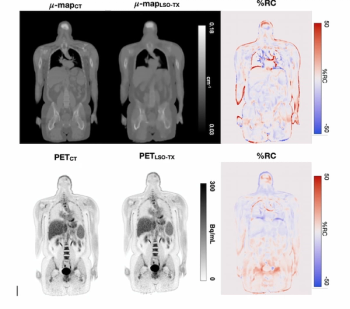
Ultra-low dosing with long axial field-of-view positron emission tomography (PET) scanners facilitates qualitative PET imaging at a more than 50 percent reduction of conventional radiation dosing with PET, according to new research presented at the SNMMI 2024 conference.
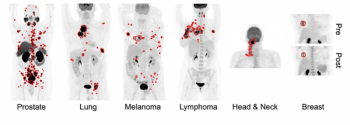
Deep transfer learning may elevate the capability of whole-body PET/CT scans to diagnose multiple cancers, ranging from breast cancer and lung cancer to melanoma and prostate cancer, according to new research presented at the SNMMI conference.
In an interview at the SNMMI 2024 conference, Oliver Sartor, M.D. discussed key findings from new award-winning research evaluating the potential of Pluvicto in treating patients with taxane-naïve metastatic castration-resistant prostate cancer (mCRPC).
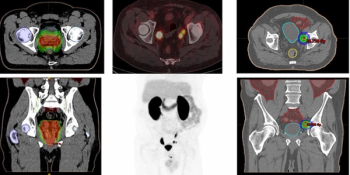
In a cohort of 85 patients with biomechanical recurrence of prostate cancer and PSA values less than 2 ng/mL, positive findings on PET imaging with PSMA-18F DCFPyL led to treatment changes in the majority of patients who had negative findings on conventional imaging, according to new research presented at the SNMMI conference.
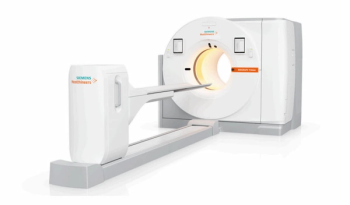
Emphasizing enhanced time-of-flight performance and an energy-efficient design, the Biograph Trinion PET/CT system can reportedly be utilized for a variety of imaging needs, ranging from theranostic applications to neurology imaging.
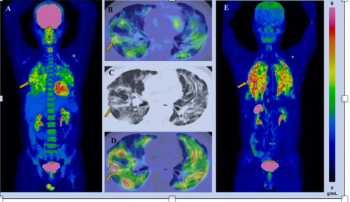
For patients with interstitial lung disease, FAPI PET/CT was more effective than 18F-FDG PET/CT at predicting progressive pulmonary fibrosis according to comparative study findings presented at the 2024 Society of Nuclear Medicine and Molecular Imaging (SNMMI) Annual Meeting.
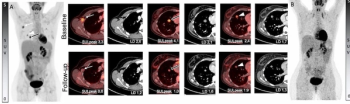
The use of 90Y-FAPI-46 radioligand therapy resulted in controlled disease progression in nearly half of a 30-person cohort largely comprised of patients with advanced sarcomas, according to new research presented at the 2024 Society of Nuclear Medicine and Molecular Imaging (SNMMI) Annual Meeting.
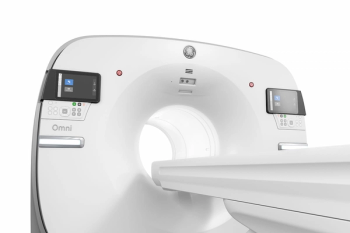
In addition to new advances in PET/CT imaging to facilitate precision imaging, the company will also unveil a device at the SNMMI conference that allows in-house production of commercial PET tracers.
Catch up on the top radiology content of the past week.
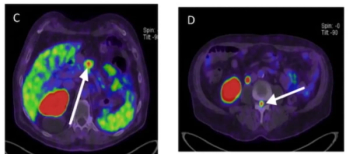
PSMA PET/CT demonstrated an 83 percent pooled detection rate for primary or metastatic renal cell carcinoma (RCC), and an 87 percent detection rate for restaging of metastatic or recurrent RCC, according to a nine-study meta-analysis.
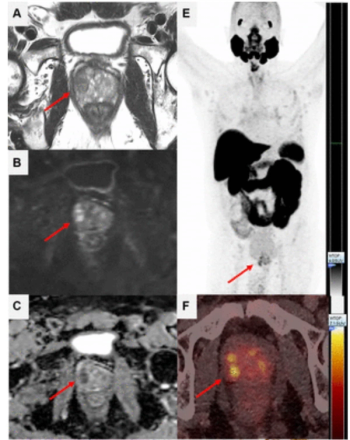
New prospective research examining the utility of 18F-PSMA-1007 PET/CT revealed comparable sensitivity to mpMRI for detecting clinically significant prostate cancer and a 17 percent higher specificity rate.
Catch up on the top radiology content of the past week.
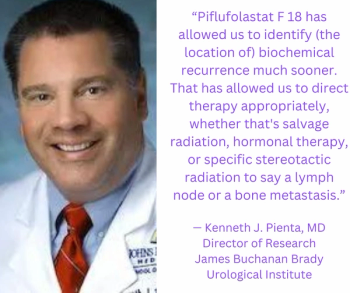
In a recent interview, Kenneth J. Pienta, M.D., discussed the impact of piflufolastat F18, current directions in research with other PSMA-targeted radiotracers and future possibilities for the role of PSMA PET in the imaging paradigm for prostate cancer.
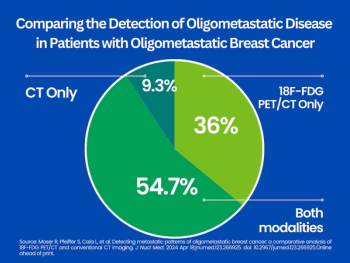
In a study of women with oligometastatic breast cancer, the use of 18F-FDG PET/CT detected additional metastases in one-third of cases that were not evident on conventional CT.
Catch up on the top radiology content of the past week.
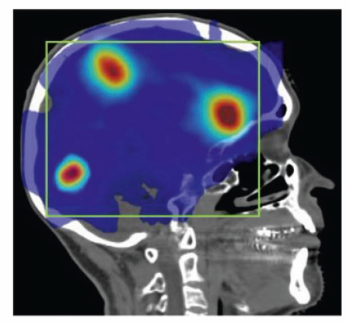
Examining current trends in brain cancer diagnostics, these authors discuss diagnostic imaging advances, pathways with adaptive radiotherapy and the ongoing quest to provide optimal precision with dosimetry.
Advertisement
Advertisement
Trending on Diagnostic Imaging
1
FDA Clears AI-Enabled Chest CT Software for Aortic Analysis
2
Mammography Study Reveals Nearly 13 Percent Reduction in Reading Time with AI-Powered Slab Reconstruction for DBT
3
FDA Clears Machine Learning Module for Emerging Musculoskeletal Ultrasound Platform
4
Advances in AI — October 2026
5