











Women's Health Ultrasound

Latest News


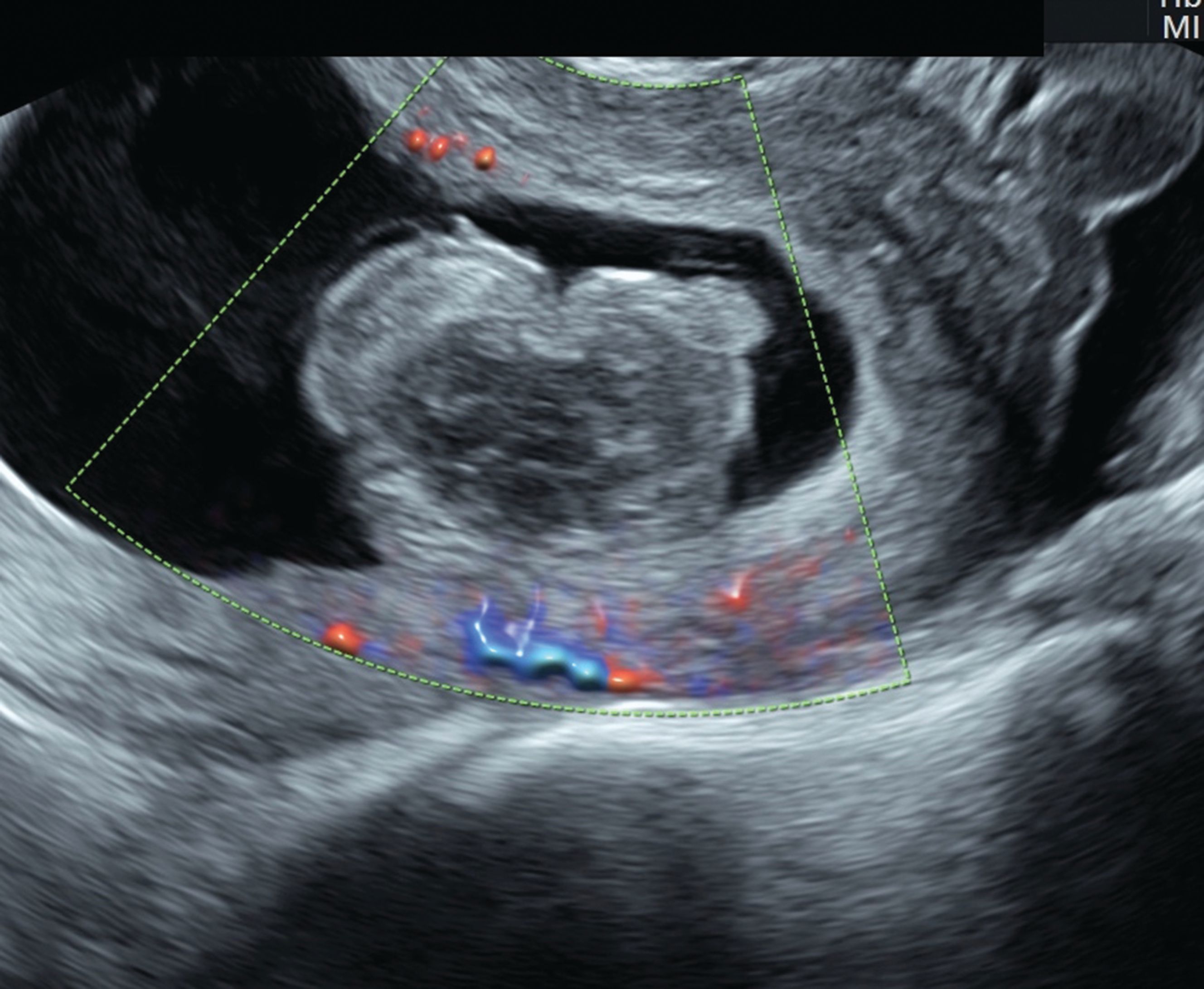
Traditional ultrasound has long been used to take bladder measurements of fetuses as early as 11 to 14 weeks gestation, including length and echogenicity. But measurement of bladder volume has tended to be inaccurate because of the limited algorithms for estimating volume using a 2D image. Fetal urine production rate can also be tricky to evaluate with 2D ultrasound.

Expectant parents no longer seem satisfied with keeping 3D fetal videos in their DVD collection armoire. Now they are posting them on the web. This practice could undermine organized radiology efforts to rein in unwarranted fetal sonography scans.

Engineers at Duke University’s Pratt School of Engineering have come up with software that twists the data composing volumetric ultrasound images into stereoscopic views, creating images that appear to float off display monitors into 3D space. The software splits the single ultrasound image into two separate images 7° from each other -- one seen by the right eye and the other by the left.

Pacific Coast Ultrasound of Los Alamitos, CA, operates at the nexus between medical need and self-indulgence, specializing in prenatal diagnostics and medically supervised 3D/4D prenatal elective ultrasounds. Throughout February, the center, which positions itself as a certified independent diagnostic facility, promotes a month-long tribute to Valentine’s Day.

One of the first stories I wrote for Diagnostic Imaging magazine made a lot of radiologists unhappy. It was about sonographers who were not only performing echocardiograms in private offices but also providing interpretations. One of these techs told me she had to because she knew more about it than the cardiologist. That was 24 years ago.

One of the first stories I wrote for Diagnostic Imaging magazine made a lot of radiologists unhappy. It was about sonographers who were not only performing echocardiograms in private offices but also providing interpretations. One of these techs told me she had to because she knew more about it than the cardiologist. That was 24 years ago.

This month sees a clutch of national radiological congresses taking place. The annual U.K., German, and Spanish meetings are held during May, but a more specialized event looks set to attract considerable attention: the first International Congress on Fetal MRI, to be staged in Vienna from 12 to 13 May.

Fetal MRI has become established in clinical practice over the past decade. MRI is indicated when conditions do not favor fetal ultrasound such as cases of maternal obesity or anhydramnios.1 It has also been shown that fetal MRI may discriminate among tissue components that do not display impedance differences on ultrasound; for instance, laminae in the developing brain.2 These advantages, along with MR's ability to delineate small structures, such as cranial nerves, has furthered its use as an adjunct to ultrasound in fetal imaging.1 Applications for fetal MRI are growing. The development of improved methods for fetal imaging, including availability of ultrafast sequences,3 has also furthered adoption.

Researchers from The Children's Hospital of Philadelphia have performed real-time functional cardiac MRI in two fetuses. It is the first time this technique has been reported, and it may represent an advance over the current gold standard of fetal echocardiography.

The American Institute of Ultrasound in Medicine has updated its policy on fetal ultrasound studies performed without medical indications. Though the revised statement still targets keepsake imaging entrepreneurs, the new language looks at potential ethical violations by accredited ultrasound practitioners as well.

Researchers from The Children’s Hospital of Philadelphia have performed real-time functional cardiac MRI in fetuses. Theirs is the first report of this technique, which may represent an advance over the current gold standard of fetal echocardiography.

Keepsake ultrasound, which has rapidly become a buzzword in the U.S., refers to the provision of nonmedical fetal videos and prenatal portraits to pregnant women and their families. Companies such as 3DbabyVu, Peek-A-Boo Baby, and Womb With a View are using seductive marketing slogans such as "Fruit of the womb" and "Mommy tummy tours, we believe in love at first sight."

Philips has released a package of enhancements and new system configurations for its ultrasound portfolio. The upgrades, known collectively as Vision 2005, include new capabilities for the company’s latest radiology and cardiology platforms.

The American Institute of Ultrasound in Medicine has updated its policy on fetal ultrasound studies performed without medical indications. Though the revised statement still targets keepsake imaging entrepreneurs, the new language looks at potential ethical violations by accredited ultrasound practitioners as well, according to AIUM officials.

Although ultrasound remains the method of choice for fetal screening and follow-up, MRI is emerging as a valuable tool in certain cases of potential congenital abnormality. Used safely and in appropriate circumstances by trained radiology staff, fetal MRI can add weight to critical diagnostic decisions, according to speakers at the European Congress of Radiology in March.

A growing number of private enterprises are using ultrasound to provide nonmedical fetal "keepsake" videos and/or prenatal portraits to pregnant women and their families. Eye-catching names such as 3DBabyVu, Fetal Fotos, Peek-A-Boo Baby, and Womb With a View are popping up in shopping centers across the country.

Vasa previa, a condition that affects approximately one in 2500 pregnancies, is almost always lethal. Adding vasa previa screening to current obstetrical ultrasound protocols could prevent mortality, according to an international group of researchers from Israel, the U.K., and the U.S. Their study was presented at the American Institute of Ultrasound in Medicine meeting in June.

Faster MR scans are overcoming the weaknesses of past efforts to use this modality for fetal imaging. Advances in speed and resolution are apparent in mapping the fetal brain.

3D fetal software takes off

Cedara Software of Toronto has come up with a package that quickly renders 3D fetal views. The software is designed to allow sonographers to view 3D renderings as part of their usual workflow routine through the use of image acquisition and rendering

While three-dimensional ultrasound is not yet as fast as two-dimensionalimaging, reconstructed 3-D images may provide diagnostic informationthat standard scanning techniques cannot provide, according toRalph Ranalli, product manager for Philips