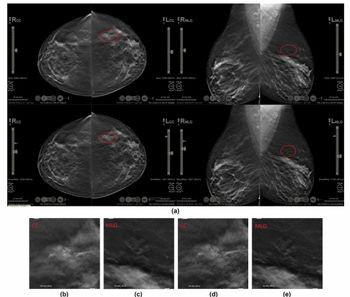
“The most important finding was that the consensus discussion recalled a smaller proportion of participants if their digital mammograms were initially flagged by AI CAD compared with flagged for suspicion of breast cancer by AI CAD versus by a radiologist … Of note, among the participants whom the consensus discussion decided to recall, the cancer yield was several times higher when the examinations had been initially flagged by AI CAD,” wrote lead study author Karin E. Dembrower, M.D., Ph.D., who is affiliated with the Department of Oncology-Pathology at the Karolinska Institute and the Department of Radiology at the Capio Sankt Gorans Hospital in Stockholm, Sweden, and colleagues.
In a subsequent sensitivity analysis of cases involving invasive breast cancer, the study authors saw similar results with a fourfold higher PPV for recalls from AI CAD alone (13 percent) versus recalls initiated by one radiologist (3.07 percent).
Three Key Takeaways
1. AI-enhanced recall accuracy. AI CAD demonstrated a significantly higher positive predictive value (PPV) for recalls (22 percent) compared to a single radiologist (3.4 percent), suggesting that AI can improve the accuracy of recalls in mammography screening.
2. Improved cancer detection. When AI CAD was involved in recall decisions alongside a radiologist, the PPV was notably higher than when recalls were based on two radiologists alone (25 percent vs. 2.5 percent), indicating AI's potential to enhance breast cancer detection rates.
3. Potential for optimized screening workflows. The study suggests that AI CAD may help reduce unnecessary recalls while improving cancer yield, potentially refining decision-making processes in mammography screening programs.
Comparing recalls for cases flagged by two radiologists in comparison to those initiated by one radiologist and AI CAD software, the study authors noted an eightfold higher PPV when AI CAD was involved in the recall decision (17.9 percent vs. 2.26 percent).
“This suggests a differential reliance on decision support related to whether that originated from AI CAD or from a fellow radiologist. The observed behavior may attenuate and underestimate the potential benefits of AI CAD in screening programs,” wrote lead study author Karin E. Dembrower, M.D., Ph.D., who is affiliated with the Department of Oncology-Pathology at the Karolinska Institute and the Department of Radiology at the Capio Sankt Gorans Hospital in Stockholm, Sweden,
(Editor’s note: For related content, see “Multicenter Mammography Study Shows Greater Than 10 Percent Increase in Breast Cancer Detection with Adjunctive AI,” “New Mammography Studies Assess Image-Based AI Risk Models and Breast Arterial Calcification Detection” and “Study: Mammography AI Leads to 29 Percent Increase in Breast Cancer Detection.”)
Beyond the inherent limitations of a single-center study, the authors acknowledged that the results with their two-radiologist consensus discussion may not be applicable to single-reader settings. The researchers also pointed out that more subtle signs on mammograms may be more of a factor with lower radiologist recalls as opposed to a lack of trust in AI CAD interpretation.