

Commentary|Videos|April 13, 2026
Breast Imaging in Focus: Can Partially Autonomous AI-Supported Screening Have an Impact with Mammography and DBT?
Author(s)Manisha Bahl, MD
In the latest episode of her “Breast Imaging in Focus” series, Manisha Bahl, MD, discusses key findings from a new study looking at partially autonomous AI-supported screening with mammography and digital breast tomosynthesis (DBT).
Advertisement
What if we could safely remove nearly two thirds of screening mammograms from a radiologist workload without missing more cancers and possibly even detecting more?
That's the question at the center of a recent study published in
Conducted in Spain as a prospective pair non-inferiority trial, this study included 31,000 women undergoing routine breast cancer screening with either digital mammography or digital breast tomosynthesis (DBT). The investigators compared two screening strategies. The first was the current standard of care, which was double human reading without AI support. The second was a novel approach, which was partially autonomous AI-supported screening. In this workflow, the AI system first assigned a risk score to each exam from one to 10 with scores from one to seven representing approximately 70 percent of studies that were classified as low risk and automatically considered normal without radiologist review. Exams with scores from eight to 10, about 30 percent of cases most likely to harbor cancer, underwent double reading by radiologists with AI support.1
The key question was: Can this partially autonomous AI-supported screening strategy safely reduce workload while maintaining diagnostic performance?
The AI-supported workflow resulted in a 64 percent reduction in radiologist workload. In practical terms, this finding suggests that nearly two thirds of screening exams could be triaged out of the radiologist's queue.1
Second, and perhaps even more importantly, cancer detection actually improved. The cancer detection rate increased from 6.3 per 1000 screening exams with standard double-blind reading to 7.3 per 1000 exams with partially autonomous AI-supported screening. Third, the recall rate was higher in the AI supported group, increasing by 14.8 percent. However, this difference was not statistically significant and met non-inferiority criteria.1
Still, it raises an important clinical consideration. While detecting more cancers is clearly beneficial, higher recall rates may lead to increased patient anxiety, additional imaging and potentially more benign biopsies. As a result, determining the acceptable balance between improved detection and increased recall will be critical for real-world implementation. Importantly, the study met non-inferiority criteria, demonstrating that partially autonomous AI-supported screening was at least as effective as standard double-blind reading. Taken together, these findings suggest that AI can be integrated into screening workflows while preserving diagnostic performance and potentially enhancing it.
From the perspective of breast imaging radiologists, this recent study has important implications. First, it suggests a potential shift in the role of the radiologist if AI can reliably triage low-risk exams. Radiologists may spend less time interpreting normal studies and more time interpreting complex or ambiguous cases, completing diagnostic workups and focusing on patient-centered care. Second the magnitude of workload reduction over 60 percent has important implications for addressing workforce shortages and burnout.
Looking ahead, several important directions for future research remain.
One key question is whether the increased cancer detection observed in the study will translate into improved long-term outcomes such as reduced breast cancer mortality. Another important area is improving specificity. Future iterations of AI algorithms may be able to maintain or further improve cancer detection while reducing recall rates. For breast radiologists, the question is no longer whether AI will play a role in screening, but how we will integrate it thoughtfully into clinical practice? The future of breast imaging lies in how we deliver more precise, efficient and patient centered care than ever before.
Reference
- Elias-Cabot E, Romero-Martin S, Raya-Povedano JL, Rodriguez-Ruiz A, Alvarez-Benito M. AI-based triage and decision support in mammography and digital tomosynthesis for breast cancer screening: a paired, noninferiority trial. Nat Med. 2026 Mar 19. doi: 10.1038/s41591-026-04277-x. Online ahead of print.
Advertisement
Related to this article

In the latest episode of her Breast Imaging in Focus series, Manisha Bahl, MD, MPH, FSBI, discusses new research comparing mammography-based AI models for breast cancer detection and short-term risk prediction.
In the third of a three-part podcast episode, Wendie Berg, MD, PhD, FACR, FSBI, Manisha Bahl, MD, and Amy Patel, MD discuss recent developments with autonomous AI in breast imaging and share their perspective on the overall potential of AI to help mitigate the radiologist shortage.
In the second of a three-part podcast episode, Wendie Berg, MD, PhD, FACR, FSBI, Manisha Bahl, MD, and Amy Patel, MD discuss how to handle disagreements with adjunctive AI in breast imaging, whether to include AI assessments in PACS, and whether patients should pay for the use of adjunctive AI.

Catch up on the top radiology content of the past week.
In the first of a three-part podcast episode, Wendie Berg, MD, PhD, FACR, FSBI, Manisha Bahl, MD, and Amy Patel, MD share insights on the utility of AI in breast imaging with respect to potential advantages, current concerns and future directions.
Catch up on the top radiology content of the past week.
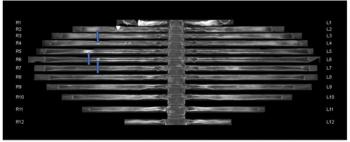
The use of adjunctive CT bone reading software in women with breast cancer detected between 8 to 22 percent more metastatic lesions for reviewing radiologists and reduced CT interpretation time by 50 percent or more, according to a new study.
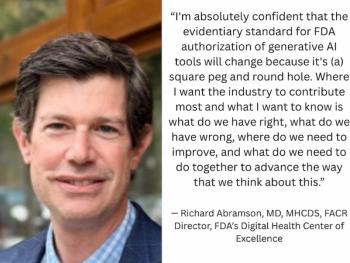
How will generative AI software be evaluated by the FDA in the future? What’s next for point-of-care ultrasound? What steps have been successful in facilitating adoption of AI applications across enterprise systems? Leaders in radiology and health care will be discussing these topics and more at the upcoming HLTH USA conference.
Advertisement
Advertisement
Trending on Diagnostic Imaging
1
MRI Study Links Tightness of High-Convexity Sulci to Higher Risk of Cognitive Decline in Older Adults
2
FDA Clears First MRI-Derived AI Software for Assessing Breast Cancer Recurrence Risk
3
What a Large Prostate MRI Study Reveals About AI and Unassisted Radiologist Assessment
4
How Photon-Counting CT Helps Us Recognize that Coronary Stenosis is Just One Piece of the Puzzle
5