


Opinion|Videos|May 1, 2026
Clinical Use of PSMA PET in Advanced Prostate Cancer
Author(s)David Morris, MD, Benjamin Gartrell, MD
Learn how FDA-approved PSMA PET tracers differ in prostate cancer staging and recurrence, including urinary uptake nuances that may affect post-prostatectomy detection.
Advertisement
Episodes in this series

This episode, titled ‘Clinical Use of PSMA PET in Advanced Prostate Cancer,’ features Dr. Neal Shore highlighting the differences between clinical trial data and real-world experience with PSMA PET imaging in advanced prostate cancer. While academic and international studies have reported high sensitivity and accuracy, particularly at low prostate-specific antigen (PSA) levels, clinicians in community practice settings report greater variability in both image interpretation and reporting. Inter-observer variability among readers and inconsistencies in report quality can impact how findings are understood and applied in treatment decisions.
The discussion also emphasizes that the strongest evidence for PSMA PET use remains in high-risk, newly diagnosed patients and those with biochemical recurrence following local therapy. However, real-world experience suggests that detection rates at very low PSA levels may not always match those reported in clinical studies, leading some clinicians to adopt higher PSA thresholds before ordering imaging. Additionally, the use of complementary imaging modalities, such as fluorodeoxyglucose (FDG) PET, is explored, though access and cost may limit their routine use in certain regions.
Despite these challenges, PSMA PET is widely viewed as a major advancement in prostate cancer imaging and is increasingly incorporated into routine clinical practice across disease states, including castration-resistant settings. Clinicians continue to rely on conventional imaging in parallel, particularly in research settings where historical endpoints require it. Ongoing clinical trials are working to integrate advanced and conventional imaging modalities, reflecting a transitional period in prostate cancer management. Overall, this segment underscores both the promise of PSMA PET and the need for continued refinement in its real-world application.
In the next episode, ‘Comparative PSMA PET Tracer Performance in Advanced Prostate Cancer,’ Dr. Neal Shore reviews phase 4 comparative data showing differences in urinary radioactivity and detection rates among PSMA PET tracers. These findings may influence tracer selection and improve detection of recurrent disease in advanced prostate cancer.
Advertisement
Related to this article

In a new podcast episode, Amir Iravani, MD, FRACP, discusses emerging dosimetry data from the COMPETE trial for 177Lu-edotreotide and how it may help facilitate more personalized treatment for patients with gastroenteropancreatic neuroendocrine tumors (GEP-NETs).

In a recent interview, Phillip Koo, MD, discussed emerging trends with AI, theranostics and empowered patients, and how these developments may lead to challenges and potential opportunities for radiologists and nuclear medicine physicians.

AI has to do more than show potential. It has to deliver measurable results.The Rad AI Outcomes and Market Impact Compendium brings together real-world clinical, operational and financial evidence from health systems, academic medical centers and radiology practices using Rad AI Reporting, Impressions and Continuity.Explore results including 60+ minutes saved per radiologist shift, a 47% reduction in report error rates, 70%+ patient follow-up adherence and >7x ROI — plus, case studies showing how organizations are translating AI into greater capacity, quality and financial performance.See what AI built specifically for radiology can deliver in practice.

Catch up on the top radiology content of the past week.
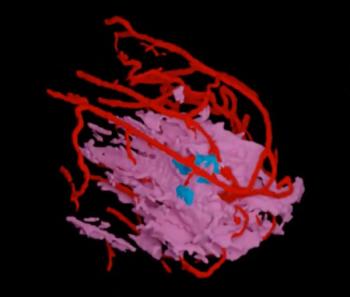
Assessing breast MRI scans, pathology and clinical data, the AI-powered TumorSight Risk software reportedly provides five- and 10-year risk for breast cancer recurrence for women with HR+, HER2-negative stage I-IIIA breast cancer.
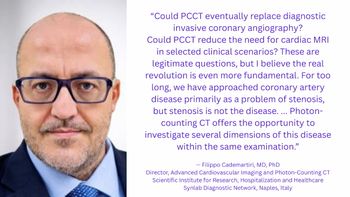
While a new article raises provocative questions about the capability of photon-counting CT (PCCT) to perhaps replace diagnostic ICA, the real revolution with this modality is going beyond stenosis measurement to a renewed focus on the disease of atherosclerosis.

Catch up on the latest imaging research presented at the recent American Society for Radiation Oncology (ASTRO) Annual Meeting.
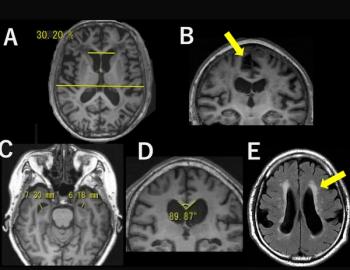
Tightness of the high-convexity sulci (THC) on brain MRI was associated with nearly threefold higher odds of cognitive decline over five to seven years of follow-up, according to a new prospective study involving over 2,100 community-dwelling senior citizens.
Advertisement
Advertisement
Trending on Diagnostic Imaging
1
FDA Clears First MRI-Derived AI Software for Assessing Breast Cancer Recurrence Risk
2
How AI, Theranostics and More Empowered Patients Have Led to Significant Changes in Radiology
3
See the Real-World Impact of AI in Radiology
4
MRI Study Links Tightness of High-Convexity Sulci to Higher Risk of Cognitive Decline in Older Adults
5