


Opinion|Videos|May 1, 2026
Impact of PSMA PET on Treatment Selection in Advanced Prostate Cancer
Author(s)David Morris, MD, Benjamin Gartrell, MD
PSMA PET reshapes advanced prostate cancer care, guiding Pluvicto use and tracking response with emerging PCWG4 criteria.
Advertisement
Episodes in this series

In ‘Impact of PSMA PET on Treatment Selection in Advanced Prostate Cancer,’ Dr. Neal Shore delves into the ongoing evolution and variability in interpreting PSMA PET imaging in advanced prostate cancer. As the use of PSMA PET expands, clinicians and imaging specialists are working to establish more standardized approaches to interpretation, including how standardized uptake values (SUVs) are measured, reported, and contextualized. However, considerable variability remains across institutions, countries, and disease states, reflecting differences in clinical experience, reporting frameworks, and patient populations.
The discussion highlights how interpretation can differ depending on disease stage, from biochemical recurrence to metastatic hormone-sensitive and castration-resistant prostate cancer, as well as evolving classifications such as those outlined by the Prostate Cancer Working Group 4. A key challenge lies in reconciling discrepancies between conventional imaging and PSMA PET findings, particularly when PSMA PET identifies a higher burden of disease that was previously undetected. These differences can significantly impact clinical decision-making, including the selection and intensification of systemic therapies, such as doublet versus triplet regimens, and the use of metastasis-directed treatments like radiation therapy.
Dr. Shore also acknowledges the inherent limitations of imaging, including the potential for false positives and false negatives, which further complicates interpretation. As a result, there is a growing emphasis on collaboration with nuclear medicine and radiology specialists to improve reporting consistency and clinical integration. Ultimately, this segment underscores the need for continued refinement of interpretation standards to ensure that PSMA PET findings are applied accurately and effectively in guiding treatment sequencing and overall disease management in advanced prostate cancer.
Out next episode, ‘Clinical Use of PSMA PET in Advanced Prostate Cancer,’ Dr. Shore explores real-world variability in PSMA PET interpretation and use, highlighting differences from clinical trial data. Despite these challenges, PSMA PET remains a critical tool increasingly integrated into advanced prostate cancer care.
Advertisement
Related to this article

In a new podcast episode, Amir Iravani, MD, FRACP, discusses emerging dosimetry data from the COMPETE trial for 177Lu-edotreotide and how it may help facilitate more personalized treatment for patients with gastroenteropancreatic neuroendocrine tumors (GEP-NETs).

In a recent interview, Phillip Koo, MD, discussed emerging trends with AI, theranostics and empowered patients, and how these developments may lead to challenges and potential opportunities for radiologists and nuclear medicine physicians.

AI has to do more than show potential. It has to deliver measurable results.The Rad AI Outcomes and Market Impact Compendium brings together real-world clinical, operational and financial evidence from health systems, academic medical centers and radiology practices using Rad AI Reporting, Impressions and Continuity.Explore results including 60+ minutes saved per radiologist shift, a 47% reduction in report error rates, 70%+ patient follow-up adherence and >7x ROI — plus, case studies showing how organizations are translating AI into greater capacity, quality and financial performance.See what AI built specifically for radiology can deliver in practice.
Catch up on the top radiology content of the past week.
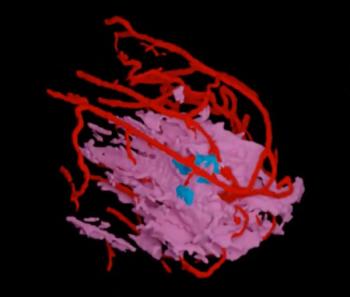
Assessing breast MRI scans, pathology and clinical data, the AI-powered TumorSight Risk software reportedly provides five- and 10-year risk for breast cancer recurrence for women with HR+, HER2-negative stage I-IIIA breast cancer.
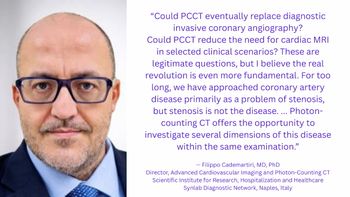
While a new article raises provocative questions about the capability of photon-counting CT (PCCT) to perhaps replace diagnostic ICA, the real revolution with this modality is going beyond stenosis measurement to a renewed focus on the disease of atherosclerosis.
Catch up on the latest imaging research presented at the recent American Society for Radiation Oncology (ASTRO) Annual Meeting.
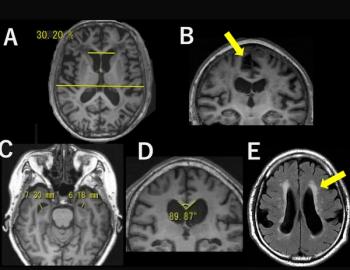
Tightness of the high-convexity sulci (THC) on brain MRI was associated with nearly threefold higher odds of cognitive decline over five to seven years of follow-up, according to a new prospective study involving over 2,100 community-dwelling senior citizens.
Advertisement
Advertisement
Trending on Diagnostic Imaging
1
FDA Clears First MRI-Derived AI Software for Assessing Breast Cancer Recurrence Risk
2
How AI, Theranostics and More Empowered Patients Have Led to Significant Changes in Radiology
3
See the Real-World Impact of AI in Radiology
4
MRI Study Links Tightness of High-Convexity Sulci to Higher Risk of Cognitive Decline in Older Adults
5