

Opinion|Videos|May 1, 2026
Comparative PSMA PET Tracer Performance in Advanced Prostate Cancer
Author(s)David Morris, MD, Benjamin Gartrell, MD
Clinicians weigh PSMA PET’s strengths, limits, and tracer differences, plus when to scan after recurrence to guide salvage prostate cancer therapy.
Advertisement
Episodes in this series

In this episode, ‘Comparative PSMA PET Tracer Performance in Advanced Prostate Cancer,’ Dr. Neal Shore explores the clinical relevance of emerging phase 4 data comparing urinary radioactivity and detection rates among PSMA PET tracers in advanced prostate cancer. In patients with low prostate-specific antigen (PSA) biochemical recurrence, excessive urinary excretion of certain tracers can obscure visualization of the prostate bed and surrounding tissues, making it more difficult to detect local recurrence. As a result, differences in tracer biodistribution, particularly urinary bladder activity, have meaningful implications for diagnostic accuracy in these settings.
The discussion emphasizes findings from a recent ASCO GU presentation demonstrating notable differences in detection rates between fluorinated PSMA PET agents, with one tracer showing substantially higher lesion detection, including in the prostate bed and pelvic lymph nodes. These results suggest that reduced urinary radioactivity may improve visualization of clinically relevant disease, particularly in post-prostatectomy or post-radiation patients. This represents one of the first intra-patient comparative analyses, offering more direct evidence than prior cross-trial comparisons.
Beyond imaging performance, clinicians also consider factors such as availability, regulatory approval, and economic considerations when selecting among PSMA PET tracers. While these practical elements vary globally and across healthcare systems, the discussion underscores that diagnostic performance, sensitivity, specificity, and detection capability, remains a key driver of treatment decisions. Overall, this segment highlights how emerging comparative data may begin to influence tracer selection and refine imaging strategies in advanced prostate cancer.
The next episode in this series, ‘Integrating PSMA PET into Clinical Practice in Advanced Prostate Cancer,’ features Dr. Neal Shore discussing the growing role of PSMA PET as a standard imaging tool in advanced prostate cancer and its integration into clinical practice. Accurate interpretation and multidisciplinary collaboration are essential to maximizing its impact on patient care.
Advertisement
Related to this article

Catch up on the top radiology content of the past week.
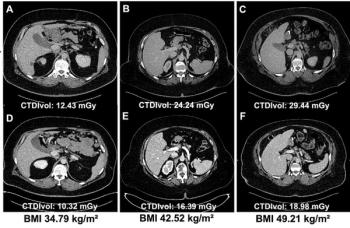
In addition to providing higher SNRs in vascular structures and parenchymal organs than energy-integrating detector CT, photon-counting CT enabled an approximately 30 percent reduction in volume CT dose index (CTDIvol) for patients with obesity, according to a new study.

Facilitating enhanced 3D visualization of skeletal anatomy, the BoneEnhance machine learning module reportedly provides automated segmentation of bone and surrounding tissues for the Accuro XV ultrasound system.

Newly published preclinical research signals a substantial conceptual shift with a potential role of photon-counting CT in targeting specific biological processes.

The future of AI in radiology lies in its potential capability to forge connections and enhance efficiencies for enterprise-wide workflows.

In a new podcast episode, Joseph Cavallo, MD, MBA, offered his perspective on AI integration, potential efficiency gains, navigating post-deployment monitoring and how to incorporate AI literacy into radiology resident training.
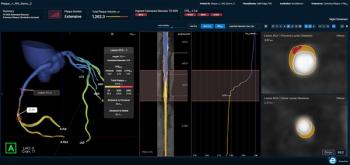
The FFR-IQ software recently demonstrated a 92.2 percent sensitivity for non-invasive estimation of fractional flow reserve (FFRC) based on coronary CT angiography (CCTA) scans.
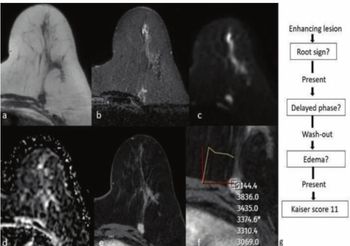
A Kaiser score > 5 with breast MRI demonstrated a 97 percent sensitivity and 87.9 percent specificity for predicting malignancy in patients with BI-RADS 0 or 4 presentations on mammography and breast ultrasound, according to a new study.
Advertisement
Advertisement
Trending on Diagnostic Imaging
1
FDA Clears Machine Learning Module for Emerging Musculoskeletal Ultrasound Platform
2
Could Photon-Counting CT Have an Impact as a Platform for Molecular Imaging?
3
FDA Clears MRI-Based AI Software for Prognostic Evaluation of Patients with Mild Cognitive Impairment
4
How AI, Theranostics and More Empowered Patients Have Led to Significant Changes in Radiology
5