

Opinion|Videos|May 6, 2026
Integrating PSMA PET into Clinical Practice in Advanced Prostate Cancer
Author(s) Neal Shore, MD, FACS
PSMA PET improves staging in advanced and recurrent prostate cancer, guiding shared decisions with expert interpretation and paving the way for theranostics.
Advertisement
Episodes in this series

In the final episode of this commentary, ‘Integrating PSMA PET into Clinical Practice in Advanced Prostate Cancer,’ Dr. Neal Shore focuses on the practical integration of PSMA PET imaging into routine clinical care for patients with advanced prostate cancer. He emphasizes that the use of PSMA PET is no longer a question of “if,” but rather “when,” particularly for patients who have progressed following local therapies such as surgery or radiation. Across both biochemical recurrence and high-risk localized disease, PSMA PET is increasingly recognized as the most accurate imaging modality for staging and guiding treatment decisions. However, successful integration requires more than access to imaging; it depends on high-quality interpretation and actionable reporting. Ensuring that scans are read by experienced specialists and that reports are both comprehensive and understandable is critical for translating imaging findings into treatment decisions.
Dr. Shore also emphasizes the importance of developing familiarity with PSMA PET interpretation, particularly as these findings may differ from those seen with conventional imaging and reveal previously unrecognized disease patterns. As imaging technologies continue to evolve, including hybrid modalities such as PET/CT and PET/MRI, ongoing education and multidisciplinary collaboration will be critical to ensure accurate interpretation and appropriate clinical use. Overall, this segment highlights PSMA PET as a transformative advancement in prostate cancer care, with thoughtful integration into clinical workflows essential for optimizing outcomes in patients with advanced disease.
Thank you for watching this commentary for the Diagnostic Imaging Peers and Perspectives series on diagnostic imaging in advanced prostate cancer. Please subscribe to our newsletter for information on upcoming video series.
Advertisement
Related to this article
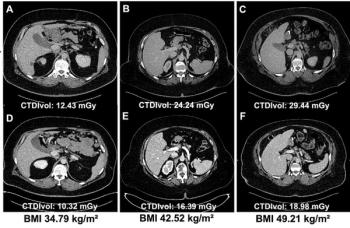
In addition to providing higher SNRs in vascular structures and parenchymal organs than energy-integrating detector CT, photon-counting CT enabled an approximately 30 percent reduction in volume CT dose index (CTDIvol) for patients with obesity, according to a new study.

Facilitating enhanced 3D visualization of skeletal anatomy, the BoneEnhance machine learning module reportedly provides automated segmentation of bone and surrounding tissues for the Accuro XV ultrasound system.

Newly published preclinical research signals a substantial conceptual shift with a potential role of photon-counting CT in targeting specific biological processes.

The future of AI in radiology lies in its potential capability to forge connections and enhance efficiencies for enterprise-wide workflows.
In a new podcast episode, Joseph Cavallo, MD, MBA, offered his perspective on AI integration, potential efficiency gains, navigating post-deployment monitoring and how to incorporate AI literacy into radiology resident training.
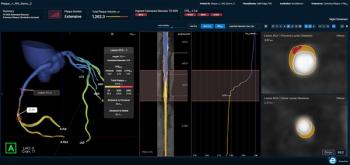
The FFR-IQ software recently demonstrated a 92.2 percent sensitivity for non-invasive estimation of fractional flow reserve (FFRC) based on coronary CT angiography (CCTA) scans.
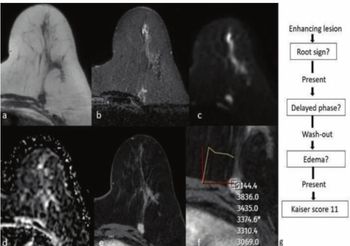
A Kaiser score > 5 with breast MRI demonstrated a 97 percent sensitivity and 87.9 percent specificity for predicting malignancy in patients with BI-RADS 0 or 4 presentations on mammography and breast ultrasound, according to a new study.

In a recent interview, Francesco Giganti, MD, PhD, discussed findings from a recent multicenter study demonstrating the ability of an AI software to provide significant clarity to initial PI-RADS 3 assessments on MRI and facilitate a nearly 19 percent reduction in unnecessary prostate biopsies.
Advertisement
Advertisement
Trending on Diagnostic Imaging
1
FDA Clears Machine Learning Module for Emerging Musculoskeletal Ultrasound Platform
2
Could Photon-Counting CT Have an Impact as a Platform for Molecular Imaging?
3
What’s Next for AI in Radiology?: Facilitating Data Orchestration Over Fragmentation
4
FDA Clears MRI-Based AI Software for Prognostic Evaluation of Patients with Mild Cognitive Impairment
5