News|Videos|August 23, 2026

Diagnostic Imaging’s Weekly Scan: August 16 — August 22

Author(s)Jeff Hall

Catch up on the top radiology content of the past week.

Welcome to Diagnostic Imaging’s Weekly Scan, which offers an opportunity to catch up on the most well-viewed radiology content of the past week.

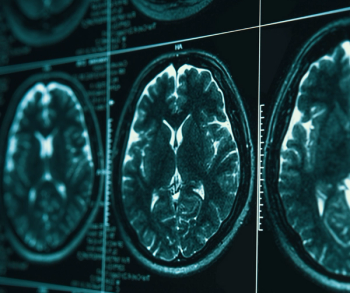
For patients who had successful reperfusion after acute ischemic stroke, new research demonstrated an 80 percent AUC for predicting infarct with the combination of apparent diffusion coefficient (ADC) mapping and MRI-derived relative oxygen ejection fraction (rOEF).

In his latest blog for Diagnostic Imaging, Filippo Cademartiri, MD, PhD, discusses a new American Journal of Roentgenology (AJR) study looking at the use of photon-counting CT for bladder cancer staging. Reducing false positives in evaluation of muscle invasion in bladder cancer cases that can occur with conventional imaging, spectral information with photon-counting CT may offer significantly improved accuracy and specificity in local staging.

In a recent Diagnostic Imaging Practice Academy webinar, Nina Kottler, MD, discussed the current state of narrow AI applications, the potential of opportunity AI and the urgent need for AI that can optimize efficiency in radiology workflows.

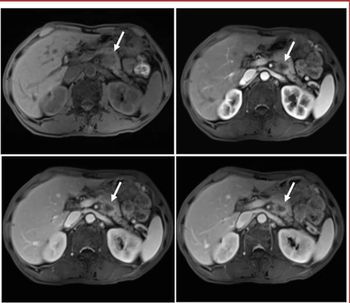
A new European Radiology publication suggests that gadoxetic acid-enhanced MRI surveillance may facilitate an improved approach for early detection of hepatocellular carcinoma.The research revealed that risk-stratified MRI surveillance in patients with cirrhosis led to over a 10 percent increase in early detection and over a 44 percent decrease in surveillance exams in comparison to reported results with semiannual ultrasound monitoring.

In the latest episode of his “Interventional Radiology in Focus” series, Mina Makary, MD, discusses the appeal of the specialty, key advances in the field in recent years, and the need for increased awareness of what interventional radiology can offer to patients.