Interventional Radiology in Focus: Emphasizing the Appeal, Advances and Awareness for Interventional Radiology
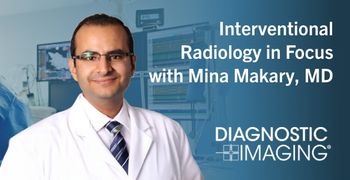
In the latest episode of his “Interventional Radiology in Focus” series, Mina Makary, MD, discusses the appeal of the specialty, key advances in the field in recent years, and the need for increased awareness of what interventional radiology can offer to patients.
Interventional radiology (IR) is a unique area of radiology in which we both diagnose and treat disease. It can also provide alternative options to traditional surgery that can reduce risk, shorten hospital stays, and lower costs.
The specialty's reach has expanded in recent years across several clinical areas. Prostatic artery embolization, which has been included in American Urological Association (AUA) guidelines since 2023, gives patients with benign prostatic hyperplasia (BPH) an option associated with less bleeding risk and lower rates of erectile dysfunction in comparison to other treatments.
Genicular artery embolization, originally developed to treat knee pain, has grown into a broader technique known as transarterial microembolization (TAME), which can now be applied to other joint and musculoskeletal conditions. That whole area has grown out of IR and is making a big difference.
In oncology, the Y90 radioembolization technique has been refined over recent decades to the point where some treatments now carry curative intent. There is also ongoing research into extrahepatic applications, including for glioblastomas. Histotripsy, a newly FDA-approved, fully non-invasive treatment, is another modality that is the focus of active investigation.
This pattern of continual innovation reflects the specialty's core appeal. One of the things that made me go into interventional radiology is the problem-solving aspects of it, having that toolkit or skill set that we have, and then being faced with problems that may have traditional treatments or may not. Oftentimes we have to come up with new and innovative ways, sometimes even on a daily basis, and I have found that extremely rewarding for our patients.
How Can We Overcome the Awareness Barrier with Interventional Radiology?
Despite these advances, there is persistently low awareness of IR, both among the public and referring physicians. We have published several studies on this — awareness by the public, by primary care physicians, by specialists — and it's slow across the board.
Closing that gap will require building an evidence base beyond individual case reports. We cannot win by having anecdotes or case reports or limited information. We have to be able to change the guidelines. We have to be able to contribute to the science. We have to run our own trials as interventional radiologists so we can really ask the questions that we need and share the interventional radiology perspective.
Dr. Makary is a vascular and interventional radiologist. He is an associate professor of radiology at the Ohio State University Wexner Medical Center.
Related to this article