

Opinion|Videos|September 18, 2024
Navigating Oligometastatic Disease: Understanding Lesion Numbers, Metastasis, and Disease Cutoffs in Clinical Practice
Author(s)Jaideep S. Sohi, MD, Jeremie Calais, MD
Jaideep Sohi, MD, and Jeremie Calais, MD, explore the complexities of managing oligometastatic disease, emphasizing the critical role of accurately assessing lesion counts, metastatic spread, and disease thresholds in optimizing clinical outcomes.
Advertisement
Video content above is prompted by the following:
- Why is it important for clinicians to recognize and understand the concept of oligometastatic disease in clinical practice?
Advertisement
Related to this article
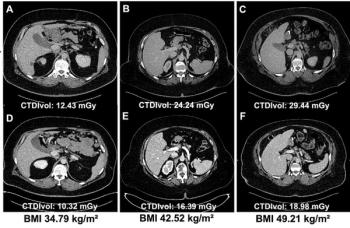
In addition to providing higher SNRs in vascular structures and parenchymal organs than energy-integrating detector CT, photon-counting CT enabled an approximately 30 percent reduction in volume CT dose index (CTDIvol) for patients with obesity, according to a new study.

Facilitating enhanced 3D visualization of skeletal anatomy, the BoneEnhance machine learning module reportedly provides automated segmentation of bone and surrounding tissues for the Accuro XV ultrasound system.

Newly published preclinical research signals a substantial conceptual shift with a potential role of photon-counting CT in targeting specific biological processes.

The future of AI in radiology lies in its potential capability to forge connections and enhance efficiencies for enterprise-wide workflows.
In a new podcast episode, Joseph Cavallo, MD, MBA, offered his perspective on AI integration, potential efficiency gains, navigating post-deployment monitoring and how to incorporate AI literacy into radiology resident training.
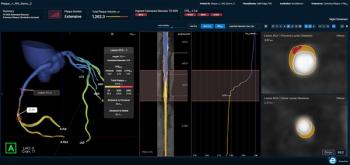
The FFR-IQ software recently demonstrated a 92.2 percent sensitivity for non-invasive estimation of fractional flow reserve (FFRC) based on coronary CT angiography (CCTA) scans.
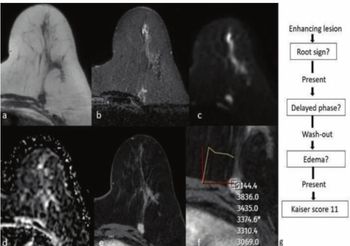
A Kaiser score > 5 with breast MRI demonstrated a 97 percent sensitivity and 87.9 percent specificity for predicting malignancy in patients with BI-RADS 0 or 4 presentations on mammography and breast ultrasound, according to a new study.

In a recent interview, Francesco Giganti, MD, PhD, discussed findings from a recent multicenter study demonstrating the ability of an AI software to provide significant clarity to initial PI-RADS 3 assessments on MRI and facilitate a nearly 19 percent reduction in unnecessary prostate biopsies.
Advertisement
Advertisement
Trending on Diagnostic Imaging
1
Could Photon-Counting CT Have an Impact as a Platform for Molecular Imaging?
2
FDA Clears Machine Learning Module for Emerging Musculoskeletal Ultrasound Platform
3
What’s Next for AI in Radiology?: Facilitating Data Orchestration Over Fragmentation
4
Can the Kaiser Score with Breast MRI Improve Clarity for BI-RADS 0 and 4 Assessments on Mammography and Ultrasound?
5