
Opinion|Videos|September 25, 2024
Optimal Timing and Frequency of Imagining Agents Used in the Detection and Characterization of Oligometastatic Prostate Cancer
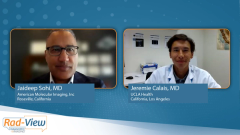
Author(s)Jaideep S. Sohi, MD, Jeremie Calais, MD
Jaideep Sohi, MD, and Jeremie Calais, MD, conduct a comparative assessment of gallium-based and non-gallium-based imaging agents for their efficacy in detecting and characterizing oligometastatic prostate cancer.
Advertisement
Video content above is prompted by the following:
- How do you determine the optimal timing and frequency of imaging studies using specific agents to monitor oligometastatic disease progression in prostate cancer patients?
Advertisement
Related to this article
The a2z-Omni-Triage software reportedly facilitates adjunctive triage for a number of findings including pneumothorax, coccygeal fracture, bowel perforation and moderate or severe hydronephrosis.
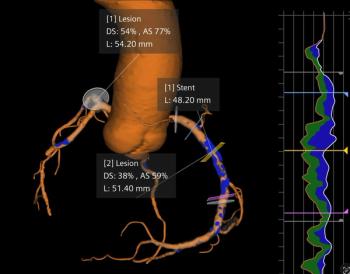
Utilizing data from CCTA scans, the Syngo.CT Coronary Cockpit reportedly provides AI-automated analysis of coronary plaque.
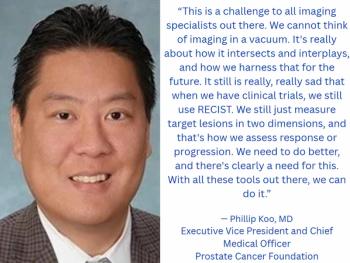
In a recent interview, Phillip Koo, MD, shared his thoughts on the impact of AI in radiology and nuclear medicine, the emergence and potential with theranostics, and how patient empowerment has changed radiology reporting.
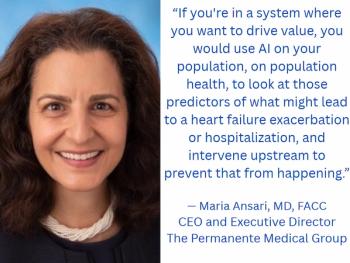
In a recent interview at the HLTH USA conference, Maria Ansari, MD, FACC, shared her perspective on the ongoing evolution of AI in health care and how it can facilitate the increasing emphasis on value-based care.
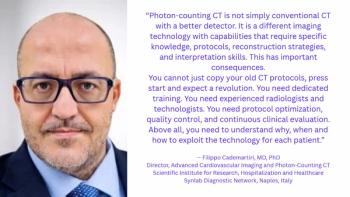
Having the technology of PCCT in one thing. Having the experience to apply the technology and interpret PCCT images is another.
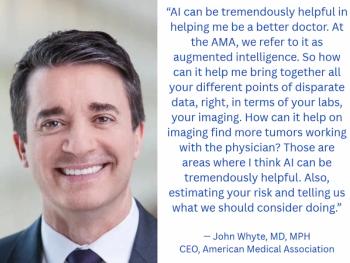
In a recent interview at the HLTH USA conference, John Whyte, MD, MPH, shared his thoughts on the promise and limits of AI in health care.
In a recent interview, Collin Bower, BS, RT(R)(CT), discussed how advances in workflow orchestration through enterprise imaging can bolster efficiencies and optimize clinical focus for radiologists.
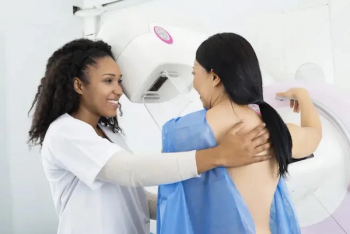
New research suggests that digital breast tomosynthesis (DBT) offers significantly higher detection rates than digital mammography for radial sclerosing lesions, lobular carcinoma in situ and atypical lobular hyperplasia.
Advertisement
Advertisement
Trending on Diagnostic Imaging
1
FDA Clears CCTA-Based AI Software for Facilitating Management of Coronary Artery Disease
2
Radiology Reflections on AI, Theranostics and Empowered Patients: An Interview with Phillip Koo, MD
3
Reducing Friction in Radiology Workflows with Enterprise Imaging
4
FDA Clears Emerging AI Triage Software for Nine Findings on Abdominopelvic CT
5